
Chakras: tradition, personal practice and current research
Seven chakras as an old map of experience - what can be practically useful in it, what is a metaphor and what is really being studied today by science.
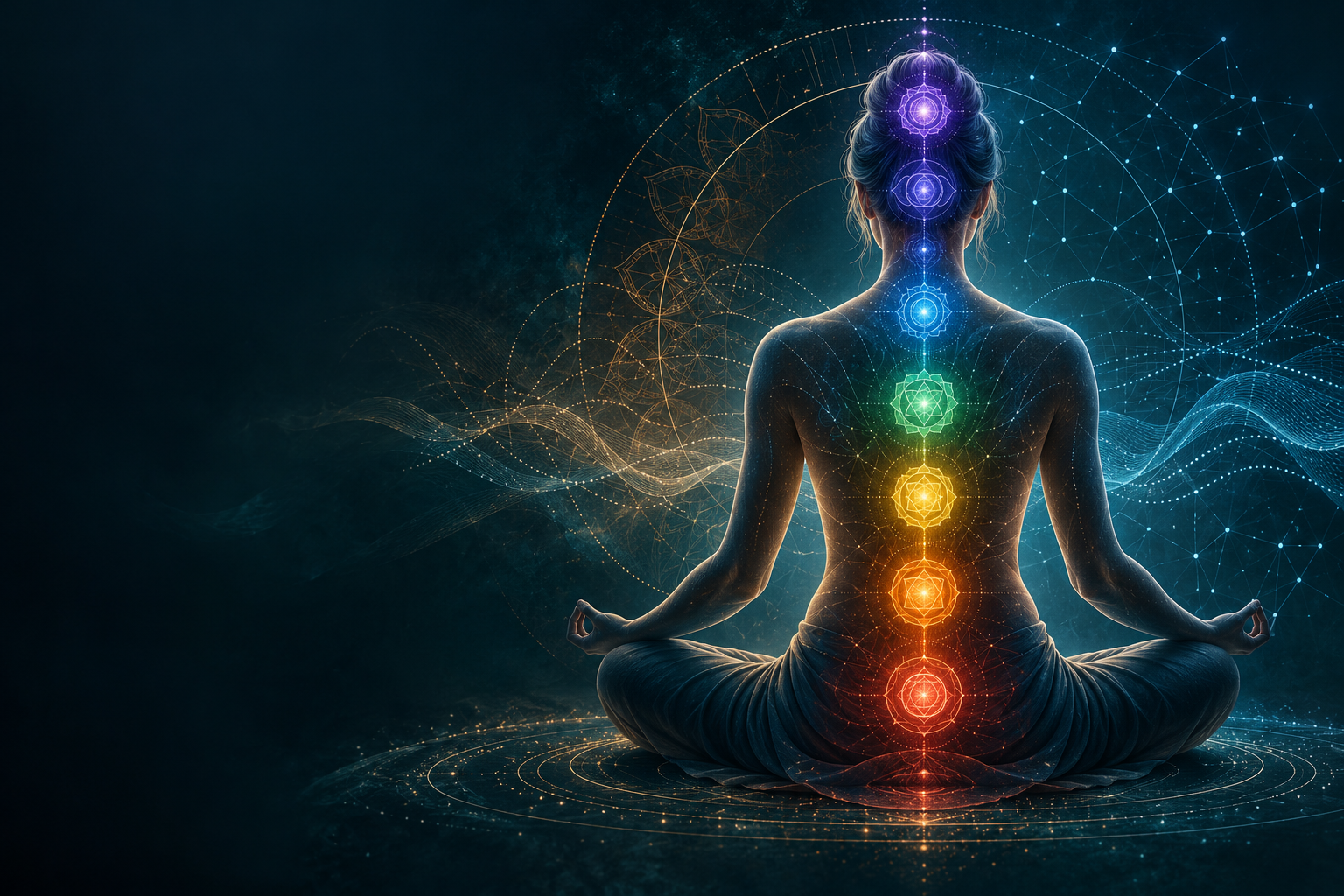
Map is not an organ
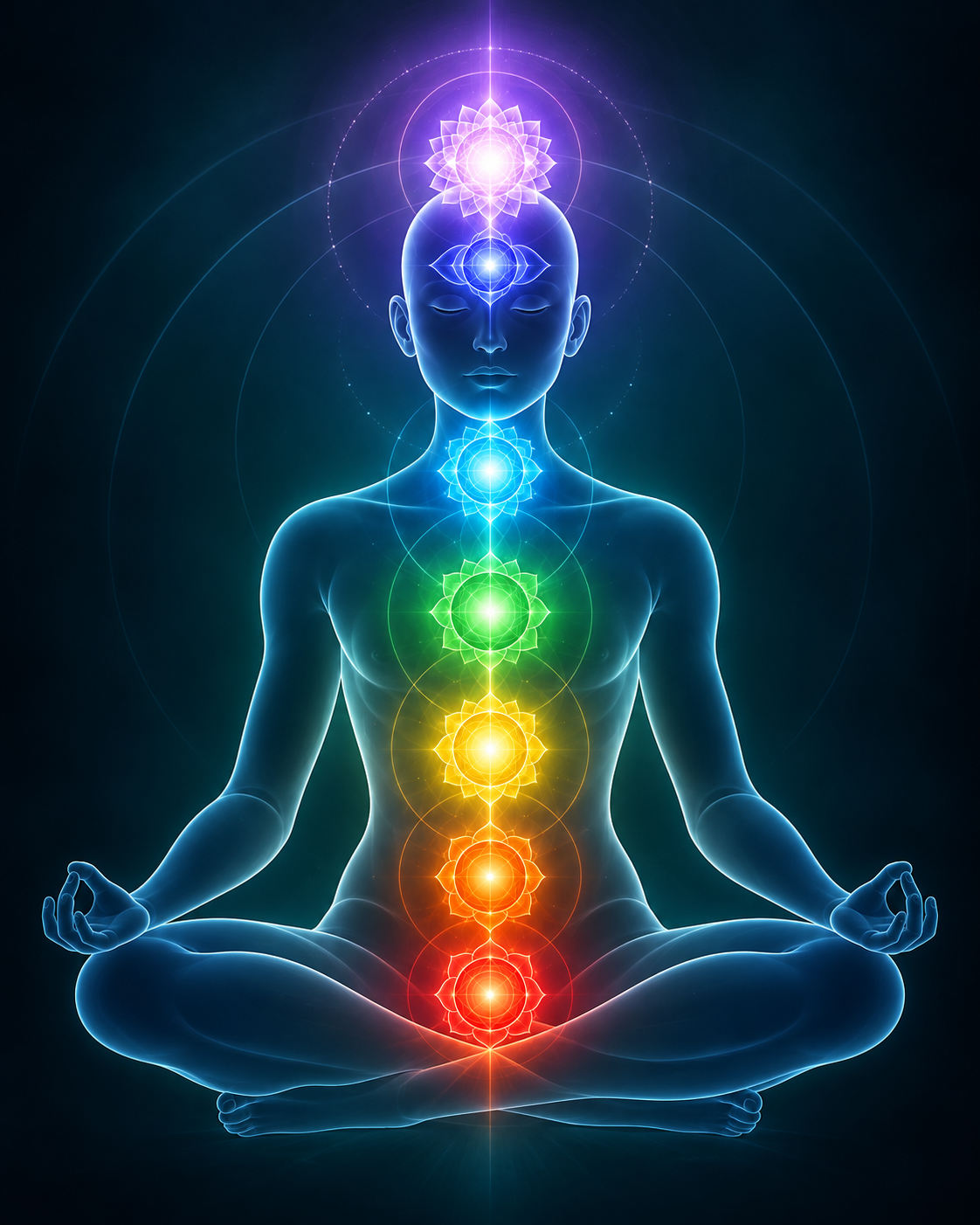
In Hindu and Buddhist traditions chakras are described as the centers or nodes of a fine body. Seven main centers form an axis from the pelvic floor to the head. Each has a colour, symbol, mantra, area of experience and various practices.
In this traditional framework, they accept and distribute chakras Prana - life breath or life force. The prana is not the same in tradition as oxygen or physical energy; it is a concept for the delicate dimension of life to pass through the vortex (energy paths), to nourish related areas of the body and also to act on the experience, relationships, aura and spiritual development.
We don't have to read that language as a description of anatomy. It can function as compact attention map: when one works with security, emotions, borders, relationships, expression, insight or purpose, tradition offers a structure to look at experience.
Prana, energy and traditional health concept
Prana It is literally related to breath and in Indian traditions it denotes the principle of life that manifests itself through breath, movement, vitality and attention. Yoga and Ayurveda work with the idea that its flow affects physical, emotional and spiritual levels. Practices such as pranayama, Asanas, meditation, mantra and sound work are therefore not just a "performance" technique, but a way to harmonise this flow.
In traditional interpretation, balanced chakras are associated with health, more harmonious relationships and the ability to go through difficult life situations. On the contrary, imbalance or deformation is described in the language of diseases, difficulties and life-blocks. Current medicine does not confirm these ties as a diagnostic cause; however, they can be read as a spiritual and psychological map that leads a person to care for the body, relationships, boundaries and attention.
There are more schools and numbers of chakras. This article uses a well-known axis of seven centers: five along the spine and two in the head area. In some interpretations, the upper two are described as centres of overlap or divine guidance. It is not the only valid tradition, but a useful common framework for orientation.
What can be examined - and what is not yet confirmed
Science usually doesn't test "chakras truthfulness" as the whole metaphysical system. It can, however, examine specific, measurable parts of the practice: changes in the stress, sleep, attention, movement, breath or cardiac variability experienced. The result is therefore important to read after layers.
Well-explored areas
Meditation, mindfullness, yoga, movement and breathing exercises. In some populations there is evidence of potential benefit for stress, subjective well-being or some symptoms.
Open mechanisms
How exactly attention, breath, expectations, movement, social context and physiological response are related. The results vary according to the method and quality of the studies.
Unverified as Medicine
Chakra is not a recognized anatomical organ or diagnostic system. Small pilot studies are not sufficient to confirm energy claims.
This is not a contradiction between tradition and research. It is the difference between two types of language: tradition passes a continuous map of experience, research discovers individual parts, searches for measurable indicators, compares groups and admits uncertainty.
Seven centres of traditional map
The following overview summarises the materials used in the Chakter Play application. I am presenting the frequency of Solfeggio, stones and sound assignment as part of tradition and personal ritual - not as proven therapy.
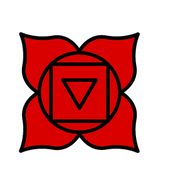 1. Root · Múládhara
Zone: base of spine and pelvic bottom
Topic: safety, basic needs, stability and anchoring
Color / symbol: red · square in circle
Other traditional correspondence: The element of earth, smell, Mars and four-leaf lotus. It connects with the coccyx, spine, bones, teeth, legs and colon areas.
Mantra: LAM · Traditionally 396 Hz
Practice: walking, contact with the ground, regular breath; mountain, child, deep squat
Traditional interpretation: Mouladhara is the line between the animal and human aspects of consciousness. It is associated with food, water, heat, safety, decision making and building material background. The imbalance is described as a loss of strength, uncertainty and difficulty in tolerating reality.
Traditionally assigned stones and fragrance: red jasper, hematite, obsidian, grenade; cedar, clove and patchouli.
Balance, weakening and overload: In balance, there is a sense of security, adequate health and finance care, life force, determination and ability to stand behind. The weakness is linked to existential anxiety, feeling of scarcity, fatigue and uprooting; congestion with accumulation, inadequate materialism, aggression and resistance to change. For harmonisation, it is traditionally recommended to walk barefoot, stay in nature, steady rhythm of the day, drumming, tai-chi, red food and work with borders.
Unbalance: fear, uncertainty, weakened anchoring, overmaterialism or egoism. Older lists indicate constipation, obesity, hemorrhoids, loss of appetite, ischaias, knee and leg problems, bone and bone disorders, inflammation of the colon, diarrhoea, poor blood circulation of the fingers, frequent urination, urinary bladder inflammation, kidney stones, impotence or congenital foot deformation.
 2. Sacral · Svádhishisthana
Zone: lower abdomen and pelvis
Topic: emotions, creativity, relationship to joy and change
Color / symbol: Orange · Month Crescent
Other traditional correspondence: element water, taste, Mercury and six-leaf lotus. The body map refers to the pelvis, reproductive organs, kidneys, bladder and body fluids.
Mantra: VAM · Traditionally 417 Hz
Practice: water, dance and creation; butterfly, pigeon, cobra
Traditional interpretation: Svadhishshanna relates to emotions, creativity, sexuality, interpersonal relationships and the joy of life. Six lotus slices are interpreted in some schools as working with anger, hatred, jealousy, cruelty, lust and pride; they also mention laziness, fear, doubt, envy or greed.
Developed Quality: joy, trust, hope, confidence and the ability to act. Traditional stones: Carneol, Moon stone and tiger eye.
Balance, weakening and overload: The balanced Svádhishshanskana is connected with a healthy experience of emotion, creativity, pleasure, guilt-free proximity and flexibility to change. The weakness of tradition describes as cold, loss of joy, creative block, lack of touch or withdrawal of sexuality; overbursts as emotional dramatic, dependence on partner or search for excitement. Contact with water, swimming, dancing, artistic production, smooth movement, orange food and the smell of ylang-ylang, cinnamon or oranges is recommended.
Unbalance: emotional closure, isolation, suppression or denial of sexuality, sexual coldness, addiction, gross experience, infirmity of emotions or the need for excessive cleansing and cleaning. Older interpretations also indicate irritant colon, intestinal and bladder disorders, reproductive disorders, irregular menstruation, PMS, ovarian cysts, testicular and prostate diseases, frigidity and impotence.
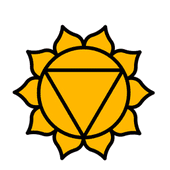 3. Solar plexus · Manipura
Zone: between the navel and the sternum
Topic: will, boundaries, courage and initiative
Color / symbol: yellow · triangle
Other traditional correspondence: element fire, sight, sun and a decathlon lotus. Traditionally, it is connected to the solar plex, abdomen, digestion, liver, bile, spleen, adrenal gland and lower back.
Mantra: RAM · Traditionally 528 Hz
Practice: conscious decision and movement; ship, fighter III, bow
Traditional interpretation: Manipura is often referred to as the center of life's energy, will of personality, emotional ties and mental processes. The imbalance traditionally combines with a sense of defeat, a loss of courage, a weakened free will or negative thought structures.
Traditional stones and fragrance: citrine, pyrith and yellow jasper; citron, lavender and bergamot.
Balance, weakening and overload: In balance, this area is linked to self-confidence without dominance, discipline, the ability to say no, to accept responsibility and act. The weakness is described as a sense of sacrifice, indecision, fear of criticism and low energy; congestion as a need for control, workaholism, perfectionism, anger and egoism. Traditional practice includes sun, movement, decision-making, yellow food and heating spices.
Unbalance: helplessness, chronic fatigue, hesitation, fear, pressure to control, nervousness, volatility, anger, rage, guilt, jealousy and selfishness. The older lists link this area with diabetes, liver problems, stomach ulcers, gallbladder, pancreas, intestines, spleen, hernia, arthritis, migraine, heart problems and excessive weight in the middle of the body.
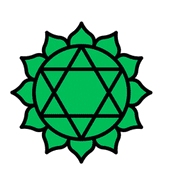 4. Cardiac · Anahatha
Zone: Chest centre
Topic: relationships, compassion, giving and receiving
Color / symbol: green · lotus
Other traditional correspondence: air, touch, Venus and 12-leaf lotus. In the body image it refers to the center of the chest, heart, lungs, circulation, hands and skin.
Mantra: YAM · Traditionally 639 Hz
Practice: gratitude and calm breath; bridge, camel, fish
Traditional interpretation: Anahata is a chakra of love and relationships - to each other, to the other people and to the world. In the language of tradition, its closure means a difficulty to give and receive love; practice then leads to balance, compassion, gratitude and open breath.
Other colors and stones: And the green is pink and golden; the rose, agate, malachite and green avanturine.
Balance, weakening and overload: In balance, kindness, compassion, the ability to forgive, receive help and be in relationships without losing yourself. Weakness means a closed heart, isolation, hatred and fear of injury; overload in tradition is manifested by self-sacrifice, possessive love or emotional pressure. Help my stay in nature, breathing practice, gratitude, relationship care, green food and the smell of roses, lavender or jasmine.
Unbalance: grief, melancholy, isolation, little self-esteem, hypersensitivity, loneliness, dependence on others, possession, arrogance, selfishness, insensitivity or inability to give and receive love. Traditional texts connect cardiac and pulmonary disorders, unbalanced pressure, circulation and blood circulation difficulties, weakened immunity, flushed chest and shallow breathing.
 5. Throat · Visúddha
Zone: Neck and larynx
Topic: expression, voice, trueness and listening
Color / symbol: Light Blue · Lotus
Other traditional correspondence: Aether (Akasha), hearing, Jupiter and 16-litre lotus. It connects with the neck, neck, jaw, ears, larynx, esophagus, shoulders and upper airway.
Mantra: HAM · Traditionally 741 Hz
Practice: Singing or silence; lion, candle, plow
Traditional interpretation: Vishuddha is a communication centre and in some interpretations "cleansing" of what one has swallowed or not expressed in life. It concerns voice, will, truthfulness, the ability to say important things and listen at the same time.
Next color and stones: sometimes it is also mentioned purple; lapis lazuli, blue agate, blue chalcedon and azurite.
Balance, weakening and overload: Balance is traditional to express its own needs, to speak truthfully, to listen and to give shape to creation and feelings. The weakness is connected with a quiet voice, fear from the view, "dumpling in the throat" or avoiding the truth; overbursts with shouting, interrupting, screaming and inability to listen. The practice includes singing, recitation, conscious silence, observation of the sky or water, blue fruit and the smell of lavender or eucalyptus.
Unbalance: the words, hoarse, stutter, closure, shyness, low self-confidence, blocked creativity, excessive talk or trying to control the second word. Some schools rank here with neck and lung problems, upper respiratory tract, asthma, thyroid gland, sore throat, tonsillitis, neck spine tension, auditory problems, aphthos, teeth, mental anorexia and multiple sclerosis.
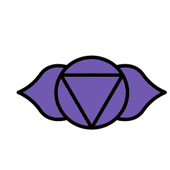 6. Third Eye · Ajni
Zone: midpoint of the forehead between the eyebrows
Topic: attention, imagination, intuition and perspective
Color / symbol: Indigo · 2-litre lotus
Other traditional correspondence: light, Saturn and lotus with ninety-six petals. Traditional body map includes the forehead, eyes, ears, nasal cavity, pituitary gland, brain and nervous system.
Mantra: OM · Traditionally 852 Hz
Practice: silent observation; child with face on the ground, dolphin, calm sed
Traditional interpretation: Ajja or the third eye refers to intuition, wisdom, inner knowledge and awareness. Some schools call it the seat of the "Master"; personal practice here works with the observation of images, dreams, patterns and own perspective.
Other colors and stones: milk white, smoke or purple; sodium, topaz and amethyst.
Balance, weakening and overload: In balance, clear mind, imagination, intuitive perspective and the ability to see context are highlighted. The weakness is described as a rejection of internal life, a leak to a purely rational view, a forgetfulness and an inability to imagine the future; an overload such as illusion, an escape to fantasy, nightmares, hallucinations or a loss of contact with everyday reality. Tradition recommends peaceful meditation, work with dreams, view of stars, indigo food and silence without overflowing stimuli.
Unbalance: illusions, self-doubt, self-deception, overcrowding, nightmares, instability, frequent changes in partners, employment or residence, life without plans, low-level thoughts or excessive management of all reason. Older sources mention pressure headaches and migraines, visual and hearing disorders, shortsighted, long-sighted, cataract, ear squeak, sinuses, rhinitis, hormonal imbalance, dizziness, depression, fatigue, forgetfulness or hallucinations.
 7. Crown · Sahabrára
Zone: head stem
Topic: silence, overlap, meaning and relation to the whole
Color / symbol: purple or white · 1000-litre lotus
Other traditional correspondence: thinking or being pure, planet Ketu and the millennial lotus. In a traditional body map, it lies on the top and connects with a large brain, a cerebral cortex, understanding and widespread consciousness.
Mantra: quiet / internal OM · traditionally 963 Hz
Practice: quiet rest; shawy or comfortable sitting
Traditional interpretation: The Sahasrára is described as the seat of divine perfection, the consciousness of unity and spiritual direction. Within the seven-part map, its harmony is derived from the balance of all previous centres.
Other colors and stones: gold and ultraviolet; amethyst, crystal, selenite and agate.
Balance, weakening and overload: In balance, spiritual schools associate it with a sense of peace, unity, the ability to learn and to face the variability of life, including death. The weakness is described as a spiritual void, loss of direction, attachment to dogma or fear of the unknown; congestion such as spiritual pride or disconnection from the earthly, relationship and practical aspects of life. Tradition recommends silence, stay in mountains or nature, philosophical questions, moderation and conscious rest.
Unbalance: emptiness, alienation, passivity, boredom, confusion, apathy, loss of meaning, inability to learn, understand or face reality, strong grief, shock and fear of death. Traditional lists include depression, mental disorders, epilepsy, senility and frequent migraines or headaches.
Simple and safe personal practice
There is no need to "open" everything at once or change the practice into a performance test. A more sensible is short, peaceful work with one area that is now resonating with its own experience.
If you want to go through a structured self-reflection and convert it to audio settings, you can open an online application Chaker test - self-reflection and meditation oscilloscope. The result is not human evaluation; it is a temporary working profile that can be remodified.
Reiki and energy work
Reiki is a Japanese system of touch or no touch relaxation practice. In many of the current schools, it is connected with chakras: the practice of working through the body's lower body, using hands, attention and intent, and traditionally talking about harmonising the flow of life energy. But the historical forms of Reiki are not identical to the Indian chakra system; their connection is a later interpretation bridge between two traditions.
For a man, Reiki can be a calm ritual of attention, rest and body perception. Current research primarily assesses subjective experience of relaxation, stress or well-being; it does not support the use of Reiki or chakra as a replacement for diagnosis or treatment. If this practice is to be used, it is to be a voluntary supplement to care, not as a replacement.
Sound, binaural rhythms and headphones
Sound can be a good bearer of attention: regular rhythm, singing, music or silence form a framework of practice. Binaural rhythm It occurs in a stereo listening session, when the left and right ears receive two close clean tones. For example 300 Hz left and 306 Hz right creates a 6 Hz difference. It is not the third physically played tone; it is the perception arising from the processing of both signals by the auditory system.
Therefore, a stereo headphones. The channels are mixed in space through the speaker and the binaural principle is not played out in the intended way. The frequency difference itself is not "chakras frequency" - it is an independent choice of sound-recording rate, which can be combined with traditionally assigned chakras tones.
1-4 Hz · delta
In professional and popular language it connects with sleep and very deep calming.
4- 8 Hz · theta
It is often chosen for peaceful session, imagination or meditation.
8-12 Hz · alpha
It is described as a vigilant calm and light relaxation.
14- 30 Hz · beta
It often combines itself with active focus and normal vigilant activity.
30-100 Hz · gamma
In neuroscience, it indicates rapid oscillation; however, personal listening is neither measuring nor controlling brain activity.
Such markings are: indicative. Research on binaural rhythms shows mixed results: some studies find effects in partial situations, others do not, and it is not reliably demonstrated that the chosen difference automatically resets brain waves or causes a predefined condition. It is virtually better to perceive them as an optional sound aid to self-concentration than as therapy or diagnosis.
Settings in our oscilloscopes
V Chakra Play Even in the resulting oscilloscope Chaker test is the switch Binaural rhythm, fast values 2, 3.2, 5.6, 6, 7,83, 10, 15,66, 18, 40 and 61,31 Hz and smooth manual tuning. A quick offer only facilitates re-setting; it does not give individual numbers therapeutic importance. Start quietly, select one value, listen for a while and keep only the setting that is pleasant.
Open without uncritical faith
Traditional knowledge may not be either literally true or worthless. It may contain long-term human experience observations that are used in a language other than current science. The honest approach is to hold both things at the same time: not to confuse the metaphor with evidence, but not to close the door to the question of what can be more accurately understood and verified from practice.
Research and other reading
Sources below are used to verify the state of research. They are not proof that the traditional chakras model acts as a medical diagnostic.
- NCCIH / NIH - Mind and Body Practices: overview of yoga, meditation, mindfullness and other approaches.
- NCCIH / NIH - Meditation and Mindfullness: Effectiveness and Safety.
- NCCIH / NIH - Yoga: Effectiveness and Safety.
- Schleinzer et al. (2024): systematic review and metaanalysis of yoga and stress.
- Mandlik et al. (2024): systematic review of one-off yoga, meditation and stress reactivity.
- Pilot study Nada Yoga and "alignment" chaker - a small sample; an interesting stimulus, not confirmation of the energy model.
- The subtle points: An inceptive map and relationship of a traditional model to research meditation.