
American paradox: domestic structural deficits, global power and the limits of internationalism
Method and value framework
The article works with a critical internationalist framework: uses universally applicable rules, reciprocity between states, the ability to share part of sovereignty in multilateral institutions, social solidarity, the availability of public goods and the preference of cooperative security to a unilateral power projection. This is an explicit value framework, not a claim that it is the only possible way of evaluating policy.
At the same time, two insurance policies are valid. One: criticism of the US is not an excuse for authoritarianism or aggression of other states. Second, the article distinguishes data, legal facts and interpretation. Critical analysis is strongest when avoiding easily refutable absolute claims. Citizens United, background checks, quantified immunity, school finances, metric system, health care and foreign military presence are therefore described with legal and statistical nuances and with the main arguments used by advocates of a different institutional arrangement.
American paradox in a nutshell
The strongest criticism of the American model is not that "everything in America fails." It comes from contrast: a country with extraordinary economic, scientific and military capacity has worse results in some basic social indicators than significantly less rich allies. And at the same time, he has the ability to project military power into virtually all regions of the world in an extent that no rival today can replicate.


100 structural areas - in detail and in context
The filter is used only for orientation; all 100 areas are included in the article. Each topic is distributed factually, with institutional context, limits of comparison and links to available resources.
Electoral system: the president may not win a national popular vote
The US president is not elected by one national vote, but by the Electronic College. Most states use the "winner takes all" rule, so a small difference in one state can redirect all its constituents. In 2000 and 2016, a situation occurred where the winner of the national popular vote did not win the presidency. From a federalism point of view, it is a deliberate feature of the constitution: states are presidential elections. But from an internationalist and egalitarian perspective, the legitimate question is why the voice of a citizen is not of equal importance everywhere in practical terms.
Gerrymandering and political drawing of circuits
The electoral boundaries can have a profound influence on how votes are converted into mandates. In the US, redeploying is a major political process in a large part of the states, and both major parties used "packing" and "cracking" at different times to maximize their representation. The Commission notes that the Commission has not taken into account the fact that the measures in question were granted in the form of State aid. Common Cause has identified the partian-gerrymandering claims as political issues beyond federal courts. Some countries have responded to independent or bipartisan commissions.
Money in politics, Citizens United and Super PACs
The 2010 Citizens United decision abolished the ban on corporate and trade union independent spending on electoral communications. The subsequent regulatory framework has enabled independent-expendenture- only committees, known as Super PACs, which can receive unlimited amounts from individuals, companies and trade unions. This creates an environment in which very rich donors and organisations can finance massive parallel communication campaigns outside the candidate committee.
Two-party dominance and barriers for third forces
Plural one-mandate elections, the presidential system, different rules on ballot access and strategic voting will stabilise the competition of Democrats and Republicans in the long term. Politically, this corresponds to the mechanisms associated with Duverger's Law: in a system where the winner takes a single mandate, voters and elites have an incentive to concentrate on two large coalitions. Third parties are not legally prohibited, but their path to federal power is structurally significantly more difficult than in proportional European systems.
Election: the problem is not just the lack of interest
Participation in the US is affected by how voters register whether the state allows a self-day registration, early voting and mail voting, how the voting places are available and how competitive a particular state or district is. In addition, direct international comparisons depend on the denominator: voting- age population versus registered voters. The US does not have mandatory participation like Australia and do not use a single federal automatic registration system.
Tuesday's Election Day and Unequal Transaction Costs of Voting
Federal Electric Day is on Tuesday, historically due to conditions 19. A century. It's not a federal state holiday. For a part of the staff, a personal vote can thus mean the organisation of shift, transport or childcare. Many countries are mitigating this problem by early and correspondence voting, but the extent of rights varies. The European reader used to the weekend elections therefore comes across a significantly more decentralised model of access to the urns.
Voter access: ID, registration, polling places and dispute over "support"
Election law is a combination of federal protection and government administration in the US. Disputes are held about voter-ID, register cleaning, drop boxes restrictions, number of election seats, post voting and renewal of voting rights after conviction. Critics call some measures voter suppression; advocates advocate them as protecting the integrity of elections. Analytically, it is useful to measure the specific impact: who is affected by the rule, what are the costs of compliance and whether there is an alternative available.
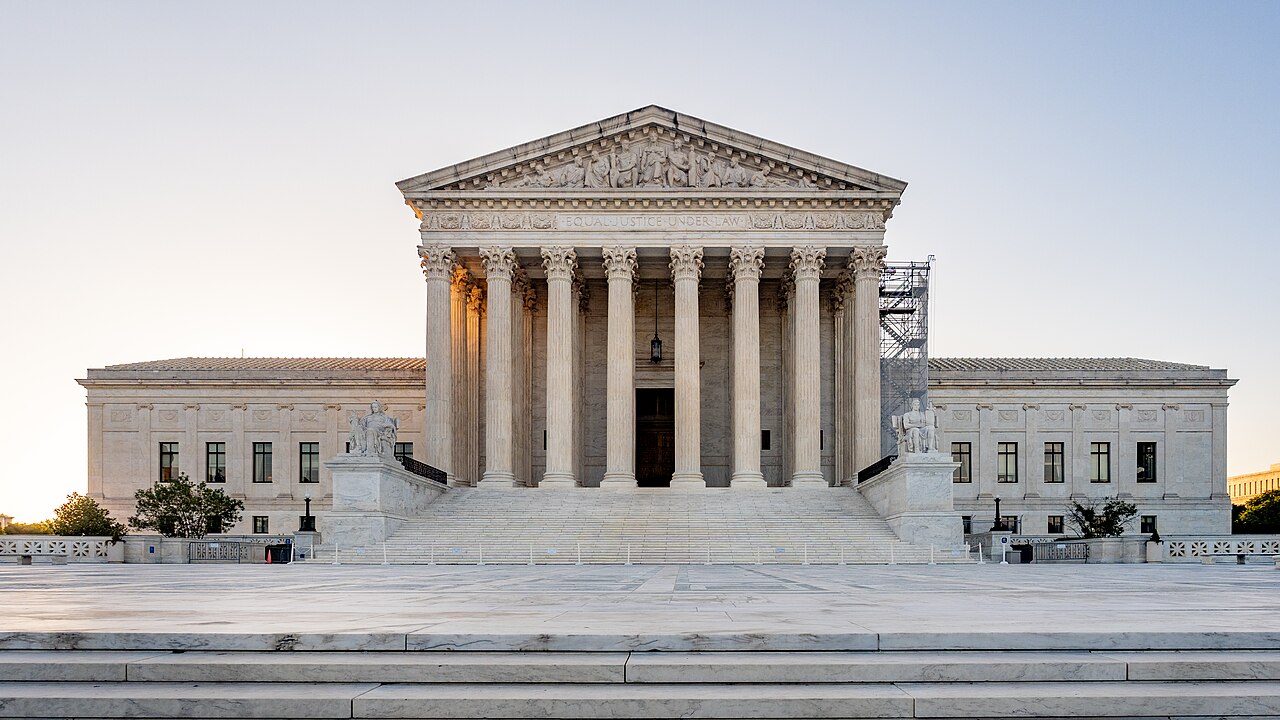
Supreme Court: Lifelong mandate and political nomination
Federal judges, including Supreme Court justice, have a tenure during good behaviour, practically a lifetime mandate. The President nominates and the Senate confirms, so the ideological composition of the court can be influenced for decades by the timing of the vaccination. Moreover, a strong judicial review means that nine judges decide questions with a huge social impact. Europe is also known for its constitutional courts, but it often has time-limited mandates and different nomination mechanisms.
Mass imprisonment and long sentences
The US has an extremely high prison population in absolute numbers and a high level of imprisonment compared to most European democracies. History has influenced war on drugs, mandatory minimums, habitual- offender laws, long sentences and a wide use of pretrial detention. The trend is not static: the number of prisoners has fallen somewhat after the peak and individual states are reforming both sentencing and parole differently. Critics must therefore be based on a specific jurisdiction, not as a single criminal code for the US.
Private prisons: real but minority segment
The privately operated facilities create a legitimate issue of conflict between criminal policy and the profit model. Contracts can create economic incentives to minimise costs and political lobbying exists. At the same time, it is inaccurate to present the US prison system as largely privatized. BJS reported around 91,000 people in private state and federal prisons for 2022, about seven percent of the prison population.
Death penalty in a developed democracy
Federal law and a part of the state still allow the death penalty and the US continues to execute executions. In the Western democratic space, this is a significant distinction from the European Union, where the enbolism of the death penalty is part of a normative identity. American practice is geographically very uneven: a large proportion of countries have abolished or have not executed the sentence in the long term, while several jurisdictions exercise a large part of the execution.
Cash Bail and Criminalization of Poverty Before Judgement
Cash bail can lead to two equally risky accusations having a different fate based on liquidity: the richer is waiting for a trial on the loose, the poorer in custody. Pretrial detention can make the defendant's working, family and procedural position worse and increase pressure on a quick plea deal. Many states and cities therefore try risk- assessment, release on recognition or limitation of cash bail; but reforms are causing public security disputes and predictive algorithms.
Plea bargain: efficiency versus "trial penalty"
The vast majority of US criminal cases are not closed by full jury trial, but by agreement. This allows the system to handle a huge number of cases, but creates asymmetry: the plaintiff can combine more actions and mandator penalties, while the accused faces a risk of significantly higher punishment if he goes to trial. Critics call it a trial penalty. Research on the wrong convitions shows that an innocent person can reasonably accept a bargain in some situations to avoid catastrophic risks.
Civil legal aid is not a universal equivalent of public defender
Gideon v. Wainwright guarantees counsel in relevant criminal matters, but in civil disputes there is no general federal right to a state-paid lawyer. This is important for eviction, child care, debt or immigration procedures where the result may have existential consequences. There are Legal Services Corporation, for bono programs and some local right-to-country initiatives, but coverage is fragmented.
Reentras and Recreation: Penalty does not end in dismissal
After being released from prison, people can face barriers to work, housing, licenses, education and voting rights. These collateral consecences may themselves increase the risk of returning to crime. The US also operates a number of rehabilitation, drugcourt and reentry programs, so the claim "the system is merely repressive" is too absolute. The critical issue is the difference between programmes, their availability and how long formal and informal sanctions remain after conviction.
Youth in the system of adults and extreme punishment
Historically, some American jurisdictions have allowed youths to be transferred to the Adult Court and to impose very long sentences. The Supreme Court decision gradually reduced the death penalty for minors and mandatorily life without parole in some categories, but the possibility of very hard treatment of young offenders has not disappeared. The decisive is the state, age, type of offence and individualisation of the sentence.
Gun violence: high load, but most deaths are not mass gunfire
Firearms play a significant role in American mortality. In 2024, according to CDC / Pew, 44 447 people died from gunshot wounds. Approximately 62% of the deaths accounted for suicides and 35%; mass shootings are socially very visible, but only part of the overall mortality. This also changes prevention policy: measures aimed at domestic violence, suicide crisis, safe storage and traffic are addressed by mechanisms other than school protection or public spaces.
Background checks and gap for some private transfers
Federally licensed dealers must carry out background checks through the NICS; this is true even when they sell on gun shows. The dispute concerns transfers from persons who are not "engaged in the business" as licensed sellers, and different state universals-background-check laws. Moreover, federal rules change over time, and the definition of a dealer of activity is subject to regulation and litigation.
Qualified immunity: a barrier to civil liability, not a criminal immunity
The doctrine of quantified immunity can protect police officers and other public officials from civil compensation, unless the cleared establishment law has been infringed. Critics claim that a demand for a very similar precedent may make it difficult to compensate even in a serious excesses; advocates point out the need to protect officials from personal responsibility for reasonable decisions in a unclear legal environment.
Police training is decentralised and often shorter than in part of Europe
The US doesn't have one national police academy. Thousands of police agencies operate according to state-owned POST standards, local academies and various regime-continuing education. Basic academic training is shorter than several years of vocational training in part of Europe in many jurisdictions. The length itself is not a sufficient quality indicator: the important is the deescalation training, supervision, field training, recertification and accounting.
Homicide rate and social geography of violence
The US has a higher murder rate compared to Western Europe, but the national average hides huge regional differences. Violence is concentrated in certain cities, districts and social networks and is linked to the availability of weapons, gang conflicts, drugs, segregation and socio-economic factors. The international comparison may therefore show the result, but does not explain the very cause.
Non-universal insurance cover and fragmentation of the health system
The US combines employee insurance, Medicare, Medicaid, ACA marketplaces, VA and other programs. The OECD for 2025 states that around 93% of the population - a very large share, but not a universal system - is covered by the basic service package. Fragmentation complicates billing, changes providers' networks and exposes a part of households to high deductibles and out- of-pocket costs.
Medical debt and bankruptcy: a serious problem, but causality is difficult to measure
American households can face high accounts even in insurance, especially due to deductibles, out- of-network care and long-term illness. Medical debt is an empirically important source of financial stress. However, the claim that it is clearly the main cause of personal bankruptcy is methodologically questionable: studies use different definitions of whether a health event was a cause, a contributing factor or just a simultaneous debt.
Drug prices and bargaining power of payers
The US pharmaceutical market has long allowed higher prices for many patented medicines than European systems with more central negotiation and health- technology assessment. In recent years, federal policy has strengthened Medicare negotiations for selected drugs and concrete limits have been introduced on some costs, so the government's claims "do not regulate prices at all" no longer correspond to reality. But the structural difference remains: the US has a pluralistic system of payers and a stronger price fragmentation.
Opioid crisis: pharmaceutical phase, heroin and fentanyl
The American opioid epidemic has gone through more phases. Aggressive marketing and excessive pressure-lowering of some opioids played a significant role in the initial growth of addiction and mortality. However, the later crisis is increasingly associated with illegal fentanyl and its analogues, so reducing the situation today to Purdue Pharma or OxyContin would be historically incomplete. It is a combination of health care, addiction treatment, illegal market, social determinant and enforcement.
Maternity mortality and significant inequalities
The CDC reports a total of 649 monetary deaths and a rate of 17,9 per 100,000 live births for 2024. In Black non-Hispanic women, the rate was 44.8, significantly higher than in White and Hispanic women. It is a serious indicator for a rich country, but an international comparison of maternal mortality may be sensitive to the methodology of registration and definition. Yet the difference within the US shows that the problem is not only a statistical convention, but also inequality in risk and access to care.
Life expectancy: high spending, weaker population result
OECD Health at and Glance 2025 lists the expected life expectancy in the USA 78.4 years, 2.7 years less than the OECD average. At the same time, the US spends USD 14.885 per person on health care against the OECD average of 5.967 and 17.2% of GDP against 9.3%. This is one of the strongest structural paradoxes in the American model: top clinics and technologies coexist with worse population outcomes.
Infant mortality and differences between groups
Infant mortality is a sensitive indicator of prenatal care, maternal health, premature births, socio-economic conditions and statistical classification. The US has lagged behind many Western European countries in the long run. In addition to the national average, internal inequality by race, income and region is important. But the simple story of "American hospitals are wrong" would be wrong: part of the difference arises before birth itself and is related to a wider social policy.
Paid parental leave without universal federal guarantee
The Federal FMLA provides authorised personnel with a Job-Protected leave, but it is generally unpaid leave. Paid family and parental leave is a combination of emptier benefits and national programmes. Compared to the European model of statutory paid parental leave, this is a significant difference in who carries the risk of having a child - family, employer, state or social insurance.
Paid leave: benefit, not federal minimum
The Federal Fair Labor Standards Act generally does not require paid leave. Vacation / CTU is therefore often part of a job contract or employee benefit. European labour legislation, on the contrary, usually provides for a legal minimum of paid leave. The difference illustrates a wider philosophy: the US more often leaves market conditions and employers, the EU codifies them more often as social law.
Paid for sickness: federal gap, state mosaic
The Ministry of Labour explicitly states that there is no general federal law guaranteeing paid sick leave. Many states and municipalities have introduced such a right and many employers provide them voluntarily. However, low-income and precarious positions may remain without it. From a public health perspective, it is an external problem: an employee without paid sickness benefits has a greater incentive to go to work sick.
At-will employment and weaker protection against depositions
In much of the US, the default of at- will employment is: employment can be terminated by both employee and employer without prior just cause, unless it is illegal discrimination, retaliation, breach of contract or other exception. For European readers used to give notice, deadlines and severance payments, this is significantly more flexible and for employees a less secure model.
Tipped wage and transfer of wage liability to the customer
The Federal regime allows for a basic cash wage of USD 2.13 / hour for tipped employees if the tips and wages together reach at least a federal minimum; the employer must pay any difference. Many countries set higher minima or tip credit does not use. The tipping culture is not just a custom, but it is partly integrated into labour law and service pricing.
Income and property inequality
The US has high income and wealth inequality compared to a number of European social states. They decide on pre-tax market revenues, tax progression, transfers, health and education costs, property ownership and financial assets. For internationalist criticism, it is important not to confuse inequality with poverty: a rich country can have a high median income and at the same time a large difference in household safety.
Student debt as a system entry into adulthood
The Federal student loan portfolio in September 2026 included 42.3 million recipients and over 1.7 trillion USD outstanding loans. This shows the extent, not automatically the individual tragedy of each debtor: the return on education varies according to school, field and completion of study. Structural criticism is aimed at a model in which a significant part of the funding of tertiary education passes directly to households and long-term personal debt.
School funding and the role of property taxes
The US K-12 public schools combine federal, state and local funding. The NCES report 12.9% of federal, 45.1% of national and 42.0% of local income for the school year 2022-23; the property taxes themselves accounted for 33.2% of total revenue. It is therefore true that local property tax can reproduce geographical inequality, but it is not true that schools are financed solely by property taxes. Many states use redistribution formulas.
Pre-school care: patchwork instead of universal entitlement
The US has not had a single national claim to free preschool since the age of three. There are Head Start, state pre-K, school districts and local universal programs, but availability varies according to the place, income and age of the child. In the European comparison, there is a difference between whether children care and early education act as public infrastructure or as a market supplemented by targeted subsidies.
Automotive dependence and public transport
After World War II, interstate highways, suburbanisation, zoning and cheap land underpinned urbanism with high car dependence. New York, Chicago, Washington, Boston, San Francisco and other regions have significant transit infrastructure, but in many metropolitan areas, normal life without a car is difficult. The impact is not just traffic: parking minimums, distances and low density affect housing, public space and social contact.
High-speed rail: missing network, not zero ambition
The US does not have a national network of high-speed lines comparable to France, Japan or China. Northeast Corridor offers faster interurban transport, but infrastructure is mixed and historic. California High- Speed Rail is under construction and other projects are being created. So the critical argument is not that the US has never built a fast train, but that the country of its size and wealth has not yet created an interoperable high-speed network.
Roads and bridges: big property, big maintenance backlog
The American road network is huge, and a large part of the infrastructure comes from the postwar decades. Official bridge inspection uses the category good / fair / poor, not the popular abbreviation "thousands of bridges are critically dangerous." The crucial problem is the life cycle: it is cheaper to politically open a new object than to finance invisible maintenance until backlog becomes expensive.
Waste, disposable plastics and fragmented recycling policy
The US has a high consumption of materials and municipal waste per capita, while recycling policy is largely state and local. The European Union is more frequent in using a producer of responsiveness, more uniform objectives and regulation of packaging. However, the recycling rate itself is not a complete ecological indicator: landfill methane, energy recovery, waste export, material intensity and actual quality of recycled streams are important.
Metric system: legally preferred, socially not fully accepted
The US is known for its daily use of Miles, Feet, Pounds and Fahrenheit, but the Internet formulation "one of three countries that officially do not use metrics" is flawed. NIST states that Congress in 1988 has identified the metric system as a preferred system for trade and federal agencies are to use it where feasible. U.S. In addition, customary units are defined by SI.
Homeless and unavailable housing
HUD counted a total of 771 480 people experiencing homelessness at one night, of which approximately 274 thousand unsheltered. PIT count is not the annual number of people who lose their housing during the year, but standardized snapshot. The crisis is particularly visible in expensive coastal regions, where high rents, low vacancy, mental health, addiction, lack of support housing and local restrictions on new construction are combined.
Loneliness, suburbanisation and "third places"
Social isolation has many causes: long-distance work, digital media, ageing, family structure, housing costs and urban planning. Car-dependent suburb can increase the distance between everyday activities and reduce the amount of accidental social interactions, but causality cannot be reduced to a car. The concept of third places - cafes, libraries, clubs, parks - is useful for analysing how public space supports social capital.
Tax returns and administrative complexity
The American income-tax file has long created a large market for commercial tax software. Critics point out that the government already has some income data and could offer pre-filled return in simpler households, like some European countries. At the same time, the US tax system has many deductions, credits, gig income and family situations that complicate a completely automatic confession. The IRS has been expanding free filing options in recent years.
Advertising of prescription drugs directly to patients
The US belongs to a very small group of countries where broad direct-to-consumer advertising prescription drugs is legal. The FDA regulates fair balance, risk information and deceptive claims and announced in 2025 a harder approach against misleading advertising. Critics argue that advancing medication will increase demand and pressure on prescribers; advocates argue the awareness of patients and awarness of untreated states.
Obesity as a result of the environment, not the only ingredient
The OECD reports a self-reported obesity prevalence in the US of 35% compared to the OECD average of 19%. The reasons include energy-dense diet, portion size, marketing, urban planning, active transport, working mode, reception, sleep and genetic predisposition. High- fructose corn syrup is part of American food history, but making it the only cause would be scientifically untenable.
Payday loans and short-term liquidity price
Short-term payday loans can convert a small cash emergency into a very expensive revolving debt. The FTC provides examples of fees that can be equivalent to 100 per cent of APR when converted into an annual rate. The market is heavily regulated by individual states: somewhere loans are banned or capped, elsewhere available. From an internationalist social perspective, it is crucial whether a low-income household has a cheaper emergency alternative.
Selective multilateralism and high constitutional barrier to treaties
The American Constitution requires the approval of two-thirds of the senators present for formal Article II. In a polarized environment, it is a high barrier, which helps explain why Washington often works with executive agreements, statutory regimes and political commitments. From an internationalist perspective, tensions arise between the US role in creating global rules and domestic reluctance to transfer some of the decision-making authority to international institutions.
Global military projections and a network of foreign bases
The Congress Research Service in 2024 identified at least 128 American overseas bases or other territorial-bound military sites in at least 51 countries: 68 persistent bases and 60 other selected sites. The scope is quite different from that of current Russia or China. This supports US criticism as a truly global military power whose strength is not tied to immediate neighbourhood alone.
Unequal representation of the Senate population
Each state has two senators regardless of the population. Both California and Wyoming have the same number of Senate votes, even though they represent a dramatically different population. This structure was a conscious federal compromise in the constitution and protects the political weight of small states. However, in terms of the "one person, one vote" principle, it creates structural inequality in how many people are per senator. Since the Senate confirms judges, ministers and approves contracts, the disproportion is also spilling beyond ordinary legislation.
Filibuster and factual supermajority for ordinary legislation
Senate rules allow for blocking or extending legislation so that most proposals require a clout, usually a three-fifths majority, 60 senators, to end the debate. Filibuster is not directly written in the Constitution; it is about the development of Senate rules. Historically, it was used for various purposes, including blocking civil law. In the modern Senate, there is no need to speak on the plenary: the threat of unreaching the clote itself can prevent the final vote.
Ballot access: the candidacy is not administratively unified
The rules on how a candidate or political party gets on the ballot are largely state-owned. The requirements for signatures, deadlines, party registration and primary choices differ. The large parties have institutionalised structures, while smaller parties and independent candidates have to fulfil different procedures in each State. The result is not a legal ban on third parties, but a high transaction price for national candidacy.
Felons disenfranchisement and voting right after conviction
In many states, felons can be sentenced temporarily or for the long term to restrict voting rights. The schemes differ: somewhere the rights are renewed after the release, elsewhere after the completion of the terms and conditions or payment of the commitments, and in some cases an individual request is required. The impact is politically significant precisely because the US prison population is numerous and criminal policy has significant regional and demographic differences.
Low confidence in the federal government as a long-term institutional problem
Pew states that in September 2025 only 17% of Americans said that they trusted the federal government "always" or "most of the time," whereas in 1958 it was 73%. Trust varies depending on which party controls the White House, but the long-term trend shows deeper erosion than the usual rotation of administrations. Low confidence complicates the implementation of large public projects, crisis communication and the willingness to accept compromises.
Lobbing as a formalised approach to the legislative process
Federal lobbying is legal and subject to the Lobbing Discreure Act. The Senate operates a public database of registrations and quarterly activities. The system thus admits that companies, trade unions, non-profit organisations, professional associations and advocacy groups will actively influence legislation. The critical issue lies not in the existence of lobbying itself, but in the inequality of resources: an organisation capable of long-term funding for lawyers, policy staff and professional lobbyists have easier access to the process than a normal individual.
Revolving door between state and regulated sectors
The transfers of senior officials, congressional staff, military officers or regulators to the private sector may transfer expertise, but also create a risk of conflict of interest. Federal ethical rules include post-employment restrictions and cooling- off restrictions for selected categories of employees. Critics focus on situations where future careers can influence current decision-making or when former officials monetize contacts and knowledge of procedures.
Extremely expensive federal election cycles
The FEC states that in the 2023-2024 cycle, presidential candidates have selected around USD 2.0 billion, candidates for Congress 3.8 billion, parties 2.7 billion and PACs 15.7 billion. The separately reported independent expenses amounted to around USD 4.4 billion. These amounts do not mean that the donor can "buy a voice" policy, but illustrate the extent of the financial infrastructure needed for a modern national campaign.
Federal judicial capacity lags behind the growth of some agendas
In 2025, the Federal Justice asked Congress for 71 new Article III Judgeships. It stated that since 1990 the filings at district courts have grown by about 30%, while the number of authorized district Judgeships has only increased by a few percent. Long wait increases the costs of the parties and can, in civil matters, weaken access to justice.
Civil asset forfeiture and separation of property since criminal judgment
Civil forfeiture allows the State to seize property related to criminal activity in certain situations, even if legal proceedings may be conducted against the property itself and may not always prevent the owner from being convicted of criminal offences. The Ministry of Justice publishes financial reports of Asset Forfeiture Programme annually. The proponents consider the tool a way to take back proceeds from criminal networks; critics point out the due process of risk and cost of the owner in recovering the property.
Binding to the court: most people in local jails are not convicted
The Bureau of Justice Statistics states that in mid-2024, 68% of the people in the local jail were unconvicted. This does not mean that they are all held only because they do not have bail money; part of it is held for security, immigration or procedural reasons. Yet the share shows how important the pretrial detention in the US system is and why conditions before the trial may affect the employment, family and negotiating position of the accused.
Mandators minimums and limitations on judicial individualisation of punishment
The compulsory minimum rates set a criminal threshold which a judge cannot normally go under in a particular case unless the statutory exceptions are met. The advocates argue with consistency and deterrence; critics argue that a fixed minimum shifts power towards the plaintiff, because the choice of the charges may fundamentally change the expected penalty and thus the pressure on plea bargain.
Public defence and capacity problem
The constitutional right to defence counsel in criminal matters is of no importance in itself, unless public defenders have enough time for a client, an investigation and a preparation. The American indigent-defense system is decentralised: somewhere there are state public defender offices, elsewhere the country systems or the targeted counsel. Different funding can create a fundamentally different quality of defence by location.
Prison work and a 13-year-old exception. Appendix
13. The amendment prohibits slavery and involuntary servitude, but contains an exception for punishment for a crime after a proper conviction. Prison work therefore remains part of the US penal system and can take the form of maintenance of facilities, state industrial programs and work programs outside the prison. The defenders stress the working experience and structure of the day; critics of very low remuneration and limited bargaining power for prisoners.
Police militarization and program 1033
The LESO / 1033 programme allows the transfer of surplus military assets to federal, state and local police authorities. The Defense Logistics Agency reported around 6,500 agencies involved in July 2026. Equipment may include common logistics and military material. Critics see the risk of militarisation of police culture; advocates point out the use of vehicles and equipment in disasters, rescue or high-risk interventions.
Hate crimes: high number of reported incidents and measurement problem
The FBI has been working with reports from 16419 agencies covering 95.1% of the population and registered 11 679 bias- motivated criminal incidents. In a comparable trend dataset, a decrease of 1,5% between 2023 and 2024. Statistics are important, but only capture crimes reported to the police and correctly classified as bias- motivated.
Absence of a single federal general privacy law
American privacy law is sectorial and layered. There are rules on health data, the financial sector, children's data, communication and specific types of consumer practices; several countries have adopted their own more comprehensive privacy laws. However, unlike GDPR, there was no federal general framework for every consumer to grant the same package of rights, regardless of the state and industry.
Data brokers and trade in sensitive behavioural data
The FTC described in its cases and studies a market in which intermediaries can aggregate the exact location, browsing history, purchasing behaviour and derived characteristics. Data can serve advertising, analytics and price personalisation. The critical problem is information asymmetry: the consumer often does not know how many of the subjects process their data further and what profiles they produce.
Surveillance pricing and individualised prices
In 2025, FTC published initial findings of the surveillance pricing study: tools can work with location, demography, browser history, shopping behavior and even user interactions on the site. Technically, personalisation can mean a discount and a higher price. The internationalist question is wider: whether the digital market remains transparent when two customers do not see the same offer and do not know why price is different.
Facial recognition in police and delayed rules
The GAO found that seven federal law-enforcement agencies examined used facial recognition in the investigation and all initially used services without compulsory specialised training; they were required by two by April 2023. GAO also pointed out the lack or insufficiently specific rules of civil rights and civil liberties protection. So technology has outdone some of the institutional procedures.
The digital divide has not disappeared even with high Internet penetration
Census QuickFacts states that in the period 2020-2024, approximately 91% of American households had a broadcast subscription. This means high coverage, but also millions of households outside the standard broadcast subscript. Moreover, accessibility is not the same as afffordability, speed, stability and digital literacy - particularly in rural and low-income regions.
The Federal Minimum Wage remains USD 7.25
The federal minimum remains USD 7.25 per hour, while most states use higher rates and some city jurisdictions even higher. In July 2026, states had rates from federal level to over $18 in Washington, D.C. Therefore, the federal value in a part of the country acts as a legal floor rather than as a real market rate.
Decrease in trade union organisation
The BLS reports a union member ship rate of 10,0% in 2025, while in 1983, the first comparable year of the series, it was 20,1%. Organisations in the public sector are significantly higher than in the private sector. The unions can increase the bargaining power of workers, but critics draw attention to possible rigidity, political influence or employers' costs.
Gender earnings gap persists even with the growth in women's income
The BLS states that in 2025, the median weekly earnings of women of USD 1 089, 82.1% of the median of men of USD 1 326. It's an uncontrolled median, not "equal pay for identical work." Part of the difference is related to occupation, seniority, working hours and career interruption; another part is subject to research into discrimination and structural barriers.
Child care as a cargo of work and family life
The 2026 census study found that 23.9% of children's households under 13 paid for children in 2024 and between paying households was USD 10.520 per year. On average, households that had a problem with care lost tens of working days. The impact is significantly unequal: higher incomes are easier to use on paid leave, low-income households are more often limited to labour market participation.
Official and complementary poverty show different realities
The census for 2025 lists official poverty rate 10,2% and the Supplementary Poverty Measure 13,1%. The difference arises from the methodology: SPM accounts for taxes, transfers, regional housing costs, work expenses and medical expenses. Social Security, according to the same report, has driven 28,8 million people out of poverty in SPM. At the same time, data show the importance of social programmes and the high sensitivity of the result to housing and health costs.
Employer as main gateway to health insurance
In 2025, Census states that the employee-based insurance was the most common type of health cover and covered 53.5% of the population for part or whole year. For many workers, health insurance is therefore linked to a job and changing it can mean changing the network, complicit and administration. This model was developed historically and is very different from systems where the basic cover is not derived from the employer.
The administrative complexity of America's health care
Fragmentation between employer plans, Medicare, Medicaid, marketplaces, VA and individual networks creates a high administrative burden for patients and providers. Billing codes, prior authorisation, deductibles, formularies and network status can decide on the final costs. The complexity is partly the price of the pluralism of the payers and the choice, but it also consumes resources that do not create health care itself.
Unavailable mental health care despite high need
SAMHSA estimated that 61,5 million adult animals had mental illness in 2024. Of these, 29.5 million did not receive mental health treatment in a given year; 6.1 million of them perceived the unfulfilled need for care. Among people with perceived need were frequent barriers to price, insurance and difficult search for a suitable expert.
Rural Hospital and Geographical Inequality Access
HRSA reports that 152 rural hospitals were closed between 2010 and 2025, 52 of which were Critical Access Hospital. The hospital's closure may extend the range to urgent, obstetrician or inpatient care and weaken the local economy. Federal programs seek to promote financial stability, workforce and telehealth, but small patient volumes and staff shortages remain a structural problem.
Reproductive care is strongly geographically uneven after the US
After the Dobbs decision, the legal regime of abortion has moved more significantly to the state level. The result is a map of very different rules, gestational limits, exclusions and availability of providers. This can make the patient's home, travel and funding a decisive place of residence. From a federal point of view, this is a significant example of how decentralisation transmits one health service into different legal regimes.
Housing cost burden affects approximately half of rental households
Census found that in 2023 over 21 million renter households spent more than 30% of income on housing costs, i.e. 49.7% of households for which the burden was counted. The national average hides significant differences according to the city, state, income and demography. The cost crisis is not just a matter of "high rents": it is linked to supply, interest rates, zoning, construction costs and income growth.
Growth in the cost of ownership of housing and insurance
Census states that median monthly costs for mortgage households increased in 2024 to USD 2,035 from USD 1,960 inflation adjusted in 2023. The costs affect mortgages, taxes, utilities, insurance and HOA fees. In some countries, insurance is becoming an important part of the affinity of disaster risks and market changes.
Zoning and limitation of housing supply
American land-use regulation is mostly local. Single- family zoning, minimum size of plot, parking requirements, high limits and complex authorisation can protect the character of neighborhoods, but also limit the amount of new construction in places with high demand. The economic consequence is reflected in prices, commuting and segregation by income.
Transport safety: drop does not mean solved problem
NHTSA has provisionally estimated around 36640 deaths on US roads for 2025 and rate 1,10 per 100 million vehicles travelled. This was a significant improvement against the previous years. Nevertheless, road mortality remains an important part of public health and is linked to the speed, size of vehicles, the design of communications, alcohol, belts and pedestrian infrastructure.
Bridges: the maintenance problem is measurable, but "poor" does not mean immediate collapse
Federal Highway Administration at National Bridge Inventory classifies bridges as good, fair or poor every year. In some countries there are thousands of constructions in fair and hundreds or more in poor condition. The category is an asset management and investment planning tool. The critical infrastructure is the strongest when it works with this technical classification, not with headlines about "dangerous bridges" without explanation.
Lead connections as an inheritance of old infrastructure
CEPOL estimates around 9 million lead service lines, which still link water lines to buildings. Federal rules banned new lead connections by the time they were 80. years, but the change of old infrastructure is slow and costly. The risk is particularly sensitive in children, as there is no safe level of exposure to lead for the development of the nervous system.
Energy superpower and climate contradiction
The EIA states that the US was once again the world's largest oil producer in 2025, with record average production of 13.6 million barrels per day, while record-high gas production. At the same time, renewable energy production has also increased. This creates a characteristic American paradox: technological leadership in clean energy exists alongside record fossil fuel production.
Environmental load is spatial uneven
Industrial operations, motorways, landfills and older housing stock are not evenly distributed. Environmental justice therefore examines whether low-income and historically marginalised communities bear disproportionately high pollution exposure and climate risks. In the US, this framework appeared in EPA policy, state programs, and litigation.
Algorimetric decision-making moves discrimination to the technical layer
Credit scoring, Hiring tools, insurance analytics, ad targeting and automated decision systems can use variables that are not explicitly protected by a character but strongly correlate with income, location or demography. The advantage of automation can be consistency and scalability; the risk of opacity and difficult attack of the result. American regulation is divided between sectoral laws, FTC, civil-rights enforcement and state regulations.
The United States is not a Contracting Party to the ICC Rome Statute
The US has signed the Rome Statute, but it has not ratified and are not State Party of the International Criminal Court. In various administrations, the relationship with the ICC has been moving from pragmatic cooperation to open conflict. From an internationalist perspective, this creates a clear problem of reciprocity: Washington supports international criminal responsibility in a number of cases, but has not underpinned its own citizens to the same contractual regime.
War Powers: The line between the President and Congress remains questionable
The 1973 War Powers Resolution was intended to ensure the joint judgement of Congress and the President in the deployment of armed forces to the hosts. But practical history shows a lasting dispute over the scope of the presidential Article II authority, the definition of "hosts" and when new authorisation is needed. CRS also analysed operations in 2025-2026 where members of Congress questioned whether the executive was acting without a sufficient mandate.
AUMF 2001 as long-term legal infrastructure of the war on terrorism
Authorization for Use of Military Force accepted after attacks 11. On September 2001, it was formulated against persons, organisations and States responsible for attacks or their support. The subsequent administrations used it as a legal basis for operations against al-Qaeda and associated forces outside Afghanistan, for example in Yemen, Somalia and Syria. Critics see this as delegating an excessively open war mandate; advocates need to respond flexibly to the transnastic network.
USA as a dominant arms exporter
SIPRI states that the US share of major arms global exports has increased from 36% to 42% between 2016- 20 and 2021- 25. The US export system is part of alliances, interoperability and industrial policy, but it also creates long-term dependency on spare parts, ammunition, training and political consent from Washington.
A dollar as a financial infrastructure of geopolitical power
IMF states that the US dollar accounted for around 56.8% of the allocated foreign reserves at the end of 2025, significantly more than the euro or renminbi. Dollar dominance, US banking ties and Treasura roles give Washington an exceptional ability to use financial sanctions and restrict access to transactions. This power is cheaper than military operations, but it can have broad economic externalities for affected states.
Foreign aid: high absolute volume, low income and sharp decline
The OECD states that the US was the second largest provider of official development assistance in absolute dollars with around USD 29 billion in 2025. At the same time, the US ODA decreased by 56.9% year-on-year, which, according to the OECD, accounted for three quarters of the total DAC assistance decline. The absolute size of the US economy means that the order by dollars and by share of GNI tells a very different story.
Foreign bases are not just a number - legal status and host relationship
Two dots on the map can mean fundamentally different things: an exclusively operated base, a host base with access, a rotational presence, joint center or logistical law. America's global network is an extraordinary range, but much of it is based on contracts with allies, not on occupied territory. Elsewhere, the presence is politically questionable or linked to unrecognised territories.
Alliance can reduce and increase security dilemma
American security treaties with European and Asian allies reduce their need to build independent nuclear or expedition capacities and may discourage attack. However, from the point of view of the rival, the expansion of infrastructure, the exacerbations and interoperability can act as a siege. The same base can thus be a means of ensuring that the host State and the third State are the source of the threat perception.
Taj-wan shows conflict between self-determination, status quo and strategic ambiguity
The security of Taiwan is linked to several layers at once: Beijing's claim to unity of China, the democratic political system of the island, the American commitments under the Taiwan Relations Act, strategic ambiguity and key status of semiconductor supply chain. Every step - military exercises, arms sale, diplomatic visit or change of rhetoric - can be understood as status quo and other as a breach of the status quo.
Great-power competition limits the scope of internationalism
The US and China are deeply interconnected and are competing for technology, standards, military position and political influence. Export controls, industrial policy and de- risk shift part of the economy from universal globalization to a more blocked arrangement. The internationalist problem is that global challenges - climate, pandemic, AI safety or financial stability - require cooperation between the countries that have the greatest incentive to limit each other.
How individual mechanisms interconnect
A hundred areas are not a list of hundreds of isolated failures. These are the four structural mechanisms. Federalism allows for experiment and regional autonomy, but may mean very different rights and public services by state. Market supply of part of public goods promote choice and innovation, but at the same time it transfers part of the risk of health, education, housing or household care. Strong veto points it protects the stability of the system and the political minority, but it can block change even with broad support. Global Projection of Power It provides security guarantees to allies and Washington with an extraordinary ability to act, but it also opens up questions of reciprocity, jurisdiction and the use of force far from its own territory.
The internationalist aspect here does not mean the idealization of the EU, Russia, China or any other state. The comparative question is more specific: how general and reciprocal the rules are, how collective the social costs are and how foreign power is subordinate to predictable multilateral rules.
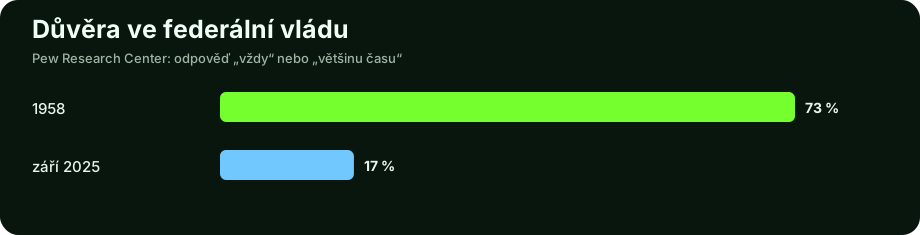
Pew Research Center: General confidence in the federal government has declined significantly between 1958 and September 2025.
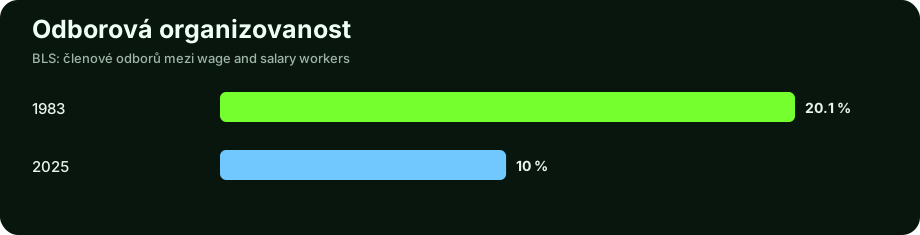
BLS: the membership rate was 20.1% in 1983 and 10.0% in 2025.
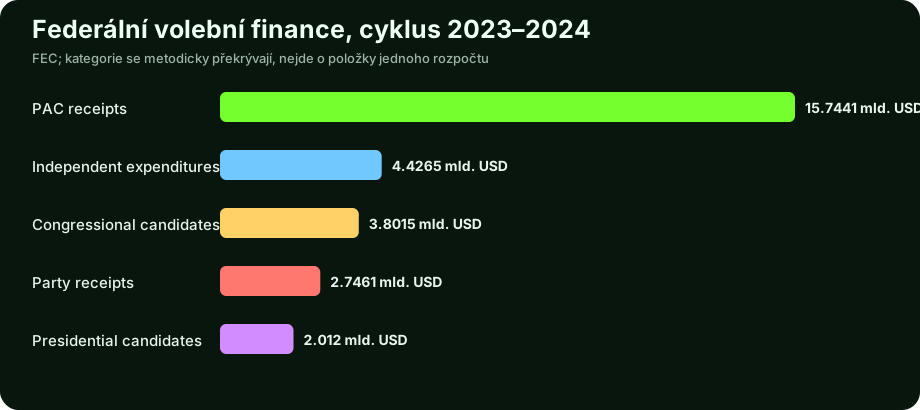
FEC: federal financial infrastructure reaches billions of volumes; the chart categories overlap partially, and therefore cannot be added to one "total budget."
Data cuts: what amplifies criticism and complicates it
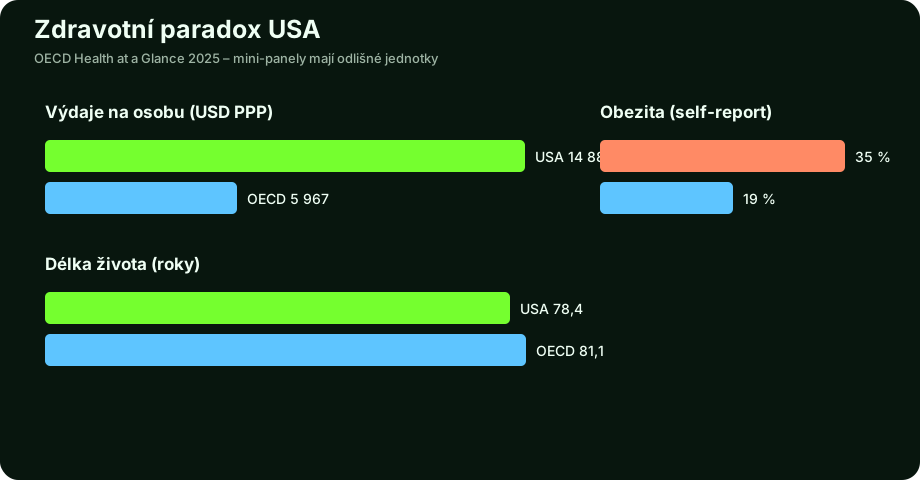
The US spends a lot more on health care, but life expectancy is lower. The OECD also mentions areas where the US has above-average technology availability and some clinical results. Source: OECD Health at a Glance 2025.
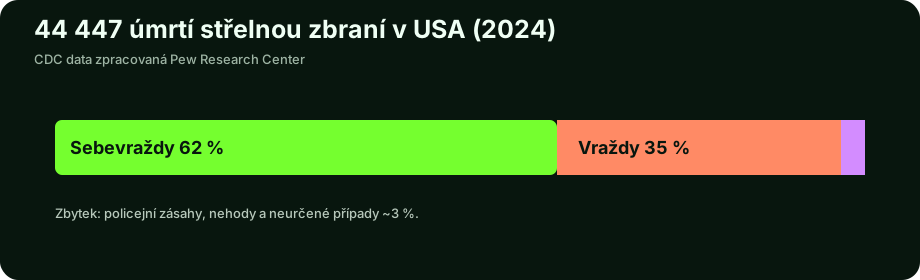
The source is the CDC, here via the Pew Research Center data analysis. The structure shows why the topic of mass missiles itself does not explain most of the fire trucks.
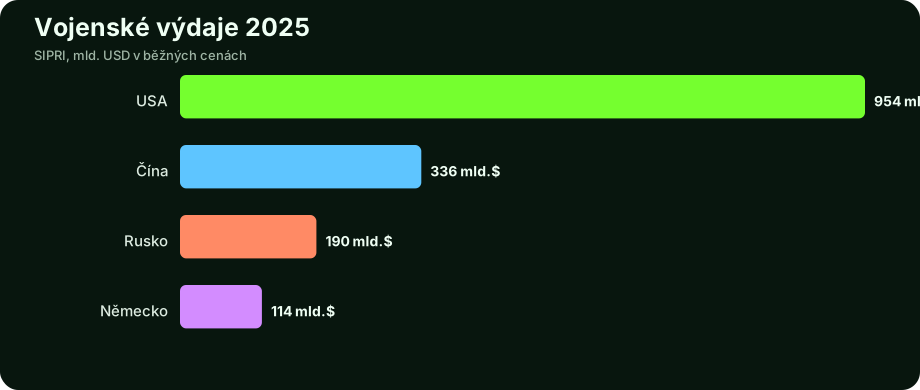
SIPRI presents 954 billion US for 2025. USD, China 336 billion Russia, 190 billion USD. At the same time, Russia has a significantly higher military burden as a share of GDP. SIPRI Yearbook 2026.
The US and the EU: not "good against evil," but two different institutional logic
The US and the European Union represent two distinct institutional traditions, but a simple division into American unilateralism and European multilateralism would be misleading. The European States use sanctions, military missions, NATO, export controls and sometimes strength; the US is also the founder and main supporter of a number of multilateral institutions. The difference is more in the degree of willingness to share sovereignty and the ratio between legal and institutional and military power.
| Zone | USA | EU / European model | Critical remark |
|---|---|---|---|
| Constitutional structure | A Federation with a very old constitution, strong checks and balances, presidential system. | Suprationary Union of States; a combination of national institutes and EU treaties. | The EU is slower and fragmented; the US can act more effectively. |
| Social risks | Greater role of employer, market and state; less universal federal claims. | More extensive legal minimum of leave, health and social coverage. | The European model has higher tax and fiscal costs and is facing demographic challenges. |
| Work | Flexible hiking / firing; weaker federal minimum leave. | Stronger employment protection and legal claims. | Flexibility may promote dynamics, but it shifts the risk to the worker. |
| International law | Strong domestic sovereignty tradition; Article II treats require 2 / 3 of the senators present. | Integration is based itself on sharing competences and transnational law. | The EU is not an absolute multilateralist and Member States have their own geopolitical interests. |
| Hard power | Global network of bases, strategic transportation, fleets, nuclear triads. | High aggregate capacity but fragmented; hard security significantly linked to NATO. | European dependence on the US itself is a restriction of European strategic autonomy. |
| Power of regulation | Technological sanctions, dollar system, extra-territorial enforcement. | "Brussels effect '- market size and GDPR standards, competition, product rules. | Both models can use the rules as a tool for geopolitical power. |
Global military projection: what makes the American model truly special
Russia and China are not military "just home." Russia intervened in Syria, using Tartous and Hmeimi, holding forces in Transnistria and bases in Central Asia; waging a large war against neighbouring Ukraine, and using partnerships and contractors in Africa. China has been formally granted its base in Djibouti since 2017, a joint facility in the Ream of Cambodia opened in 2025 and a new military presence in Laos was established in 2026.
The difference is nevertheless essential in scale and global range. CRS identified 128 American persistent / selected sites in at least 51 countries. This network covers Europe, the Indo-Pacific, the Middle East, Africa and Latin America, and is linked to strategic air and maritime transport, intelligence, prepositised stocks and alliance structures. The US is therefore able to conduct long-term operations thousands of kilometres from its own territory in a way that Russia and China today cannot reproduce on a global scale.
To criticise an internationalist, controversy is twofold. Network can to discourage the attack on the allies and to allow a rapid humanitarian or security response; but at the same time reduces the logistical and political costs of military intervention far from US territory. The base is not in itself proof of imperialism or peace - it is an infrastructure that expands the available set of power tools.
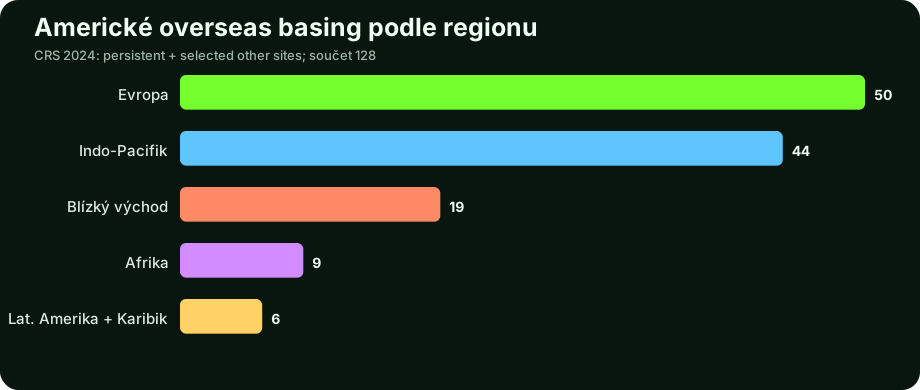
CRS 2024: 68 persistent bases + 60 selected other sites. The methodology does not cover each temporary continuity site and is not directly comparable to any other list of States.
Interactive historical map of foreign bases, occupation and temporary deployment, 1776- 2026
The map is collection and analysis, not a complete inventory. The timeline starts in 1776 and distinguishes between permanent bases, host facilities, access agreements, occupation and short war or expedition deployment. It includes representative points of the US, the United Kingdom, France, Russia and the Soviet Union, Japan, Italy and China; historical records cannot therefore be read as accurate numerical comparisons of powers. Coordinates only indicate a publicly known general location.
Active points in the selected year: 0
Map background © OpenStreetMap contributors. Click on the item to display the status and source. For disputed territories, the description does not imply recognition of sovereignty.
Map Data Table
| Operator | Place | Guest / territory | Period | Type | Source |
|---|
American excectionalism, hegemony and military-industrial complex
American exception is not a unified doctrine of the state apparatus, but a long family of ideas about the exceptional American constitutional experiment, its universal mission and its specific role in the world. It can take a liberal form - promoting democracy, open institutions and the Alliance Order - and the power form in which US security interests present themselves as an interest of the international community. Critical analysis monitors the moment when universalist language and national privilege are in conflict.
Military industrial complex is a real incentive problem: defense contractors have an economic interest in long-term contracts, employment is geographically distributed into many constituencies and revolving door can connect the state, army and industry. But it is exaggerated to say that peace would destroy the American economy or that the gunmen themselves are causing war. The US economy is much wider than defense industry and foreign policy are forming alliance commitments, triple perception, bureaucracy, president, Congress, and public opinion.
A stronger critical argument is institutional: if the state invests in the long term in the unrivalled ability to design power, it creates at the same time option value Military solutions. This does not mean that it will automatically use them - it means that military capabilities are faster, logistically more achievable and politically more imaginable than those of a state without global infrastructure.
USA-China and "Thoukidid's Trap": a useful metaphor, not a historic law
Graham Allison has popularized the concept of Thucydides Trap for a situation where a growing power challenges the established. His project often lists a set of 16 historical cases, 12 of which ended in war. This is provocative heuristics, not statistical natural law: the choice of cases, the definition of ruling and growing powers, and causality itself, are the subject of academic criticism.
For the relationship of the US-China is still a useful model because it highlights the security dilemma. What one party calls deterrence, the other can read as a siege; what Beijing considers a restoration of historical status may be perceived by neighbors as revisionism. Export chip controls can be economic security for Washington and Beijing's policy of containment. Each next step then creates a domestic argument for the opposing party's step.
Taj@-@ wan and "silicon shield"
Concept silicon shield is based on the extraordinary concentration of the most advanced production finder in Taiwan, in particular for TSMC. Global technological chains - smartphones, AI accelerators, data centres and a number of defence systems - depend on Taiwanese production and suppliers from the USA, Japan and Europe. This interdependence can increase the price of conflict for all parties.
But it is exaggerated to describe TSMC as a simple monopoly tap that China would take over after the cast. Modern fab is dependent on software, service, lithography, chemicals, know- how, energy and global labor. War or blockade would probably undermine the very ability to continue production. That is why the US, the EU, Japan, and other states support geographical diversification semicidator capacity.


At the same time, CHIPS policy shows the dual logic of internationalism and geoeconomics: allies want an open technological ecosystem, but at the same time they reduce strategic dependence and restrict exports of the most sensitive technologies to China. So globalization does not change in autarkia, but in selectively-managed connections.
How to reduce the risk of the Grand Power War: four analytical scenarios
1. Controlled strategic competition
Regular military hotlines, rules on incidents of ships and aircraft, communications on nuclear doctrine and the definition of areas where rivalry must not be poured into direct escalation. Competition would continue in technology, trade and influence, but with guardrails against random war.
2. Compartmentalisation
States can compete in semicolons while cooperating on pandemic surveillance, nuclear safety, climate science or minimum rules for AI. The advantage is that cooperation is not conditional on overall reconciliation. A weakness is the possibility that the crisis in one area will block all others.
3. Stable deterrence without maximism
Removal may be more stable if both sides believe that the opponent does not seek their complete strategic defeat. This requires a combination of defence capacity and vulnerability limitation, not automatically acceptance of formal spheres of influence that would deny the agencies of smaller states.
4. Economic interdependence with critical addiction management
Full decoupling can eliminate the economic costs of the conflict while creating a block economy. On the contrary, uncritical dependence on a single supplier creates a coercive leverage. The middle way is diversification and de-risking instead of absolute economic separation.
Sources and hyperlink signpost
- Congress Research Service - U.S. Overseas Bassing
- SIPRI Yearbook 2026 - Military expenditure 2025
- OECD - Health at a Glance 2025: United States
- CDC / NCHS - Maternalty Mortality Rates in the United States, 2024
- Pew / CDC - gun deaths in the United States
- FEC - Citizens United v Council FEC
- FEC - Contributions to Super PACs and Hybrid PACs
- U.S. Senate - Treaty-making power
- Federal Student Aid - Federal loan portfolio, September 2026
- NCES - public school revenue sources 2022 -23
- HUD - 2024 Annual Homeless Assessment Report
- NIST - Measurement in Law
- CSIS - China's Djibouti base, 2026
- CSIS / AMTI - Ream Naval Base, 2025
- Reuters - China-Laos military presence, 2026
- Reuters - Russian Hmeimim / Tartous arrangements, 2026
- French Ministry of Armed Forces - Djibouti / UAE
- UK Ministry of Defence - Integrated Global Defence Network
- Japan Ministry of Defense - JSDF facility in Djibouti
- Italian Ministry of Defence - Djibouti support base
- Pew Research Center - Public Trust in Government 1958-2025
- FEC - Campaign Activity of the 2023-2024 Electric Cycle
- U.S. Senate - Filibuster and Clodure
- U.S. Senate - Lobbing Dislosure Act
- U.S. Courts - Judgeships and Caseloads
- BJS - Jail Inmates in 2024
- U.S. DOJ - Asset Forfeiture Program Reports
- Defense Logistics Agency - LESO / 1033 Program
- FBI - 2024 Reported Crimes in the Nation
- FTC - Surveillance Pricing Study
- GAO - Facial Recognition and Civil Liberties
- U.S. Department of Labor - Minimum Wage Table 2026
- BLS - Union Members 2025
- Census - Child Care Challenges and Adaptations
- Census - Inside, Poverty and Health Insurance 2025
- SAMHSA - National Survey on Drug Use and Health 2024
- HRSA - Rural Hospital Programmes and Closures
- Census - Router Housing Cost Burden
- EPA - Lead Service Line Inventories
- EIA - U.S. Crude Oil Production 2025
- U.S. State Department - United States and the Rome Statute
- CRS - War Powers Resolution
- CRS - 2001 AUMF
- SIPRI - International Arms Transfers 2021-2025
- IMF COFER - Current Composition of Reserves
- OECD - U.S. Official Development Assistance 2025
Image licences
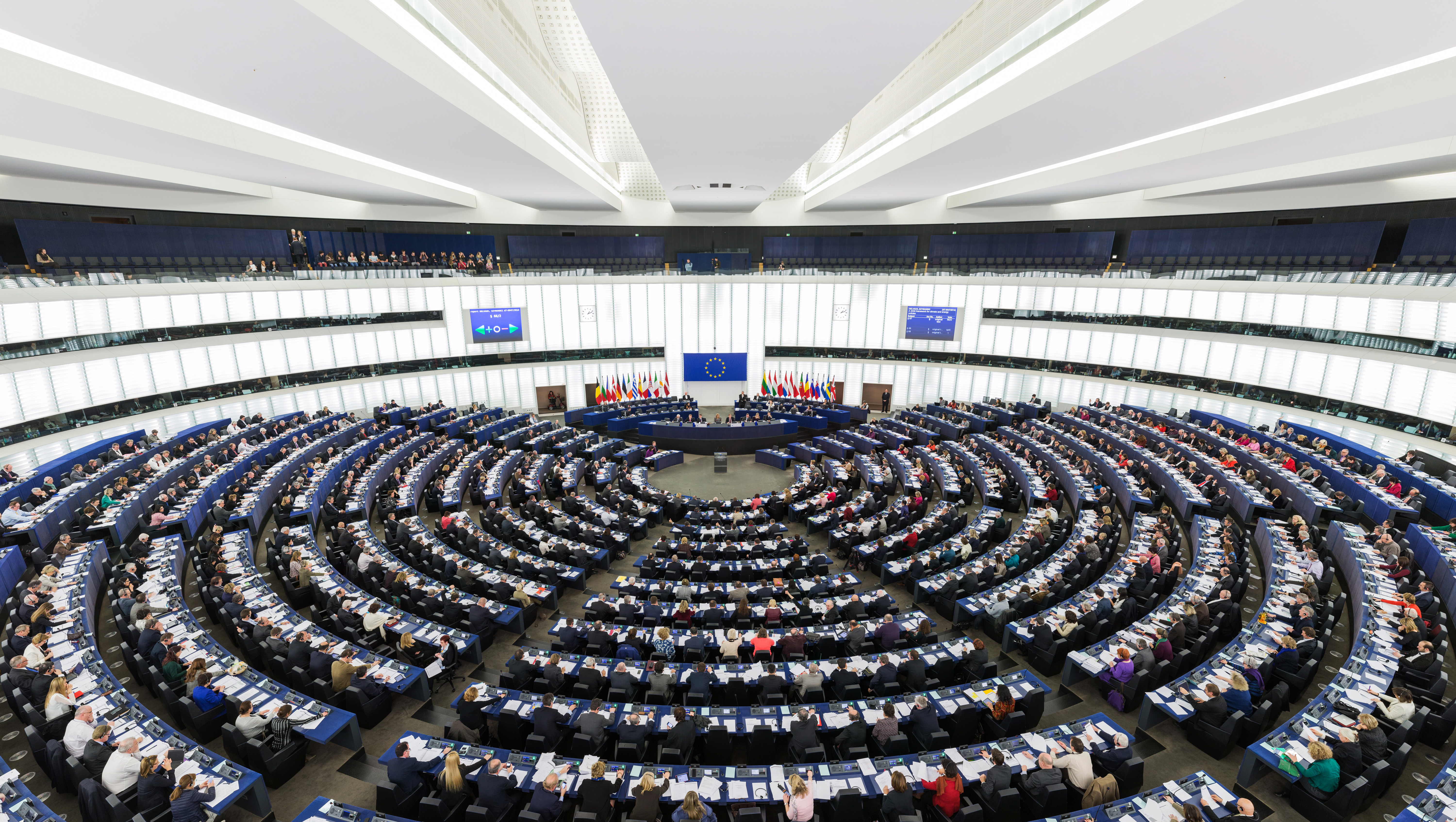
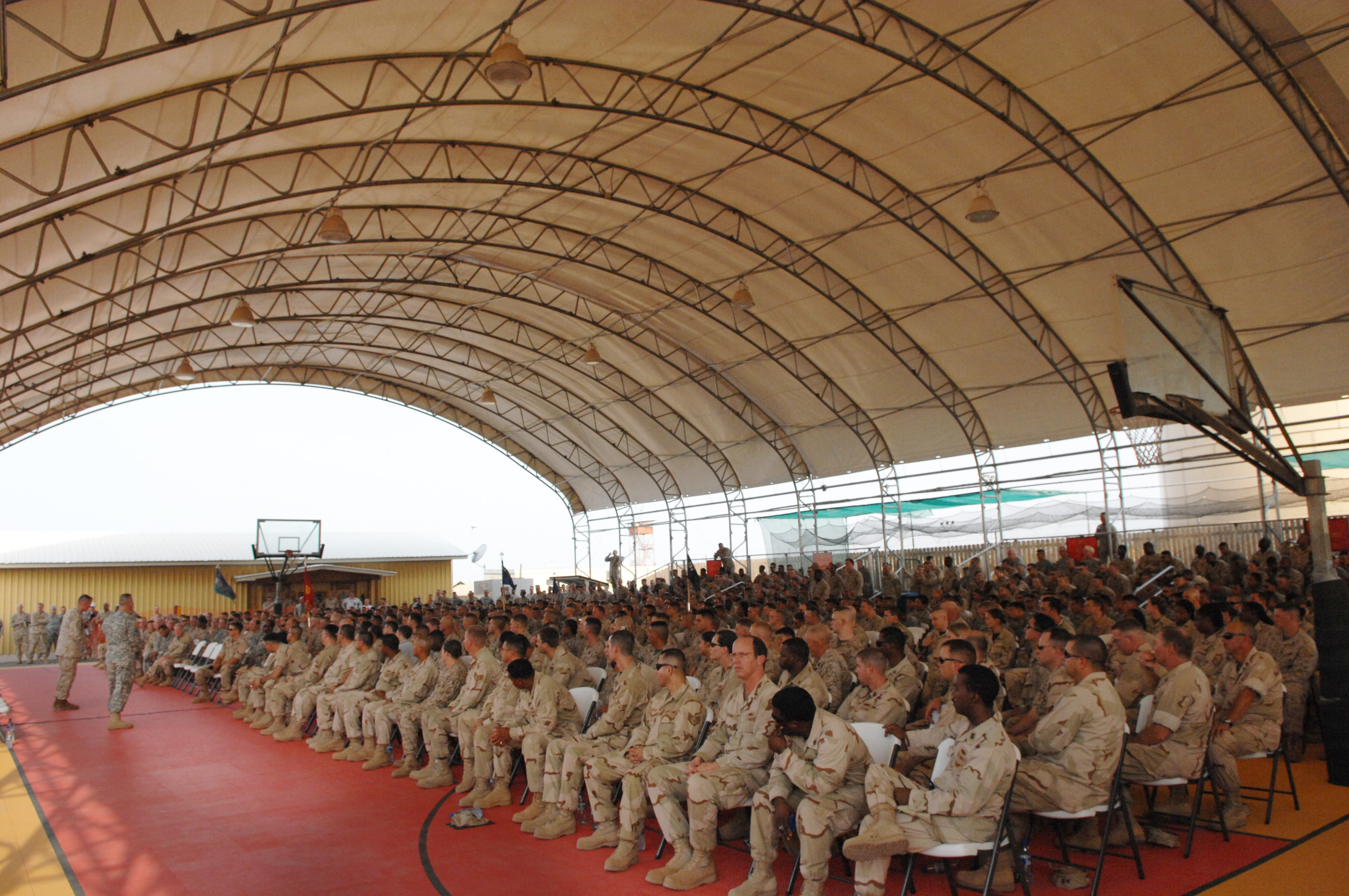
Capitol: Oren Rozen, CC BY-SA 4.0 · U.S. Supreme Court: ajay _ suresh, CC BY 2.0 · European Parliament: David Iliff, CC BY-SA 3.0 · TSMC Fab 5: Peellden, CC BY-SA 3.0 / GFDL · Camp Lemonnier: U.S. DoD work, public domain in the USA. References to the Wikimedia Commons source pages are given in each image.