
Indochina: how the decolonization became a system war
Vietnam, Laos and Cambodia, from colonialism to cold war to the long-term consequences of bombing, civil wars and power decisions.
Vietnam, Laos, Cambodia and the United States - from the pre-colonial states to French Empire and Cold War to Long-Term Back
Methodological note. This text makes a deliberate distinction four layers: FAKT = claims directly identifiable a document or a stable historical consensus; ODHAD = an indication whose value depends on methodology or incomplete archives; INTERPRETACE = explanation of cause, meaning or the context on which different expert opinions may exist; TUS = Final System Interpretation in Theory Universal System. The TUS is not a historical source or proof events. It is a secondary model that asks if it can be in documented history to recognize more general relationships between information, power, feedback, local optimization and long-term consequences.

Basic sources for the method: Pentagon Papers - full edition of National Archives · Foreign Relations of the United States - Office of the Historian · Libraries of Congress Country Studies
1. First, to remove one shortcut: "Vietnam War" was not just a war in Vietnam
In public memory the whole period often reduces to the image "Vietnam versus the USA '. It's a clear shortcut, but historically it's too narrow. Conflicts that were between the 1940s and 1970s 20. century they were pouring over Vietnam, Laos and Cambodia, they were at the same time wars Decolonization, civil, revolutionary, interstate and proxy conflicts Cold War. France was trying to restore colonial power, Vietnamese nationalist and communist forces fought for independence and later unification, the United States has gradually taken over the role of the main external patron of anti-communist regimes, China and the Soviet Union supported various communist allies and Vietnam itself, Laos and Cambodia had self-interest, factions and historical disputes.
That's the first important correction. If the whole region is described as passive space of American intervention, vanishes from Hanoi's decision history, Pathet Lao, the Khmer Red, the royal and Republican governments, China, The Soviet Union, France and the local elites. If, on the contrary, The roles will be reduced to "helping allies," the huge asymmetry of power, the range bombing, chemical defoliation, covert operations and the fact that Washington has the ability to significantly expand the conflict in a number of key moments; or Silent.
That's why it's more accurate to talk about Indochina Conflict Systemin which local history gradually interconnected with global Cold war. Pentagon Papers are valuable precisely because of the American politics not only shows from the outside, but reconstructs its own internal decision-making process from 1940-1950 through the French-Vietnamese War until the Geneva order. Document: National Archives - Pentagon Papers
2. Before France: three countries were not one political space
Vietnam: stand on the edge of the Chinese civilisation world
Vietnam had a long tradition of statehood before European colonization, which was strongly influenced by China but was not the same. For periods Chinese dominance was consolidated by a separate Vietnamese dynasty; state The viIncrezir took over Chinese administrative, Confucian and cultural elements and at the same time he created his own political identity. In the Middle Ages and Early New Testament moved the Vietnamese space south, including at the expense of The bats and later the Mekong Delta areas. This is important for later relation to Cambodia: Vietnamese-Khmer tension did not arise with communism Not even with the US, but it had deeper historical layers.
Source: Library of Congress - Vietnam: A Country Study
Laos: Lan Xang a problem of dispersed space
Lao's political development had a different geometry. Kingdom of Lan Xang The results of the tests are based on the results of the tests performed by the laboratory. The century combined a significant part of Lao space, but later it fell into several centers and found itself under pressure stronger neighbours, in particular Siam and Vietnam. A sparsely populated mountainous area, ethnic diversity and weaker ability of the centre to control the periphery later reflected into modern conflict: Laos was particularly suitable for parallel power networks, logistics corridors and local armed structures.
Source: Library of Congress - Laos: A Country Study
Cambodia: Angkor heritage between Siam and Vietnam
Cambodia's statesmanship grew from Khmer civilization and the Angkor Empire, which was among the most important power centers of pre-modern Southeast Asia. With the retreat of Angkor power, Cambodia is increasingly Between the pressure of Siam in the west and Vietnam in the east. French the protectorate was therefore not merely a simple story of European conquest; The Cambodian court sought protection from regional powers. But that doesn't mean colonialism was "voluntary." Means It's just that local elites were acting in an existing system of imbalances. Force.
Source: Library of Congress - Cambodia: A Country Study
INTERPRETATION: Precolonial history warns against one common mistake: today's national borders lead to the idea that Vietnam, Laos and Cambodia have always been solid national vessels. V the reality was the variable spheres of power, tributary bonds, migration zones and overlapping cultural spaces. Colonial State These Streams did not cancel, but some of them "frozen" administratively into new boundaries.
For image orientation is a very valuable French map from 1895, created in the environment of the Pavie mission. It's not a neutral map "eternal Indochina 'but just about the product of colonial mapping and transfer a variety of space for manageable cartography. Map: Library of Congress - Carte de l'Indo', 1895
3. French Indochina: the connection of different countries to one colonial architecture
French expansion in Vietnam has institutionalized since the second Half 19. A century. In the south, Cochinchina had a different legal status than Annam and Tonkin Protectorates; Cambodia has become French by protectorate in 1863 and Laos got under French control after The crisis with Siam in 1893. Thus, at the end of the century, the French Indochina as an administrative whole, which has associated historically different a country under one imperial framework.
Fountains: Vietnam: A Country Study · Laos: A Country Study · Cambodia: A Country Study · historical map of France Indochina
Colonialism brought roads, railways, schools, new administrative structures and greater integration into the world market; at the same time, it was a system political subordination, economic extraction and hierarchical approach to the population. Modernization and dominance were not contradictions - often went two functions of the same system. The infrastructure could increase local productivity while serving the transfer of goods, officials and troops. The education could create a new educated layer and at the same time from this very The layers grew up by people who proved colonialism in a worded way. criticize.
INTERPRETATION: That's the first significant system feedback binding. The Empire creates tools to manage the territory more effectively; but the same tools can create a communication network, educated elites, and political concepts that will help the empire to decompose later. Colonial Modernization is not a linear story of "progress" or a simple table Damage. It's an asymmetric transformation that simultaneously increases capacity the centre and the ability of the periphery to organise.
In Vietnam, nationalism was linked to a number of ideological currents, including communism. Ho Chi Min was not simply "Soviet agent inserted into Vietnam "not even a non-party nationalist; its political project associated Vietnamese independence with Marxist-Lenin revolutionary organisations. This dual classification - national and communist - will be after a year 1945 one of the sources of fundamentally different interpretations of the same conflict. France could read it as a fight for colonial order, the Vietnamese movement. as liberation and Washington after 1950 increasingly as part of a global communist process.
Context and sources: Library of Congress - Vietnam: A Country Study · Pentagon Papers, Part I and II
4. World War II: French colony under Japanese power and opening political vacuum
World War II has broken down the idea that European colonial power It's undeniable. French administration in Indochina after slaughter France worked in the Vichy environment and the Japanese military presence. V On March 1945, the Japanese removed the French colonial apparatus militarily. After Japanese surrender, a power vacuum was created, which Viet Minh used. during the August Revolution; Ho Chi Min 2. September 1945 declared Democratic the Republic of Vietnam.
But the post-war arrangement did not mean immediate and uniform Decolonization. Allied orders split the responsibility for accepting Japanese surrender: north of 16. parallel lines were taken by Chinese nationalist forces, south British command. British and French documents also show an effort to allow the French return administration. American Diplomatic Correspondence from 1945 captures the dispute over how the French forces to get to Indochina again and how deal with the growing resistance of the local population.
Document: FRUS 1945 - the future of French Indochina · Document: FRUS - distribution of Japanese surrender areas · Document: protests in Saigon against the French return
Here's the important thing to not rewrite history backwards. United States of 1945 they were not yet the actor that they would become by ten or twenty years later. There was tension in American politics between anticolonial rhetoric, relation to France as a European ally and increasing fear of communism. After the victory of the Communists in China in 1949 and the Korean But the war has moved the optics of Washington: Indochina was no longer mainly the question of the French colony, but increasingly the global segment holding communism.
Document Framework: Pentagon Papers, Part I-II
5. The First Indochina War: Decolonization Connects to Cold War
The war between France and Viet Minh since the late 1940s has been originally strongly associated with the question of colonial return and Vietnamese independence. But gradually, it was gaining more and more international character. After the creation of the People's Republic of China, Viet Minh received important material and political support from the Communist bloc. On the contrary, the United States has increasingly started to finance France war effort and military building "Associated States" Vietnam, Laos and Cambodia.
The scale of American involvement before 1954 is sometimes underestimated, Because there were no major American ground forces fighting on the battlefield. But the US government documents are very specific. In one budget a summary for 1954 was assumed to be taken into account when the deliveries were made The United States shall bear the material approximately: 61% of total financing war; another internal document talks about American financial and material assistance "currently over 60%."

Document: FRUS 1952-1954, document 367 - approximately 61% of funding · Document: FRUS, Document 561 - "currably over 60%"
This does not mean that "the US led the first Indochina war." French The army, French politics and local forces remained independent actors. But it means Washington before the fall of Dien Bien Phu invested significantly in maintaining the non-communist structure of the region. The internal US documents openly addressed how increased financial assistance At the same time, it increases America's responsibility and political voice in Indochina.
Document: FRUS 1952 - Memorandum on the consequences of the takeover of part of the French Costs
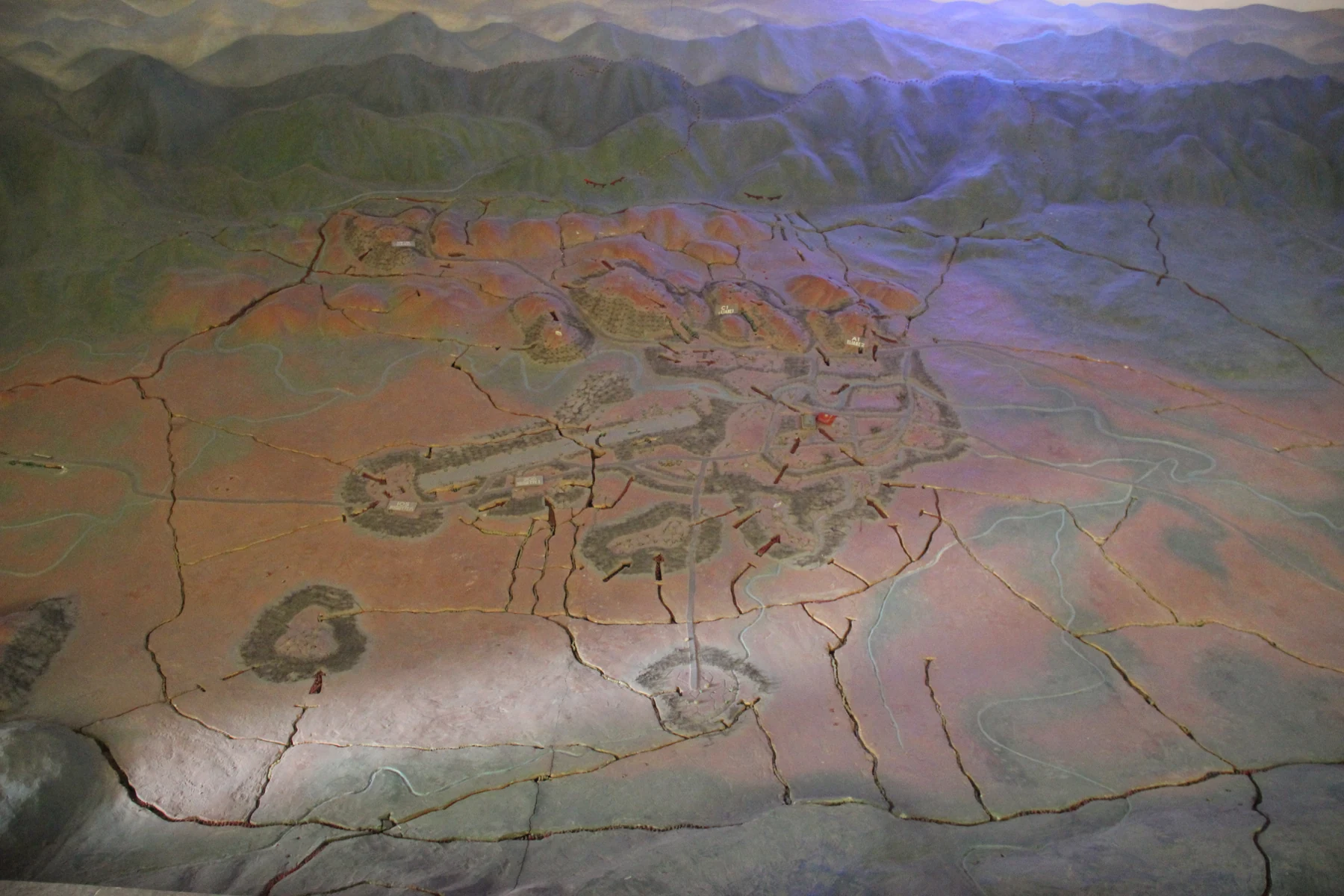
When French base Dien Bien Phu 7. May 1954 fell, was not It's just tactical defeat. The model that France had collapsed Military to create conditions for long-term sustainable non-communist Order. In Washington, there was also discussion of a more direct intervention, But without a wider coalition, it didn't happen. Next Geneva Conference Ending one phase of the war, not the political conflict itself the future of the region.
Summary documentary context: FRUS 1952-1954, Indochina · Pentagon Papers, Part II-III
6. Geneva 1954: Temporary military division has turned into political border
The Geneva arrangement is often described too easily. Vietnam was not intended as two in 1954 according to the text of the Final Declaration permanently separated States. Demarking line around 17. parallels were expressly designated as Interim military line, no political or territorial boundaries. Final Declaration at the same time Expected general elections in July 1956 and consultations on both zones on their organisation.
Primary Document: Final Declaration of the Geneva Conference, 21 July 1954
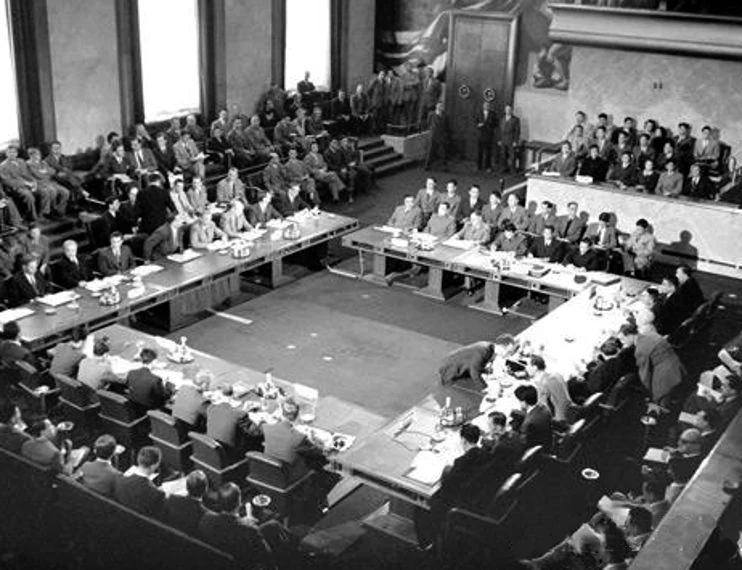

But it is inaccurate to simply say that "the US signed the treaty and then it "broken." The United States was not the signatory to the final declaration of the same in the form of the main parties to military agreements and the Government of South Vietnam Rejected the political solution. Washington has also declared that it considers free elections for desirable, but his internal documents show that the conditions and likely outcome of the overall Vietnamese elections were fundamental problem.
Document file: FRUS 1955-1957 - "The Question of Eletions in Vietnam" · Pentagon Papers, Part III - Geneva Records
For Laos and Cambodia, Geneva had a different meaning. Both countries should have been independent and neutral; just this idea of neutral buffer But states will prove very fragile. Geography and Logistics of War do not respect the legal separation of individual countries. East Laos and later on East Cambodia became a key supply route space Communist forces to South Vietnam. American strategy therefore still more often, it solved the paradox: how to formally respect the neutrality of the neighbours the country and at the same time militarily interfere with the infrastructure which via their territory supported the Vietnam War.
INTERPRETATION: Geneva created a classic problem difference between legal map and operating terrain. On the map there were separate neutral states. In a real military system through them People, weapons, information and supplies were flowing. Once one side has Decided to use these flows and the second to forcibly interrupt them, conflict with almost inevitably began to expand geographically.
7. South Vietnam: American Replacement for the French Framework
After 1954, the United States gradually took over as its main patron. South Vietnam. Ngo Dinh Diem was not just an American puppet - he had own power base, own ideas and often with Washington I was. Without America's extensive political, financial and military support However, its regime would have significantly less scope for consolidation.
American papers from 1955- 1957 are remarkable in this respect open. The whole one FRUS block is dedicated to "decision to support Diem" and another "election issue in Vietnam." Reports from South Vietnam at the same time show that electoral and constitutional processes have been strongly oriented towards the Diem's governments; the American Embassy, for example, after the election to the Constitutional the meeting of 1956 evaluated the body as being predominantly pro-Diem and she stated that only 33 of the 123 mandates were awarded to candidates who ran against candidates of unofficially preferred government.
Document: FRUS 1955-1957, Vietnam · Document 308 - evaluation of elections to the constitutional assembly
Diem's regime combined state modernization, anti-communism, nationalism and authoritarian elements. Conflicts have gradually deepened with Buddhist groups, rural areas and political elites. Concomitant Developed communist insurgency infrastructure, supported by the North. The simplification of the "democratic south versus totalitarian north" does not therefore describe The reality as well as the opposite abbreviation "national liberation versus American Colony '.
The 1963 crisis year shows how deep Washington was into South Vietnamese policies involved. American documents capture in detail debates about the coup against Diem, contacts with South Vietnamese generals i The death of Diem and his brother Nhu. From these documents it can be documented: That the US was working with a possibility of coup and stopped providing Diem with unconditional political support. But methodically wrong from that automatically deduce that Washington ordered their murder directly.
Document file: FRUS 1961-1963, Vietnam, St. IV - Coup Plotting, Coup Against the Diem Government
INTERPRETATION: Here begins the distinctive path Dependence. The US originally entered Indochina as Supporter of France, then helped construct new southern Vietnamese Stop. Every next step increased the price of the admission that previous investments Maybe she didn't produce a stable result. The larger the resources that were put in, and political reputation, the more difficult it was to consider leaving as ordinary change of strategy.
8. Gulf of Tonkin: a broad mandate has emerged from an uncertain event
Events in the Gulf of Tonkin in August 1964 are among the best documented examples of how uncertain information can be obtained a fundamental political effect. First encounter, 2. August between the USS Maddox and the North Vietnamese boats have actually occurred. Second alleged Attack 4. However, in August, according to a later internal historical analysis of the NSA, did not play as presented at the time; the news signals were misinterpreted and evidence contradicting the second attack hypothesis, have been suppressed or inadequately taken into account.
7. On August 1964 Congress adopted the Tonkin Resolution, which President Lyndon Johnson has provided a very wide framework for use forces in Southeast Asia. A overwhelming majority voted for the resolution Congress; only two opponents were in the Senate. The document subsequently became One of the legal-political foundations of the escalation of the American war without formal declaration of war.
Primary Document: National Archives - Tonkin Gulf Resolution
INTERPRETATION: Tonkin's not just interesting as historical controversy. It's a case decision making at high uncertaintywhen originally unclear input is converted into a clear political signal. Once this signal is legally Encoded, he's starting to live his own life. Later correction of input data already need not return the system to its previous state.
That doesn't mean that the entire American accession to war "was created by a lie about Tonkinu. " American engagement, military advice, Saigon assistance North pressure existed long before August 1964. Tonkin, however, is fundamentally facilitate the transition from more limited intervention to much wider use strength.
9. 1965: Bombing war and ground army
In 1965, American involvement changed qualitatively. Programme Rolling Thunder launched a long-term bombing campaign against North Vietnam and South Vietnam joined the American ground fighting Units. The official edition of FRUS directly divides the period of February 1965 as "launch of the air strike programme against North Vietnam 'and" introduction American ground fighting forces. "
Document file: FRUS 1964- 1968, St. II - Rolling Thunder and Ground Forces
Strategic logic was understandable: increase Hanoi's costs, limit His ability to support the war in the South, stabilise the South Vietnamese stand and convince the opponent that he will not militarily achieve victory for an acceptable price. The problem was that the opponent was operating differently from assumed part of the American model. The supply grid was scattered, the correct and able to move the routes. Hanoi's political motivation was high and human and material losses that would be for American society were difficult to accept, North Vietnamese leadership tolerated in a much higher degree.
Bombing could therefore destroy specific targets without automatically destroying The Commission has also taken the view that the measures provided for in this Decision are in accordance with the opinion of the Committee established by Article 108 (3) of the Treaty on the Functioning of the European Union. That's the difference between tactical efficiency and strategic Efficiency. A destroyed bridge is a measurable result. Question whether The destruction brings the political goals of war closer to the next level.
The Pentagon Papers are a vital source of this contradiction, because they show how repeatedly inside the US administration Confronted estimates of bombing options, political risks, The US credibility and Saigon's ability to stand on its own. Source: National Archives - Pentagon Papers
10. Agent Orange: change of environment as military technology
The American war was not only waged against troops and infrastructure. Operation Ranch Hand used herbicides to remove vegetation that provide shelter and also to destroy crops. US Ministry of the veteran affairs state that between 1962 and 1971 it was used through: 19 million gallons miscellaneous "rainbow" herbicide mixtures and that Agent Orange was the most common of them. Among the areas hit hard the forests were also in the area of border contact of South Vietnam, Laos and Cambodia.
Official Source: U.S. Department of Veterans Affairs - Facts About Herbicides
It's important to distinguish two planes. FACP: extensive use of herbicides and long-term health and environmental issues are well documented. INTERPRETATION: moral and legal assessment of individual operations, period knowledge of risks and precise attributes specific health consequences are more complex issues that require own professional literature.
But in the system, another thing is important: the battlefield is no longer there only a place where enemy military capacity is destroyed. Alone Environment becomes a variable in the military model. Forest is not an ecosystem, but a "shelter." Field is not a source of livelihood, but a potential The logistical input of the opponent. This reduction may be from the operating rational but also creating huge externalities that Military metering of success is not fully capturing.
11. Tet 1968: when the military result and political result show the opposite in
The Tet offensive in early 1968 was very much for the Communist forces Expensive and did not meet their expectations of a general uprising in the south Vietnam. American diplomatic documents later considered it as a significant tactical failure of the opponent. At the same time, however, they admit that the impact of the He was extraordinary in American public opinion. One of the postwar internal American views summarized it almost paradoxically: politically it went in Vietnam For failure, but in America, for brilliant success.
Document: FRUS - Tet offensive impact assessment · Document: American Evaluation of 1968
Tet showed a weakness of metrics that evaluated the war mainly by the number of units destroyed, the areas occupied; and estimated losses of the opponent. If the opponent can still do it after years massive US intervention to hit dozens of cities in a coordinated fashion; and even symbolic centers like the American Embassy in Saigon, can be psychological effect directly contradicts tactical balance.
INTERPRETATION: war is an information system. Tactical the event does not become strategically important only by how many units there were destroyed, but by, how it is interpreted by various by the audience. One side can lose the battle and simultaneously disrupt The adversary's model of the future. Aunt wasn't proof that the Communist forces they were militarily invincible. He was proof that American political support war was not an unlimited resource.
12. Laos: "neutrality" of the state that led the war
Laos is almost invisible in the public image of the Vietnam War, but it is crucial to understanding the system. Already in 1961-1962, World powers have tried to stabilize the conflict through the Geneva agreements on the neutrality of Laos and the coalition government. American documents show that That Kennedy administration was willing to accept a truly neutral Laos and that neutrality was considered important for wider peace in Asia.
Document file: FRUS 1961-1963, Laos Crisis · Kennedy Statement on the neutrality of Laos
But formal neutrality did not eliminate the civil war between Right, neutralist and Pathet Lao forces or North Vietnamese present. East Laos led a supply network known as Ho Chi Minh's trail, along which the forces and material flowed towards the south Vietnam. The United States responded with a combination of air war, support local forces and large-scale CIA secret or semi-secret operations.
The CIA itself later described its activities very directly. Historical The Agency's study calls Laos the largest paramilitary in the world until then CIA operations and states that the Agency has managed local forces fighting against large North Vietnamese troops. Air America, Air Company secretly owned by the CIA, providing transportation, supplies, evacuation and support intelligence and military operations.
Unclassified CIA history: Supporting the "Secret War": CIA Air Operations in Laos, 1955-1974
The magnitude of the bombing is extreme even without rhetorical embellishment. Lao National Unspecified Ordnance Programme states that between 1964 and 1973 The US has carried out over half a million bombing missions and overthrown more than Two million tons of explosive ammunition. There were over 270 million submunics involved. From cassette bombs; estimated up to 30% of unexploded ammunition created a problem, which persists decades after the war.
Official Laotian Source: UXO Lao - The UXO Problem · UNDP - UXO Annual Report
These numbers must be put into context: the aim of the bombing was not "bomb Laos because he's Laos." America's main motivation was to reduce North Vietnamese logistics routes and support non-communist forces In the Lao Civil War. But that's what the root of the problem is. The operational logic of the Vietnam War has created a strong motivation to violate the effective neutrality of adjacent spacebecause The opponent also did not consider this neutrality to be an inexcusable military barrier.
13. Cambodia: neutrality between two cylinders
Cambodia under Prince Norodom Sihanouk has tried for a long time balance between blocks and maintain as much autonomy as possible. It wasn't. simple neutrality in the European sense. Sihanouk maneuvered between China, North Vietnam, France, the United States and the neighbours by where he saw the greatest threat to Cambodian sovereignty. But at the same time, North Vietnamese and Vietnamese forces used parts of eastern Cambodia like a haven and a logistics background.
Washington saw this situation as a military gap: the opponent could To cross the border while American forces were political constraints bound. There were more limited strikes before the Nixon administration, But in 1969, a secret bombing operation began with Menu against the Cambodian "sanctuaries." Internal American documents clearly capture not only the decision to bomb, but also the attempt to hide the operation. In one record Kissinger says the president approved the bombing as something "can never admit it publicly."
Document: FRUS 1969-1976, St. VI, Document 41 - Secret Decision bombing
In March 1970, Sihanouk was removed and power during his stay abroad took over by Lon Nol. To date, the claim that it was "CIA coup." But the undisclosed American material does not provide simple The basis for claiming Washington had organized the coup. Internal American records attribute their own preparation to Lon Nola and Sirik Matakai and after the coup d'état Washington was discussing how to support the new regime. President Nixon For example, shortly thereafter approved the secret financial assistance of Lon Nola; Minister In doing so, Rogers' foreign affairs warned internally against the too fast decisions.
Document: FRUS - Internal analysis of coup formation · Document: Secret aid $10 million to Lon Nola
This distinction is methodically important. No need to produce Unproven US coup management to be America's responsibility for a subsequent escalation of significance. The US supported the new regime in On April 1970, the American and South Vietnamese forces joined the Cambodian The border and air war continued to expand.
14. Cambodia bombing and the rise of the Khmer Rouge: the connection is yes, The single cause of this reaction was not
The scale of the American bombing of Cambodia is subject to long-term historical research and accurate tonnage may vary according to the used the databases and the manner in which they are cleaned. Yale Cambodian Genocide Program publishes documents, maps and bibliography for bombing in years 1965- 1973 and American politics towards Cambodia. Researchers Ben Kiernan and Taylor Owen argues that the massive bombing and civilian casualties contribute to radicalisation and recruitment in some areas for the Red Khmer.
Database and documentation: Yale - The United States Bombing of Cambodia, 1965- 1973 · Yale - U.S. Involvement in the Cambodian War and Genocide
But this bond is not right to convert it into an equation "USA Bombarded Cambodia → Born Pol Pot ". The Khmer Reds had own ideological development, organisational structure, management and foreign ties; civil war has been fundamentally influenced by the North Vietnamese presence; and support of communist uprising, return of Sihanouk to symbolic alliances with the opponents of Lon Nola, Chinese aid and the breakdown of state institutions. Bombing was one of the destabilizing and mobilizing factors, not the sole cause of the later regime.
INTERPRETATION: This is a typical problem. multicausality. Political debate tends to look for one cause, because one cause allows one culprit; and A simple story. The historical system may have several simultaneously necessary or strengthening conditions. If we remove one of them, the result may change; however, it does not mean that other causes cease to exist. exist.
American bombing could simultaneously destroy North Vietnamese infrastructure, to save part of the military situation of the Lon Nol Government, to kill civilians, to emigrate rural populations and to create propaganda material for insurgents. One operation may therefore have more functions and more feedback links, some of which work directly against the original target.
15. Red Khmer 1975-1979: After the American War, peace did not come.
17. On April 1975, the Khmer Rouge took Phnom Penh. He followed radical social transformation experiment: violent evacuation of cities, forced labour, collectivization, breaking of existing social ties, Security centres, executions, purges and mass deaths as a result a combination of murders, exhaustion, hunger and disease. Estimates of total number The deceased are different, but international experts and judicial resources are working. approximately 1,5-2 million; the UN frequently states at least around 1,7 million.
UN - Legal and historical overview of Democratic Campučia · ECCC - historical timeline, estimate 1,5-2 million · United Nations - at least 1.7 million victims


It is also important to use the word precisely genocide. ECCC in Case 002 / 02 addressed and recognised genocide in relation to Vietnamese and the Chamam minority, in addition to the extensive crimes against humanity and others Crimes. A huge number of ethnic Khmers were murdered or died. as a result of a policy of the regime, but the legal qualification of "genocide" has narrower definition than the general description of mass murder.
This detail is not a word-teller. If we want to analyze history systemically, we must also reject the morally tempting tendency to use The strongest term for everything. Accuracy is not an excuse for crime; it is condition that we prove the various mechanisms of violence at all to distinguish.
The Khmer Rouge wasn't the American regime. After taking over the power, oriented especially on China and their relations with Vietnam quickly They were getting worse. China's support for Democratic Campučii has become part of the growing Chinese-Vietnamese and Chinese-Soviet conflict.
16. 1975 was not the end: another indochina war was created
America's fighting role in Vietnam ended after the Paris Agreements of In 1973 and the South Vietnamese State disappeared after the fall of Saigon in April 1975. The Paris Agreements were formally signed by the United States, South Vietnam, North Vietnam and the Provisional Revolutionary Government 27. 1 January 1973.
Primary documentary edition: FRUS - Paris Peace Records
But there was no peace for the region. Relations between United Vietnam and Democratic Campuchia has turned into a bloody border war. Red Khmer was involved in attacks on Vietnamese territory and their regime was sharp Anti-Vietnamese. In December 1978 Vietnam launched a large invasion, in On January 1979, he overthrew the Khmer Red Government and supported the new regime in Phnom. Penh.
That regrouped the conflict. Vietnam was more firmly connected to the Soviet By association, while China supported Democratic Camputia as a counterweight Vietnamese influence. American Intelligence Review November 1978 described Indochina as a space divided into two blocks: Soviet Union supported Vietnam and Laos while China supported Cambodia and was its main source of military and economic assistance.
Document: FRUS 1977-1980 - Interagency Intelligence Memorandum about China, Vietnam and Cambodia
In February 1979, China then attacked North Vietnam. Indochina War, which was mainly associated with conflict in the American public image "Communism versus anti-communism," so shortly after victory Communist regimes turned into open conflicts between Communist States. This is important historical correction to the idea that ideological affiliation automatically overlaps national interests.
17. Did the US support the Red Khmeres after 1979? Necessary accuracy
This question is often formulated in binary terms: "The US supported Pol The pote "versus" USA Pol Pot did not support. " Real politics was More complicated.
After the Vietnam invasion, the United States refused to legitimize the long-term Vietnamese occupation of Cambodia and sought international pressure on Hanoi. That objectively creating a common geopolitical interest with China and the ASEAN to maintain anti-Vietnamese resistance. But at the same time, American documents Show Washington considered Pol Pot himself unacceptable a basis for future political solution and sought non-communist or wider Coalition.
In an interview with Sihanouk, the US Foreign Minister specifically supported his refusal to cooperate with the Khmer Rouge. Other American 1979 document states that the United States cannot support Pol Pota, although at the same time they refuse to recognise the Heng regime established by Vietnam Samrin.
Document: FRUS - interview with Sihanouk, refusal to cooperate with Khmer Rouge · Document: FRUS - "we... cannot support Pol Pot"
The most accurate conclusion is therefore neither "the US saved the Red Khmery" nor "the US with "they had nothing in common." Washington was politically fighting against Vietnamese dominance in Cambodia and supported the emergence of anti-Vietnamese Resistance, especially its non-communist forces; China was the main The State Patron of the Khmer Red. In international diplomacy, these interests partially overlapping and resulting in a situation where forces associated with The former regime remained part of a larger anti-Vietnam camp.
INTERPRETATION: This is an excellent example of why geopolitics cannot be read as a moral table of friends and enemies. States may at the same time condemn actor A and promote systemic conditions which: allow them to survive because their main objective is to limit actor B. The result may then act as a logical contradiction, but from a power point of view optimisation is consistent.
18. What the United States actually - You wanted to?
It is tempting to seek one hidden motivation: raw materials, Military-industrial complex, imperialism, anti-communism or personal The ego of presidents. Historical documents show a mixture of motivations whose The meaning was changing in time.
The key was Communism's Preservation Policy and fear, That the fall of one state would change balance in all of Southeast Asia. Present was also a question credibility: if Washington long-term guarantee of the ally's support and then retreated under pressure, American officials feared that other allies might be The opponents draw a broader conclusion on the value of American liabilities. In the '50s, In addition, politics in Indochina intertwined with the need to maintain France. as a major European ally in NATO and in post-war stabilisation Europe.
Document context: FRUS 1952-1954, Indochina · Pentagon Papers
That doesn't mean that economic interests or power expansion weren't playing No part. It means that the claim about a single material cause not adequately responding to what the decisive actors themselves have been dealing with in the internal materials. Their language is repeatedly the language of security, Communism, alliances, creditworthiness, stability and regional chain effect.
At the same time, it is necessary to distinguish declared target from System function. The state can truly believe that it is defending Allies and international order, while creating structurally an imperial relationship in which it has a more dramatically possible to determine military; and economic parameters of the weaker state. Motivation and power effect are not Same thing.
19. Why did the firepower not create the required political result
The United States had a technological, air, logistics and economic superiority, which their opponents could not symmetrically imitate. Yet they have not achieved the main political objective: long-term viable non-communist South Vietnam.
One reason is the very nature of the asymmetric conflict. Stronger the party must often: maintain system"The weaker side is enough. prevent him from stabilising. For Washington, it was necessary that South Vietnamese state survived, gained sufficient legitimacy, proved control the territory while at the same time making the American public accept the price war. Hanoi did not have to defeat the United States in a classic decisive battle; needed to survive, maintain pressure and wait for the political price to continue wars will cross American tolerance.
The second problem was substitution of the target by metric. When The final political objective is difficult to measure, the system tends to Replace it with indicators that can be measured: number of operations, losses adversary, destroyed warehouses, controlled counties, air missions. These the data are not unnecessary. The danger arises when their growth He will begin to confuse the growth of the likelihood of political victory.
Aunt 1968 revealed this inconsistency. The bombing of Laos showed her Otherwise: hundreds of thousands of missions can be carried out, destroyed by huge quantities the infrastructure and at the same time not to stop the long-term flow of people and material. Cambodia has shown another option: an attack on a cross-border asylum may be In the short term, solve the military problem while extending geography of war and politically destabilize new space.
INTERPRETATION: Military power is the ability to change the state system. But it's not automatically a capacity to determine, to which the system passes on stable condition after intervention.
20. Three countries, three different Geometry of War
It is useful for a moment to separate three countries again.
Vietnam was at the heart of the conflict about decolonization, the legitimacy of two competing states, the revolution and national unification. The war here combined rebel struggle, conventional armies and vast foreign intervention.
Three countries, three different paths of conflict
| Layer | Vietnam | Laos | Cambodia |
|---|---|---|---|
| Main axis | Decolonization, division, civil and interstate war, unification | Formal neutrality, civil war and hidden international intervention | Neutrality, coup, bombing, civil war and Khmer Red regime |
| Key external actors | France, USA, China and the Soviet Union | USA, North Vietnam, Thailand, China and the Soviet Union | USA, North Vietnam / Vietnam, China and the surrounding countries |
| The problem of simple interpretation | National exemptions cannot be separated from or reduced to a communist project | Neutrality on paper does not explain the war that has been waged through the territory and within the country. | Bombing is part of the story, not the only cause of later genocide. |
| Long-term outcome | Health and environmental consequences, migration and political memory | Unexploded ammunition, land losses and long-term mine-mine costs | Genocida, emigrations, memory, judicial and social balancing |
Laos was a civil war at the same time, formally neutralized by the state and the logistics space of the Vietnam War. The US presence here has therefore been given a significantly more secret institutional form: CIA, local forces, air operations, limited public visibility.
Cambodia She tried to hold the war long enough by balancing outside its own centre, but its eastern territory was involved in Vietnamese logistics. After 1970, the country fell into civil war, extensive bombing and state collapse; the victory of the Khmer Red Not led to pacification, but to one of the most brutal regimes of 20. A century and finally a new war with Vietnam.
So three countries cannot be merged into a single curve "American intervention → disaster '. But at the same time, there's no denying that the American military strategy Connecting their conflict areas even tighter, in particular through bombing, cross-border operations, support local regimes and efforts to break the logistics network of Hanoi.
For orientation in the postwar space can be compared the colonial map from In 1895, with a map of Indochina, created by the CIA in 1985. ♪ On my own ♪ comparison shows how the imperial administrative category "Indochina" Three sovereign states have become, but their security remains deep connected. Map 1895 - Library of Congress · Map 1985 - CIA / Library of Congress
21. Liability without simplification
Historical accuracy does not require moral neutrality against documented actions. At the same time, there are several things that are not disturbing each other.
The United States has a significant responsibility for the scale of escalation of war, massive bombing of Vietnam, Laos and Cambodia, chemical defoliation, support for authoritarian allies and the use of covert operations which limit public control. American archives themselves provide for these claim sufficient material; it is not necessary to prove them by conspiracy design.
At the same time, North Vietnamese leadership and its leadership are also responsible for their own responsibility. Allies for decisions to continue armed unification, for exploitation the territory of neighbouring states, for repressive practices and the huge price She was willing to make war. Pathet Lao was not only a passive reaction to CIA. The Khmer Rouge was not just a byproduct of B-52. Lon Nol, Sihanouk, South Vietnamese generals, Chinese leadership or Soviet Union They weren't figures without their own will.
And finally: causality is not the same as guilt. If bombing will contribute to radicalisation of a part of the rural population, The causal relationship that's worth exploring. However, it does not follow that The bombing party "caused" all later acts radical organisation. Likewise, the fact that North Vietnamese forces used Laos and Cambodia, explains part of the American motivation to bomb, but does not determine in itself that the extent and method of bombing was the only possible or optimal response.
This difference between by explaining the negotiations and justification for the conduct of the proceedings is for serious history essential.
22. Long shadow of war: UXO, health, refugee and memory
The war won't end the moment the last unit stops firing. Laos is the most visible physical example: tens of millions unexploded submunics remain in the landscape and still affect safety, agriculture and development. UXO Lao states that the estimated contamination represents only a very slowly removed part of a huge inheritance bombing.
In Vietnam, health and environmental issues are still herbicides and dioxin contamination. The United States itself created extensive system of health compensation and recognised diseases for their veterans exposed by Agent Orange, which simultaneously documends that use chemical resources are not just a historical topic of the battlefield.
Source: U.S. Department of Veterans Affairs - Agent Orange
Cambodia was carrying the consequences of civil war, bombing, the Red regime. Khmer, Vietnamese invasion, and years of armed resistance. Millions of people they have been killed, injured, displaced or exiled throughout the region; the exact aggregate numbers of Vietnamese, Lao and Cambodia victims with varies depending on the years, types of deaths and categories of civilians studies include. Therefore, it is better to specify a specific number always with a specific number a source than to produce one seemingly accurate "total" number.
We have more precise administrative arrangements for American military casualties. Registration: National Archives presents 58 220 records of American military fatalities associated with the Vietnam conflict; databases at the same time shows that part of the death is being sustained for Laos and Cambodia, which itself Reminds that Vietnam War, geographically, was long over Vietnam.
Source: National Archives - Vietnam War U.S. Military Fatal Casualty Statistics
PART II - SYSTEM DISTRIBUTION
23. Path Dependence: Each solution reduced the scope for further solutions
When we look at the whole period without national and ideological label, a very strong formula appears dependence on previous path.
France, after 1945, restores colonial power because it considers loss Realms for politically and strategically unacceptable. The US supports France, because they need it in the European security system and after 1949 They see Viet Minh increasingly as a prism of communism. If France loses, Washington no longer has "empty" Vietnam in front of it, but a system into which He put money, reputation, and anti-communist strategy. It will therefore support Southern state. When this state is weak, the number of advisers increases. When advisers Not enough, bombing and troop numbers are growing. When the supply network He moves over Laos and Cambodia, increasing pressure to cross the next border.
No single step may be absurd from the point of view of the moment. Problem arises from their composition. Each solution changes the conditions the next decision and increases the political cost of returning.
This is one of the most important lessons of Indochina: catastrophic systems may not be generated by a single catastrophic decision. They may arise from long series of decisions, each locally correcting the problem created by decisions made before.
24. Local optimisation versus global result
American military strategy has repeatedly addressed real local problems.
North Vietnamese troops have a haven in Cambodia → destroy A refuge.
Stocks flow through Laos → bomb the logistics network.
Vegetation covers the movement of units → remove vegetation.
South Vietnamese regime is politically unstable → to promote more stable management.
The opponent doesn't believe in America's determination → to demonstrate determination escalation.
Each of these operations may have its own internal logic. But systemic the result is not only made up of Primary effectbut also from side effects: civilian losses, migration, radicalisation, loss legitimacy, domestic resistance in the US, pressure on neighbouring regimes, ecological damage, dependence of local allies on American aid and adaptation An opponent.
In the system language it is a problem optimization of local node without sufficient model of the entire network.
This does not mean that there was a simple "correct solution" that politicians ignored. In a number of moments, all available options were Expensive. But it means that power might paradoxically allow to perform increasingly local interventions instead of forcing the system to Reassess the original target.
25. Secrets like Disorder feedback
Laos and Cambodia show one more mechanism: Secrets change quality of control.
Sometimes the state needs to keep military operations secret. Existence So the secret is not proof of illegitimacy. However, if the essential part of wars take place in a regime that the public cannot fully monitor, occurs weakening one of the main correction loops of the democratic system: informed political resistance.
The CIA in its own history admits that the Lao War was after only partially visible in front of the American public, although Congress committees have been informed. The Nixon administration has a Cambodia's operation specifically addressed how to keep the bombing secret.
Source: CIA - Secret War in Laos · Source: FRUS - the secret bombing of Cambodia
INTERPRETATION: secrecy may not change only what The public knows. It also changes the internal environment of decision-making. If the operation need not be constantly defending against a wider number of actors, may decrease number of correction inputs and increase the probability that local operating Rationality begins to reproduce itself.
26. Ideology such as compression reality
Domino Theory, Communist aggression, National Liberation, "American Imperialism," "Defending the Free World" - all these concepts capture some of the real features of the conflict. The problem arises when One of them becomes complete model.
Ideology works as an extremely effective compression. Complex system reduce to several categories that allow quick decision-making. If opponent only part of the unified communist block, local nationalism loses its meaning. If every opponent is only American collaborator, disappearing his own political interests of South Vietnamese, Lao; or Cambodian actors. If every conflict is just a fight of colonialism against liberation, it is difficult to explain why after 1975 communist Vietnam is at war with Communist Cambodia and then with Communist Chinese.
Good compression maintains a decisive structure. Bad compression remove the variable that later causes the model to fail.
Indochina shows both.
27. The hardest question: how to know the moment when we no longer defend the solution, but previous investment
There is a strong tendency in large institutions to protect past costs. The economy knows it as a problem ♪ ♪ ♪ ♪ ♪ ♪ ♪ ♪ ♪ ♪ ♪ ♪ ♪ ♪ ♪ ♪; in policy is added to reputation, prestige and responsibility of specific people.
If a certain state has been explained for several years to the public, key to the security of the entire region, psychologically and politically difficult to say later: "Our original model was wrong or the situation changed. "Leaving then is not presented as an update strategy, but Like defeat. And it is the effort to prevent defeat that can increase the price of the final defeat.
That's not just for the US and Vietnam. Similar mechanisms can be found in France before Dien Bien Phu, near Hanoi when accepting huge human costs for the Khmer Red in radicalisation of their social experiment or the Vietnamese occupation of Cambodia, whose long-term price has increased even after, The original Pol Pot mode has been removed.
The system analysis must therefore not have nationality. The same mechanism may work in various ideologies and institutions.
PART III - RESPECT
28. What TUS can add - and which must not be added
The TUS can use this historical material as testing the terrain of system conceptsNot as proof of his ontology.
The Vietnam War cannot be inferred from the existence of Information Units, no metaphysical mechanism. History is not An experiment that would verify such a thesis. If we documented the events merely translated into the terminology of TUS and then claimed that by We would have made exactly the mistake he had before its methodology to protect: we would replace new description for new evidence.
So I use the TUS here in a narrower, heuristic sense: as a language of relationships between part and total, information filter, feedback, asymmetry, The noise and ability of the system to correct its own model.
29. Map is not terrain: each side fought with their own model adversary
One of the simplest theorems of the TUS - map is not landscape - is extremely useful to Indochina.
The American system had its map: Communism expands, South Vietnam is critical node, loss of node will damage the credibility of the entire defense system, Military pressure can change the odds of an opponent.
Hanoi had another map: the fight is a continuation of decolonization and national unification; the American presence is a new form of external dominance; time and domestic political fatigue works against the US.
Sihanouk had a map of a small state clogged by the more powerful players and tried maximize the room for manoeuvring.
The Khmer Rouge created an extremely deformed map of a society in which the entire population could be identified as a source of contamination of the system; and physically remove them.
No party has worked with "reality itself." Each worked with by selecting information and model of relationships.
TUS Interpretation: the problem does not start by He's using a filter. Without filter, you can't make decisions. The problem begins in a moment, when the system forgets that the filter uses, and begin his the internal image is considered to be a complete reality.
30. Ego in State scales? Just like a metaphor
TUS often works with ego as a layer that protects identity the body and may deform the intake of unpleasant information. It's tempting to say, I'm sure "states have an ego." It's literally not accurate: the state has no nerve system or subjective experience as a person.
Still, metaphorically monitor a similar function. The institution protects its legitimacy. The leadership protects the reputation. The Army protects doctrine. The political administration protects previous decisions. Information that threatens the identity of "we win," "we defend freedom" or "history is on our side," it can be selected in any way other than information that confirms identity.
The Gulf of Tonkin is, in this sense, enlightening not because: President "had a big ego," but because the information system in the crisis the situation preferred interpretation consistent with the existing The risk is expected. Later NSA analysis shows how ambiguous signals and misevaluation contributed to creating a very certain a public story.
Source: NSA - Gulf of Tonkin historical study
In TUS we could say: System filter suppressed part information that has disrupted a coherent internal model. But this one the sentence is an interpretation of the documented process, not empirically measured "ego State '.
31. Asymmetry and feedback: violence changes the system against which it is used
In a mechanical model, the intervention only takes away the opponent's capacity. V social system intervention also changes motivation, relationships and information environment.
Bombing will destroy the supply point. At the same time, he can kill a man's family, who until then was not politically active.
The rebels will attack the village. The state will intensify repression. Represe increases support for the rebels. The rebels will gain more space. State will strengthen military hit.
This is how it arises positive feedback - not "positive" in a moral sense, but a loop that amplifies itself output.
The TUS may use the concept of increasing asymmetry for this phenomenon, or information noise, if clearly indicates that it is a metaphorical system Translation. Historical science has more specific concepts for the same phenomena: radicalisation, escalation, security dilemma, Insurency / counterinsurency dynamics, revenge cycles.
It's not a word that matters. The structure is important.
32. When the optimizes against the whole
From the point of view of the TUS, it is perhaps the strongest motive of Indochina. local optimisation.
Pilot's mission is to hit target.
The commander has a task of limiting infiltration.
The embassy has a mission to keep the government.
The president has a task to do not look weak.
The ally has a mission to get more American help.
The rebel has a mission to survive and increase the price of the opponent's control.
Each local node can act rationally according to its own function and but the whole generates a result that almost nobody wanted: long war, state breakdown, millions of victims, mass migration and other conflict after "victory."
This is a system paradox that TUS can formulate without any metaphysics:
The rationality of the part does not guarantee the rationality of the whole.
And vice versa: the requirement to "think of the whole" must not mean that a person ignores specific actors, their security and responsibility. "Whole" is not magical moral authority. It is only a requirement to include more feedback links than the local decision-making node can see.
33. Policy filter silence: there is an institutional equivalent of personal Self-reflection?
In the MÚB, a person with a short pause between impulse and reaction works: first to recognize your own emotional agenda, then act. State of course He can't meditate. But it can create institutional equivalents deceleration of the reaction:
- competitive reporting analyses,
- parliamentary scrutiny,
- independent media,
- legal limits on the use of force,
- publication of documents,
- "red team" analysis of assumptions,
- protection of people who bring unpleasant data,
- obligation to explicitly formulate what would lead to change strategy.
The Pentagon Papers are a paradoxical example. They were created as an internal attempt analyse the history of American decisions; their later publication allowed the public to see that the government system had much more inside doubts and contradictions than the homogeneity of the public communication.
Source: National Archives - Pentagon Papers
TUS Interpretation: healthy system doesn't need absence mistakes. He needs low price of admitting error. If correction associated with intolerable loss of prestige, identity or power, the system will have an incentive to protect the wrong model.
34. What would this TUS Did the interpretation refute?
If the TUS is to be a truly open model and not a new way to historical material to push into a pre-finished philosophy, must itself ask where it might fail.
This systemic interpretation would be weakened, for example, if detailed documents showed that the secondary feedback was continuously well Modelled, information was flowing to the decisive players without problems, strategy was quickly updated by new data and long-term failure was almost exclusively a result of external coincidences. Historical material On the contrary, Indochina repeatedly shows disputes over the quality of information, miscellaneous internal estimates, problems with the legitimacy of local regimes, unexpected adaptation of the opponent and political consequences of operations that were not identical to their military effect.
However, it still does not suggest that the terminology of TUS is the only one or the best language to describe them. System science, political science, organizational theories and military history have their own advanced concepts. TUS is meaningful only if connect relationships more clearly; or shows useful analogy, not if only renamed known mechanisms.
This is the same epistemic brake that the entire TUS project must have: The elegant system is not true because it is elegant.
35. Conclusion: Indochina as a warning against a map too simple
The history of Vietnam, Laos and Cambodia cannot be summed up by a sentence "the US invaded three small countries "- but the same inaccurate sentence would be" the US only defended Southeast Asia before Communism '.
Both abbreviations remove the structure.
French colonialism has created one modern framework of the region and At the same time, the forces that began to break it down. World War II was destroyed Part of the authority of the European Empire. Vietnam's decolonization after a year 1949 has linked to the global Cold War. First, the United States massively Funding the French war, then becoming the main patron of the South Vietnam and finally a direct participant in the conflict. Hanoi joined nationalism, revolution and unification into the project for which he was willing accept the extreme price. Laos has become formally neutral, but in fact one of the main logistical and aviation fields. Cambodia's neutrality fell apart under the pressure of the Vietnam War, domestic coup, civil wars and foreign intervention. Victory of Communist regimes in 1975 then created a single peace block; within a few years against one another Vietnam, Cambodia and China fought.
If we're looking for one moral figure and one guilty, big part of history disappears. If, on the contrary, responsibility is dissolved into the claim "everyone made mistakes," the differences in power, the scale of decisions, specific actions.
A more accurate picture requires both things to be held simultaneously:
the actors have their own responsibility
and at the same time
their conduct takes place in a system which It changes and returns them through feedback.
At this point, TUS can be useful. Not as a substitute for history, Not as a moral judge, and certainly not as proof of your own cosmology. May offer a question that is useful to put over every so complex conflict:
Which relationships we don't see in our model precisely because we have too focused on individual objects, enemies, goals and immediate results?
In Vietnam, one bridge, one unit, or one could be targeted. Province. One supply line in Laos. In Cambodia, a refuge. V One regime to politics. In diplomacy, one sign of credibility.
But the whole was not the sum of these goals.
The whole thing was a network of relationships between companies, states, fear, identity, history, geography, information and power.
And that is perhaps the most permanent lesson of Indochina:
The greater the ability the system has to interfere with the world, the greater the ability The ability needs to be doubted by the world's own map.
PART IV - ADDITIONAL KEY HISTORIC CONVERSATIONS
36. Independence of Vietnam, Geneva elections and the problem of political legitimacy
FAKT. The question of Vietnam in the war was not merely a dispute about which military bloc will control Saigon. It was also about Decolonization and the form of a state whose inhabitants were to decide on their own political order. French defeat at the Biên Ph.D. in May 1954 It has undermined the possibility of continuing the colonial war by means of so far. The Geneva Order subsequently created temporary military zones around 17. parallel lines. The envisaged all-Vietnamese elections in 1956 did not take place. National Archives - Pentagon Papers, Part III and IV; National Archives Museum - Eisenhower supports Diesema.
It is essential to distinguish Demarkation line from internationally a recognised permanent distribution of the country. North and South weren't in 1954. automatically two definitive national entities created by free choice of the whole population. But it would be a mistake to describe South Vietnam as a mere administrative puppet without its own political actors: there were Anti-communist, religious, regional and nationalist currents, whose attitudes towards Hanoi were diverse. The NgClosing DiClosing Scheme was not identical to all South Vietnamese and not even the Communist leadership of the North it did not express the views of all the people in the north without reservation.
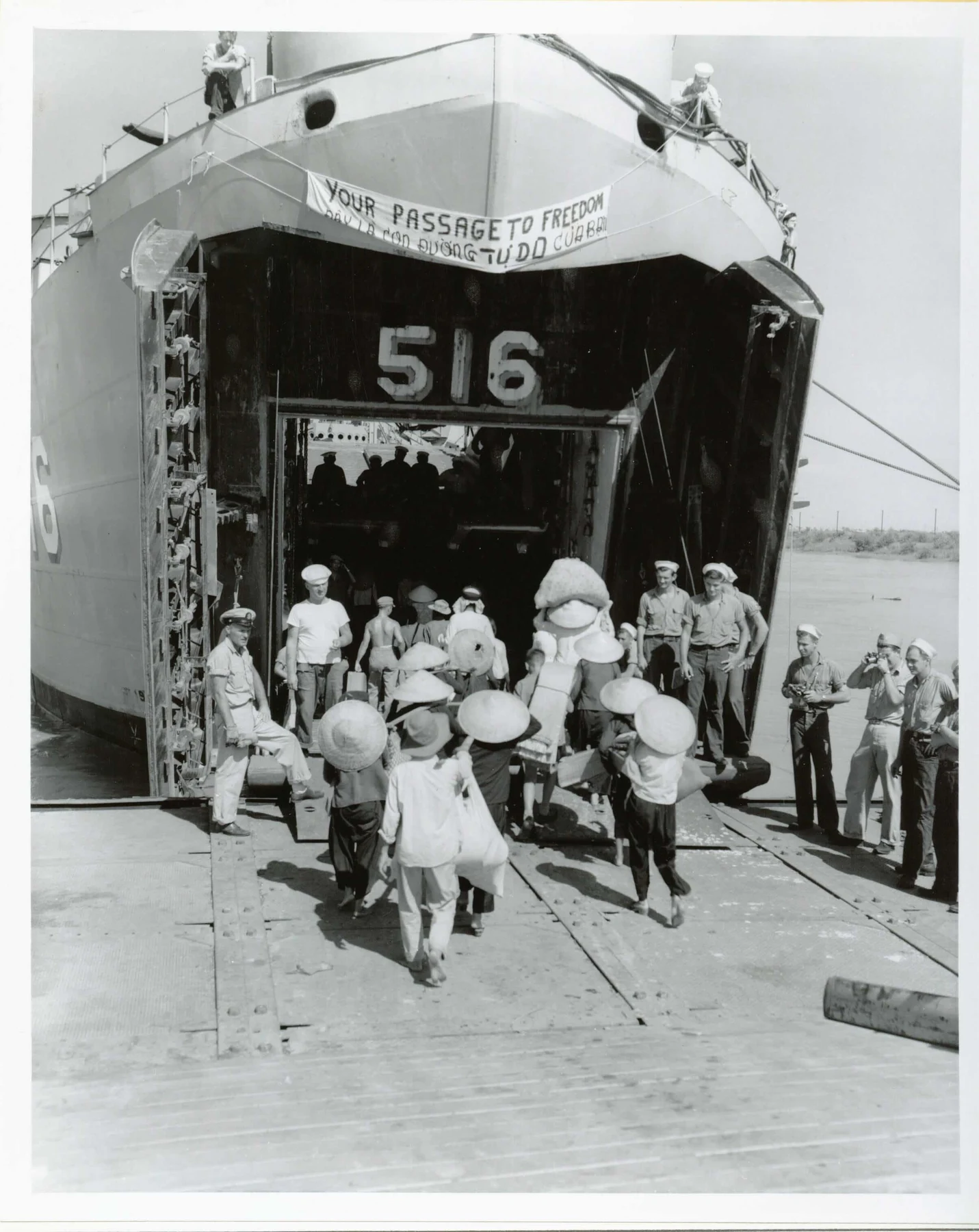

INTERPRETACE. The question of legitimacy therefore had at least three planes: a historical claim to a unified independent country, the procedural right of citizens to political choice and the ability to provide specific governments maintain security and acceptable living conditions. These planes are: they can break up. The regime may be diplomatically supported by an ally and while having weak domestic legitimacy; a revolutionary movement may have real nationalist support while using political violence. War with so she led not only about the territory, but about who has the right to speak on behalf of Vietnam.
Failure to hold the scheduled elections is an important part of the explanation radicalization, but is not in itself a universal proof of how free the election looked like or who would win under any circumstances. Such conclusion requires period surveys, information conditions, enforceable guarantees; and analysis of the political pressure on both sides at the time. It's more appropriate to designate this place as one of the essential Unfulfilled mechanisms peaceful political competition than for clearly proven lost result.
37. Diesel, strategic villages and coup d'état 1963: why the military patron does not gain political confidence automatically
FAKT. American support for the South Vietnamese state the practice did not focus solely on the supply of weapons. United States participated advice, reorganisation of security forces, funding of institutions; and Anti-rebel strategy. One of the most important experiments was the program strategic villageswhich was intended to separate rural population From rebel organizations. Its real effect depended on the way execution: infrastructure and protection were created in some places, elsewhere the movement of residents, forced labour, lack of security guarantees or corruption undermined the declared purpose. Pentagon Papers - Strategic Hamlet Program 1961-1963.
1963 then showed the limits of American influence. Buddhist crisis; and The repression of the regime's opponents has increased mistrust of DiPreparation's government. V Washington had various ideas about whether the president could be to change whether to support it or how to approach South Vietnamese To the generals preparing the coup d'état. American documents record direct contacts with opponents Diesel and the disunity of the US authorities. A coup from 1. On November 1963 he ended up removing DiCalculation and killing both his and his brother NgProcessing Nhua. FRUS 1961- 1963, Saint IV, documents for the coup; National Security Archive - JFK and the Diem Coup.
INTERPRETACE. It cannot be inferred honestly that Washington itself managed every step of the coup. But it's just as unsustainable. The idea that the US was merely a passive observer of domestic events. The external patron could have had a significant impact on the expectations of the South Vietnamese elites, without controlling their future decisions. This one right here. the combination of influence and limited controls increased the risk of destabilisation: the supported regime may have been dependent on foreign aid, but it may not have been be able to transform it into politically legitimate by foreign pressure Stop.
TUS - analytical analogy only. Financial and military The system input does not guarantee that its ability to do so will increase separately to gain the trust of the people. If the safety performance is measured by the occupants the territory and number of operations, while the population's feedback remains weak, may be linked to the weakening of the state's real strength social bases.
38. Gulf of Tonkin: difference between events, intelligence assessments and political mandate
FAKT. There were two in the Gulf of Tonkin. on August 1964 a real collision of the American destroyer Maddox au North Vietnamese vessels. Announcement of a second attack from 4. in August, the following The undisclosed and analysis of signal intelligence appears to be undone. The subsequent resolution of Congress gave the Johnson administration an extraordinary amount of a broad political mandate for further military action. U.S. Department of State - Gulf of Tonkin; NSA - Tongine documentation undisclosed; National Security Archive - listening analysis.
Here it is necessary to distinguish three different statements. One: "There was no one in the Gulf incident "- false, conflict of 2. It's documented in August. Two: "Day 4. August "A second attack" - does not match the conclusions later undisclosed news material. Three: "All the decisive politicians from The early days knew that the second attack did not exist "- from the mere error of the message to automatically does not flow. The question of specific knowledge, distortion, selection the information and responsibilities assumed must be assessed by means of documents on the basis of the following: the individual institutions and persons.
INTERPRETACE. The importance of Tonkin is not just a mistake. in identifying a naval attack. It's an example of how vague information could be turned into a political authorisation within a short time a much longer life span than the original incident. Subsequent decision on the extent of the war was no longer an automatic technical consequence of radar; or - The wire. It was a political decision for which they were responsible. the relevant factors.
39. Cambodia: why bombing must not be erased or issued as the sole cause of genocide
FAKT. American Operations on Cambodia Territory related, inter alia, to the attempt to disrupt North Vietnamese and Vietnamese sanctuary and logistics. But their effects were on Cambodia. a company that itself was undergoing the break-up of neutrality, a coup d'état, civil war and the transformation of political alliances. American Government Support Lon Nola and her military conflict with communist forces significantly have intervened in the internal balance of the country. The Holocaust Museum of the USA describes expert discussion on whether bombing indirectly increased ability The Khmer Red Corps to get recruits and support. At the same time, it will appoint another essential factors: Vietnamese and Chinese aid, Sihanuku's speech on the side The resistance and corruption of the Lon Nol regime. USHMM - The Khmer Rouge Gain Strength.
INTERPRETACE. It is very important to refuse two comfortable shortcuts. "The US created the Khmer Red and caused genocide." confused interaction with the full agent of all subsequent acts. "American bombing with genocide was not related to genocide" ignored again Social destruction, political mobilization and fundamental war change the affected environment. The relationship should be divided into several probable Connection: impact of bombing on civilian population; local change support for insurgents; change in their military capacity; independent decisions The leadership of the Khmer Rouge and its specific policy after April 1975.
The crimes of the Democratic Campuchia regime were the responsibility of their The perpetrators and the commanders. The Extraordinary Chambers of the Cambodian Courts (ECCC) were: set up to investigate the most serious acts committed under the Red Government Khmer between 17. April 1975 and 6. January 1979. This court plane is Different from the broader historical issue, as international conflicts have enabled the regime to gain power. ECCC - Mandate and historical framework.
40. Laos and Unexploded Ammo: a war cargo that does not disappear by signing a peace one agreements
FAKT. In Laos, the Air War left an extraordinary extensive contamination with unexploded ammunition (unexfloded ordnance, UXO). According to UNDP documentation, Laos was overthrown in 1964-1973 More than two million tons of ammunition and hundreds of thousands of bombardment carried out Mission. The time and later estimates of the extent of unexploded submunitions vary according to definitions and method of detection. UNDP - UXO Annual Report 2012.
The subsequent risk cannot be expressed only by the number of bombs. Contaminated the land may restrict agriculture and construction, the cost of roads, sewerage or expansion of electricity networks and create long-term the danger to children, farmers and excavation workers. Him the real economic impact is also made up of investments that have never been made, because the exploration or cleaning of the territory was expensive or technically difficult.
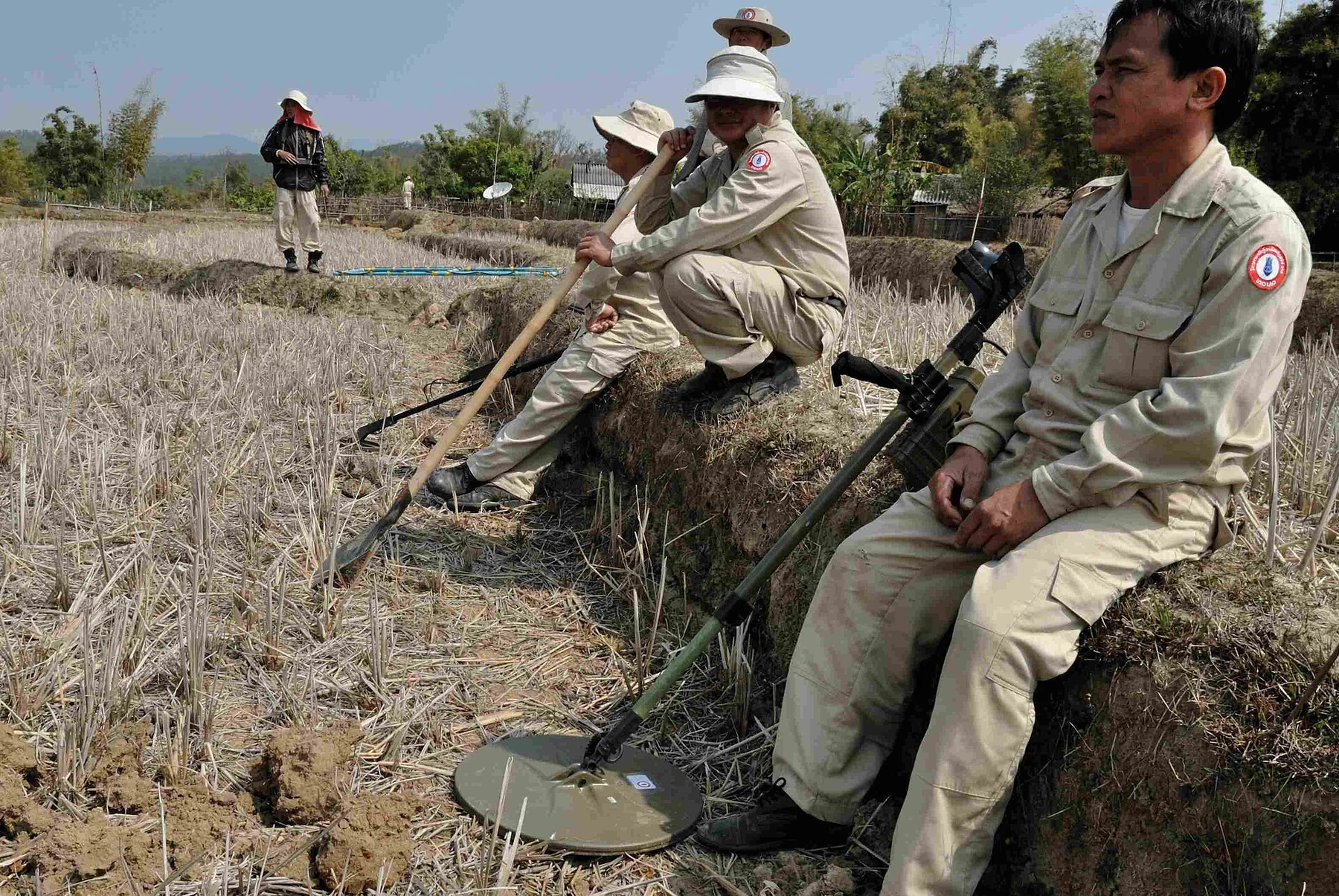

INTERPRETACE. UXO is an example transferred Time cargo: political and military decision of one Decades to use budget resources and limit opportunities A company a generation later. In no serious balance of war therefore "cargo 'is not to be limited to military expenses at the time and immediately registered civilian casualties. It would also be dishonest to attribute the entire postwar Laos' economic trajectory was exclusively ammunition; they were also active. institutions, trade ties, natural conditions and domestic political decision.
41. After 1975: refugees, reeducation camps and long international the consequences of war
FAKT. The end of the Vietnam War did not mean immediate the end of forced movements and political violence in the region. After the victory North Vietnamese regime left Vietnam various groups of people: persons associated with the former South Vietnamese administration, people afraid repression, members of certain ethnic and commercial communities, and people affected by the economic crisis. Laos and Cambodia experienced their own a large refugee and displaced crisis. Maternalistic motifs, political persecution, family ties and security situations with individual stories often overlapping.
It is therefore not appropriate to label all outgoing automatically as "political refugees" or all of them transferred to "economic migrants." The distinction between reasons for leaving was, moreover, a key part of the later international policies. In 1989, it was created under the auspices of the UNHCR Comprehensive Plan of Action for Indochina Refuges, which combine regional arrangements for the admission and determination of refugee status, resettlement and return of persons who did not meet the definition of refugee. Office UNHCR pointed out the risks of ship rejection at sea, undignified conditions in camps and incorrectly carried out examination of applications. UNHCR - High Commissioner's speech 1990; UNHCR - regional approach to refugee crises.
INTERPRETACE. The long shadow of Indochina was not so limited to a map of military operations. He turned the diaspora, asylum policy, relationships Southeast Asian countries and experience of families that have lived abroad yet tens of years after the war chapter was closed. Here too, it is important to distinguish responsibility: one consequence is related to US intervention; and bombing, other with decisions of new regimes after 1975, another with conflicts between the socialist states themselves and the country's policy receiving migrants.
42. How to verify and not confuse the causes of these six extensions
METHODOLOGY CHECK. The cases dealt with above show common rule: claims about the event, its cause and its long-term the result is three different types of notice. The existence of a coup, bombing or refugee plan is archivously identifiable. Rate the specific intervention has changed the support of a party or the length of the war, is already causal historical interpretation. Today's TUS analogy is another one, explicitly hypothetical step.
It is therefore appropriate to maintain any disputed an event in at least four columns: which is verified, What is estimated, about what there is a professional dispute and which archive document will allow the claim to be re-examined. Image "USA versus Indochina "does not exclude the responsibility of American institutions, but it stops reduce Vietnamese, Laos and Cambodia to mere objects geopolitics.
PART V - SCOPE OF THE FORCE, RELIABILITY AND AMOUNT RELATIONS
43. What exactly does "bombing range" mean: tons, missions, targets and civilian Consequences
FAKT. The war in Indochina was one of the most extensive air campaigns of the 20th century. American forces not only bombed North Vietnam, but also South Vietnam, Laos and Cambodia. Already this cancels the intuitive notion that all American bombing was heading for the enemy's state. Extensive part the air support served by its own and by Allied ground operations to: South, interdiction of transport routes and destruction of expected warehouses; or meeting places. Another part was to force Hanoi's leadership to change strategic decision-making. These are different objectives for which success must be measure differently.
It's also important not to flip between the sources of numbers that express something other. Tonnes of ammunition overthrown is the mass figure, not the number of explosions, aircraft or victims. Combat take-off is one operations of aircraft; may not mean successful hit by the target and not always them "Bombing mission" equivalent used by other statistics. Number of target points cannot be confused with the number of actual destroyed buildings. A Number of civilian deaths caused by a specific air operation requires evidence other than the summary table Tonage. For each historical number, the territory, years, the number of participants, the type of ammunition and the source methodology.
The 2019 US Foreign Ministry report uses a summary of more than 7,5 million tonnes of ammunition, which during Vietnam's wars of the American and Allied forces toppled on Vietnam, Laos and Cambodia. On the other hand, the report by Congress Research Service from the same year quotes professional work with more than eight million tonnes for a nine-year period. This is not a suitable place for mechanical Averaging. The difference may arise by defining the period, types of ammunition, territory and Baseline military data. The size of the reader is essential campaigns; for the expert, the exact definition of each series. U.S. Department of State - Working Together to Address Legacies of War in Vietnam; CONGRESSIONAL Research Service - War Legacy Issues in Southeast Asia: UXO R45749.
FAKT. In Laos, many public documents mention More than two million tonnes of ammunition and approximately 580 000 bombing missions Between 1964 and 1973. CRS report attaches an estimate of hundreds of millions submunic. These numbers do not apply to a single type of weapon or necessarily to the same statistical field. The mass of all ammunition is not the same as the mass the cassette bomb and the number of scattered small submunitions is not the number of aeroplanes or containers. In addition, Laos was not only a passive transport corridor; there was a civil war of its own with foreign involvement; and with variable fronts. CRS R45749.
ODHAD. Number of non-exploding submunitions must be reported as an estimate with an interval or explanation of the method. Simplification "third "not exploded 'may be an appropriate illustration of the risk in a particular ammunition, not a reliable universal coefficient for all years, locations and types. Unexploded ammunition is not just historical statistics: its presence can be to verify the findings, findings and liquidation for decades after that. The worst results are for the inhabitants who have to cultivate the land every year. or build on it without sufficient means to explore.
INTERPRETACE. The military entity changes the we consider it evidence. A large number of targets affected could mean intensive commitment, but not necessarily a breach of the opponent's will. On the contrary, The bombing was also of strategic importance, the effects of which are difficult to capture: forced movements, crop loss, restrictions on civilian movements, the failure to respect the requirements of the relevant legislation; government. The historian must not automatically add any later economic loss to the sum of damage to a single operation; however, it must explain why balance sheet purely military targets undervalue social costs.
44. Rolling Thunder, Linebacker and North Vietnamese War Logic bombing
FAKT. Operations Rolling Thunder was running from In 1965 to 1968 as a gradually expanding air campaign against North Vietnam. Her targets were not stable. Washington wanted to do it at the same time signal determination, limit North Vietnamese capacities and force an opponent to political concessions, attempting to manage escalation; and the risk of direct confrontation with the Soviet Union or China. Decision-making The objectives therefore included military, diplomatic and domestic political considerations. The restrictions on attacks in certain zones have been criticised by parts of the U.S. Command as a barrier to military effect; advocates of restrictions saw risk unpredictable escalation. The campaign explanation cannot be used only by one of the these perspectives. Office of the Historian - FRUS, Vietnam 1964-1968.
In spring 1972 followed Linebacker I and in December 1972 Linebacker II, often associated with "Christmas bombing." The time context was different: North Vietnamese conventional offensive, negotiations on the agreement and Nixon's strategy in the final stage of American participation. Absolutely. But it is not true that the higher intensity of bombing itself clearly "won peace. " The Paris Agreement was the result of a long conflict, changes to the battlefield, negotiations and the domestic political situation of all those involved. Some of its key elements were discussed before the December strikes; To determine what specifically changed the bombing requires comparison of draft agreements and diplomats' records.
INTERPRETACE. American airpower allowed destructive blows, but it didn't transfer directly to the legitimacy of the South Vietnamese institutions. When bombing is assessed by whether it was capable of destroying infrastructure, it can come out as an effective tool. If the resulting objective of a stable and independent political order, must be the evaluation include a much longer causative chain. Efficacy in the tactical sense is not automatically strategic efficiency.
The problem is absolutely crucial. Double use infrastructure. The railway bridge can serve military logistics. civil transport; the power plant provides industrial production while hospitals; transport hub brings ammunition and food. Legal basis it cannot be concluded that "the economic object has been helping the opponent '; and automatically justify any intensity of attack. It is necessary to examine them specific military function, expected advantage and predictable civilian the impact at the time of decision. Historical campaigns are therefore needed analyse the target after the target where the springs allow reconstruction.
TUS - analytical analogy. Bombing It was a strong negative entry into the opponent's system. The idea that pressure must lead to surrender, but it depended on a social model resilience: can also strengthen mobilisation, make compromise more difficult and deepen dependence on foreign suppliers. The TUS does not replace the intelligence here evidence or law; asks whether the expected feedback it was consistent with the company's actual behaviour.
45. Cambodia: secret war, civil war and responsibility for the various stages violence
FAKT. Cambodia bombing isn't the only isolated surgery. Air strikes on Cambodia territory have appeared in The 1960s, but the major escalation was linked to 1969, continued after the coup in 1970 and strengthened especially during the Cambodian era civil war. Operations are associated with names Menu and Freedom Dealwhose borders, records and geographical scope are: different views. The exact bombing data should therefore be read following the American database of individual missions, not take over The highest public debate number as an undisputed sum. Yale - United States Bombing of Cambodia 1965-1973.
The official justification repeatedly pointed to North Vietnamese the bases, cross-border supplies and the need to protect the American; or South Vietnamese units. But it is not possible to move the debate to these objectives. Cambodia was a sovereign state whose inhabitants were not Collective responsibility for the use of parts by different armed groups its territory. Historical reconstruction must follow the legal framework, the way the choice of targets, availability of settlement information and the method of recording damage. Political decision to hide the scope of the campaign from a part of the public; and the institution adds a separate issue of democratic accountability.
FAKT. After the coup against Norodom Sihanuk of the year The 1970's have changed the way the conflict is. The Lon Nola regime fought the rebellion, in which the Communist organisations of Cambodia played an important role, North Vietnamese forces and the variable political loyalty of the population. Sihanuk's public approach to the anti-government coalition has increased legitimacy the uprising in part of society; that does not mean that he shared all future Pol Pot's targets. The course of war and gradual radicalization cannot be explained only by the intensity of air strikes or only by the Red ideology Khmer. Both processes were real and they influenced each other. United States Holocaust Memorial Museum - The Khmer Rouge Gain Strength.
THE DEAL AND THE SPOR. Total civilian casualties Cambodia's bombing is fundamentally different in literature. The difficulty causes missing local registration, indirect deaths, population movements, coexistence ground fighting and later political use of numbers. Without a clear methodology one extreme estimate cannot be chosen and built next to relatively better documented number of crimes judged after 1975 as: equivalent numbers. Strict work with numbers is not a delusion of victims; it is protection against their instrumentalisation.
INTERPRETACE. The question "created by the United States of Red Khmery? "contains several different hypotheses. Bombing could have to facilitate the recruitment of insurgents because it created anger and destruction. American Lon Nol's support could link some of the peasants to the opposition against the government. Chinese supplies and Vietnamese military presence have changed their ability armed groups fight. And the leadership of the Khmer Rouge itself was Policy decisions: organized cleans, created prison The system, displaced residents and persecuted groups defined as hostile. The last liability cannot be revoked by reference to the previous intervention of another power. At the same time, it cannot be used to disappear responsibility for bombing and support to civil war parties.
46. Laos: war from the outside and from the inside and long-term price of the landscape
FAKT. Laos found himself between the Cold War and the formal requirements of neutrality, domestic conflict and functioning North Vietnamese transport networks. There was a war on his territory between Laotian political and armed actors, supported by various foreign centres. American covert operations in Laos are associated with CIA, its local allies and with air support; North Vietnamese At the same time, the units used East Laos for logistics and direct operations. The war was not the same as bombing Ho Chi Minh's path: air mission promote conflicts beyond this route. CIA - Air Operations in Laos, 1955- 1974.
The experience of Lao communities included the loss of homes, hiding in caves, forced movements, escape from combat, and change in relation to the landscape. After the war, large areas were loaded with unexploded ammunition. Even a territory which was not economically significant during the war could be for later development essential: agricultural land, water resources, construction land, school surroundings or scheduled transport arteries. We can't just add "all hectares of unused land" as proven damage. We can However, prove that the need to locate and remove ammunition is made up of additional investment cost and security risk.
Priority in cleaning contaminated areas would be given in terms of the humanitarian effect should not have been determined solely by economic return. Child protection and access to livelihood resources may be more urgent than the profitability of a certain communication. In practice, an ethical conflict arises: commercially the usable infrastructure attracts capital while the poor village with high contamination may remain on the side. TUS - Interpretation Model: local maximization of investment revenue can deepen the intragroup risk inequality, although the total investment amount is increasing.
ODHAD. In connection with Laos, it is often repeated claims about millions of unexploded ammunition. It is necessary to distinguish estimates originally overthrown submunitions, modelled percentage failure, newly found cuts and items actually removed. The last two categories are best auditable, but not directly indicative of the total remainder. Prohibition automatic conversion of historical percentage of default to accurate today's number is intentional in this article. CRS - War Legacy Issues in Southeast Asia.
47. My Lai: documented war crime, his investigation and systemic problem Responsibility
FAKT. Massacre in Mzolai from 16. On March 1968, he was one of the best documented cases of killing civilians by American soldiers during the Vietnam War. It's not just an accusation made by an opponent. The forensic files on Lieutenant William Calley's case describe him conviction for intentional murder 22 persons with disabilities and for: attempted murder of another child. This figure must not be supported by a judicial document. to give up for the total number of all victims of the massacre, which is in historical works reported to be significantly higher. This is the difference between the range a specific condemning statement and the extent of the whole event. ICRC The Commission notes that the Commission has not taken into account the evidence available in the opening decision. William L. Calley, Jr..
Investigation of such events requires a sequence of actions through initial reports, public revelations and military investigations following criminal proceedings the steering. General statement that "the army knew all about it" would have exceeded sources, unless specific persons are identified, dates; and documents. At the same time, it is perfectly legitimate to examine whether the culture of reporting results of operations, pressure on the number of killed opponents, ideas about civil communities and the scope of command have created conditions that facilitate crimes and their concealment. Individual criminal liability and systemic responsibility are not competitive alternatives.
INTERPRETACE. Case is a pre-transfer warning the population to a pre-determined category of "hostile environment." V Anti-rebel war may be, according to some military practices difficult to identify armed personnel in the civilian population. From this The difficulty, however, does not imply the authority to consider all locals hostile. warriors. The basic distinction is normative and has legal effect: if civilian suspected of supporting the rebels, does not stop being that automatically a person protected against intentional killing.
It is also important to remember those who refused violence, tried to prevent it or document it later. War is not the only one the collective action of "Americans" or "Vietnamese." It contains specific soldiers, Commander, Informants, Journalists, Witnesses, Survivors and Home Opponents intervention. Transferring everyone to national categories would be the same thing as reproducing The simplification that we want to pass analytically.
48. Crimes of all parties: Hue, executions, prisoners and the boundaries of evidence
FAKT. American and South Vietnamese crimes are not one part of the history of civilian suffering. North Vietnamese and Communist rebel forces used assassinations, abductions and targeted killing political or administrative opponents; some practices they were intended to be a means of intimidating communities and weakening the state of the south. During The Tet offensive of 1968 is among the most contentious episodes of killing civilians and suspected opponents in the Hujak region. Precision resolution executed persons since deaths caused by combat operations, bombing and later picking up remains methodically complex.
When comparing two crimes, the procedure cannot be used: one party committed a documented act, thus the other party does not bear responsibility for its own action. Still, the crime of one army justifies the collective the punishment against the population of the area considered to be its base. Historical Treatment of Hužak and Mzellai should be the same in the requirement for individual evidence, not necessarily the same in the availability of documentation. There is a extensive US court file; for many other events there is a spring Base fragmented and politically burdened.
THE DEAL AND THE SPOR. The figures for the victims of the Hub differ significantly depending on whether the source counts the bodies found, reported missing, possible executed, or all dead during combat. The source shall not be the only one a repeated number taken from the promotional brochure. It's necessary to divide them the existence of documented murders from the scope and motive of all attributed death. The survival statement is of high historical value, but at Quantification should be taken into account for the possibility of multiple testimonies to the same victim, and insufficient identification.
INTERPRETACE. The principle is uniform moral and legal Metrics: killing a civilian is not a minor evil just because she committed it a Party fighting against colonialism or a Party supported by democratic State. The political objective may be historically explained or legitimate; cannot automatically legalise the means of making no use of the goods. This principle is also applies to torture of prisoners, treatment of prisoners, political murders and to the postwar treatment of the losers. ICRC - protection of civilians.
49. Phoenix program, South Vietnamese prison and anti-insurgency border strategy
FAKT. Programme Phoenix was created as part of American-South Vietnamese efforts to weaken political and organisational the infrastructure of the National Liberation Front in the South. Its operation involved gathering information, identifying suspects, detaining and operations against persons considered to be members of the Communist apparatus. Historical discussion is about efficiency, about the scale of direct American controls, methods used and responsibility for torture, arbitrary holding or killing. Human self-marking as part "infrastructure 'is not a judicial evidence of belonging to an armed person the organisation.
In the anti-insurgency environment, a structural problem arises: the network depends on local collaborators who may have their own family conflicts, property disputes and political interests. The information may be: used to eliminate the truly important organizer of the uprising, but also to an innocent man's purposeful accusation. When an institution simultaneously requires measurable "neutralising" numbers, there is a risk that success will be measured Number of arrests and deaths without independent control of their actual roles.
INTERPRETACE. It is not a claim that all participants the programme used the same methods or that each arrest was illegal. The question is whether the system has created effective safeguards against misaccusations and whether he was allowing for an investigation into abuse. Difference between information the reporting services and the evidence required for criminal liability is in This issue is crucial. Here too, responsibility is important South Vietnamese authorities: American support may not mean direct command any local interrogation.
In future, the exact numbers of persons must be distinguished from the killed in: combat operations, killed in targeted actions, detainees, persons Switched to the other side and administrative removed from the lists. The statements on the "number of Phoenix victims' which, without definition, combine the following category, cannot be used as a final balance sheet.
50. Chemical War, Agent Orange and a disease that doesn't end with war
FAKT. The American army in Indochina used herbicides. especially to the defoliation of the crop and to the destruction of vegetation that could hide an opponent or provide food. The best known is Agent Orange, the mixture herbicides with a significant problem of contamination with TCDD. Public debate sometimes confuses herbicides themselves, dioxin contamination, the whole group "rainbow herbicides" and any war use of chemical substances. This leads to miscomparisons of the dose, territory and health consequences. U.S. Department of Veterans Affairs - Agent Orange.
Health impacts must be described in relation to the exposure type, length stay, route of entry of the substance into the organism and strength of epidemiological evidence for a specific disease. It is not scientifically responsible to claim that every disease The man who lived in the south of Vietnam was caused by Agent Orange. Same wrong would be to declare that without an individual laboratory record there is no proven population risk. Epidemiology often works with probability, group comparisons and uncertainty intervals. Judicial Injury elimination level They don't have to overlap perfectly.
INTERPRETACE. Contaminated disposal programmes soil and healthcare represent a form of late-stage correction but are not automatic quantification of all original damage. High costs of remediation specific places do not directly tell you the amount needed for the whole company. Similarly, the number of patients recognised depends on access to examination, compensation rules and the ability of the authorities to register Disabled. When the war balance shifts from immediate death to chronic diseases, genetic and reproductive issues, loss of productivity; and long-term care, complicated both the evidence and the moral framework; however, it does not disappear the responsibility for the use of the means at risk predictable.
TUS - analytical analogy. Health and the environmental impact is an example of delayed feedback. In the moment The military decision may be manifested directly, while The social price is created gradually, geographically unevenly and partially in other generations. System based on short-term indicators only This price will not be systematically captured.
51. The right to use force and rules of conduct are not the same question.
LEGAL FRAMEWORK. It is necessary to distinguish consistently ius ad bellum - legal rules on the use of force between states - from is in bello, i.e. international humanitarian law governing management armed conflict. The conclusion that some intervention was lacking sufficient international legal justification, does not automatically prove that every punch during that time, he was a war crime. And vice versa, not even a proven self-defense does not allow the deliberate attack on civilians, torture prisoners or execute attacks that do not distinguish between civilian and military objects.
The UN Charter contains a prohibition of threat by force and use of force against territorial the integrity or political independence of the States, with particular exceptions to: self-defence and security Council measures. In the case of Indochina, the the United States' argument relied on the defense of a South Vietnamese ally; and a broader concept of collective security. Critics argued that political the Saigon regime was not simply "the State under attack" in a clear the interstate conflict that the conflict had significant civil and Decolonization dimension and that interventions in Laos and Cambodia caused separate issues of sovereignty. Fair legal analysis must state: then arguments and objections, not to take back diplomatic the formulation of one party as an undisputed verdict.
FAKT. In addition to the UN Charter, the Geneva The protection of war victims. Four 1949 Geneva Conventions They existed during the main American intervention. Additional However, the 1977 Protocols cannot be applied automatically without explanation back to the 1968 event as the contractual text already in force at that time. Some principles codified later reflected earlier ordinary law; their existence and specific content in a given year but must be analysed by law to be documented separately. That is the fundamental difference between contemporary moral criticism and legally accurate marking of the broken rule. ICRC - Civilians.
Even the anti-insurgency nature of war does not diminish the value of the civilian life. If an armed group is active among civilians, it causes more difficult military decision-making; it does not create an automatic exception from protection rules. The presence of some legitimate military targets in the municipality does not allow the entire municipality to be considered a military object. Basic the problem lies in the knowledge available to the attacker at a specific time, the means chosen and the reasonably expected civil losses.
52. Resolution, proportionality and precautionary measures: how to legally analyse attack
LEGAL FRAMEWORK. Three concepts are necessary: distinction between civilians and fighters or civilians; and Military objects; proportionality within the meaning of the prohibition expected collateral damage disproportionate to the specific and direct Military advantage; and precautionary measureswhich have help prevent or reduce damage. Proportionality is not the mathematical ratio "one military sacrifice for a certain number of civilians'; and does not mean that civilian losses to a certain abstract percentage are always acceptable. It requires a concrete assessment of the circumstances of the attack.
Consider bombing the bridge. Under certain circumstances, the bridge may be a legitimate military objective if it actually makes a significant contribution to the military the activities and their destruction offer a certain military advantage. However, the analysis must continue: what are the alternatives, when civilians use the bridge, what is expected damage in the surrounding area, what ammunition will be used and how Is information reliable? A similar analysis is needed for communications, warehouses, airports, and suspicious refuge across the border. Markings places behind the "enemy area" in itself does not prove the military nature every object inside.
METODA. The historian may find back that he is at the destination There was no enemy squad in the area. But this result alone yet does not prove that the decision of the attacker was intentional at the time of the attack By attacking civilians. On the contrary, the soldiers declared intent to intervene The opponent, he's not yet showing respect for the rules. We need orders, target documentation, operational records, collateral damage estimates, statements witnesses and any internal warnings. The analysis must distinguish intent, negligence, predictability and real result.
For large campaigns, there is not enough legal sentence "bombing was disproportional ', if it is not clear whether we are evaluating a single attack, series Interconnected blows or a broader policy strategy. Legal conclusion without an identified unit of analysis is too vague; at the same time, it is not necessary wait for a final judgment to be able to prove civil suffering historically describe and critically assess. FACP / RIGHT / INTERPRETATION Therefore, the article remains separate layers.
53. Command Responsibility, Investigation and Difference Between Crime and War tragedy
LEGAL FRAMEWORK. The commander's responsibility is not automatically The same as the subordinate's responsibility. Is there any question of the commander's condition? control what he knew or might have known what orders he gave, whether he had a real the possibility of preventing the crime and whether it took the available measures after the detection a violation. The current legal language is more detailed than the period military practice; it is therefore necessary to identify when assessing events in the 1960s the corresponding historical legal basis. It is not right to call the commander criminal liability only because the incident took place in his space Command.
FAKT. Historical charges against American war Crimes require examination of military investigations, trials, statements of survivors and then the debate in Congress. Similar claims apply to North Vietnamese and rebel forces, their command decisions, executions and treatment of civilians or prisoners. There is a special legal law in the post-war Cambodia evidence in the form of the activities of the Extraordinary Chambers of the Cambodian Courts (ECCC), which assessed the crimes of the Democratic Campuche regime. These courts may not: mechanically spread to all violent acts of the region and decades; they had a defined time, personal and substantive mandate. ECCC - Case 002 / 02.
Criticism of the political strategy may be justified even without the conclusion that: the specific factor has been criminally responsible. Government liability for decisions conduct a large-scale war, the commander's responsibility for the command system; and the responsibility of the soldier for a particular act is not synonymous. Public The controversy often merge because the word "crime" makes it more convincing than careful reconstruction. But for historical truths, it is necessary maintain differences.
INTERPRETACE. Severity of damage and evidence individual guilt represents two distinct axes. There may be catastrophic civil consequence for which it is not possible to use the available materials reliably demonstrate the specific intent of the person. There may be a fully proven intentional crime with a lower number of victims. One axis shall not be delete the other. If we want to judge the relationship between the great power and the smaller companies, we must also follow the criminal responsibility responsibility for the structural risk created.
54. Moscow, Beijing and Hanoi: why North Vietnam was not a simple puppet
FAKT. People's Republic of China and the Soviet Union provide North Vietnam with military, economic and political Help. Their relations have deteriorated deeply during the 1960s. V The different advantages of deliveries were applied: the Soviets played a significant role in air defence and supply of advanced weapons; China provide support to neighbouring Vietnam, including significant material and the logistics dimension. The real aid ratio was changing by years, types equipment and valuation methodologies. At certain times, the Soviets and the Chinese They were competing for influence, but both supported the war against America. intervention. This apparent discrepancy is the essence of the triangle, not the except for that.
The secret CIA memorandum of April 1972 captures the remarkable American conclusion: North Vietnam is not just a Soviet tool and its leadership It carefully protects independence. The memorandum explicitly points out that Hanoi It uses two suppliers, inter alia, to prevent excessive the dominance of any of them. The document also admits uncertainty American knowledge of the true tone of Soviet-Vietnamese negotiations. That is an example of useful methodological restraint within period reporting analysis. FRUS CIA Intelligence Memorandum, 17. 1 April 1972.
INTERPRETACE. Hanoi had its own priorities: reunification of the country, political survival, military goals and domestic ideological discipline. These actors were not outside international power relations; they cannot But to assume that their policy was possible from Moscow or Beijing Just command. Nor can any decision of North Vietnamese The leadership only explains nationalism. The Communist Party's leadership had a own power structures, internal disputes and suppression mechanisms Opposition. Foreign autonomy cannot therefore be confused with political autonomy. Pluralism at home.
It is important not to be subject to a double standard when compared to Saigon. South Vietnam had its own institutions, interests and conflicts with the American advisors, although he was critical of US aid. North Vietnam had his own strategy despite the extensive help of socialist powers. Differences between the two systems are essential but analytical category "external sponsor and domestic partner" belongs to both sides. Only then can it be to objectively assess the limitations of power by the great powers.
55. China-Soviet discord: ideology, boundaries and the struggle for leadership position
FAKT. China-Soviet dissolution was not just personal by fighting two leaders. Linked ideological differences, strategy disputes Revolutionary policies, nuclear deterrence, position in Socialist camp and growing security concerns from both powers. Soviet withdrawal of advisors from China in 1960 and later border clashes show that the difference interfered with Asia's security architecture itself. At the same time, the Soviet and Chinese support for North Vietnam continued; bilateral competition has not interrupted the common interest to weaken America Military engagement.
In this context, the Vietnamese question has also become a field of competition for Revolutionary legitimacy. When one great power seemed too moderate, the other She could have accused her of betraying the liberation movement. When she offered more arms, gaining access and influence, but committed to support a partner whose decision-making was not fully controlled. Economic and military assistance so could increase the autonomy of Hanoi precisely because it was not monopolised dependent on a single source.
US strategic memorandum from the Nixon administration shows how Washington perceived the conflicts between Moscow and Beijing, and He tried to use them. It is necessary to read them as a document of the American political considerations, not as a neutral description of the motivations of all parties. FRUS - National Security Council: China and the Soviet Perspective.
INTERPRETACE. The participation of a third actor may increase: or reduce the negotiating possibilities of a smaller State. Two competing patrons increase the choice of supplier, but can also push on loyalty and transfer your own conflict into local politics. That's one of the Central issues of economic and political sovereignty: dependence will not disappear just changing the patron, but it can be reduced if the state gets alternatives and retain its decision-making power.
56. Nixon in Beijing, Paris 1973 and the paradox of diplomacy of three powers
FAKT. America-China's convergence culminated Nixon's visit to Beijing in February 1972. Vietnam was not the only one motivated; It was a global balance with the Soviet Union, American strategic a position in Asia and Chinese security calculations. Vietnam's War, however It was one of the factors that the American leadership wanted with this diplomacy. influence. Former simplified image of the "Single Communist Block" became strategically useless for Washington. Office of the Historian - Rapprochement with China, 1972.
The paradox was that Hanoi could perceive Chinese convergence with the US as a risk, but at the same time tried to insure against him by close relations with The Soviet Union. Moscow could support Vietnam while searching for Detente with Washington. China may have criticised the American war, but its priorities also included concerns about the Soviet Union. American Documents from In 1971, they note that the Soviet position on the Vietnam negotiations could respond to the announcement of the American trip to China; the document itself draws attention to the limited evidence of specific Soviet instructions. FRUS - Soviet Policy and Vietnam, 1971.
The Paris Agreement of January 1973 established a framework for the termination of the direct American military participation, ceasefire and other commitments. Her signature was not identical to by reaching a permanent political agreement between the Vietnamese parties. Conflict He continued and ended in 1975 with the fall of Saigon. Therefore, it is not appropriate To call Paris the moment when "won" or "lost" without determining for whom, what target and in what time horizon. Diplomacy The great power changed the international space of conflict; it did not abolish its own internal political dynamics.
TUS - hypothesis. If one player changes in the system the coalition, other actors will reassess their threats and investments. It's not, however, in itself proof that a specific diplomatic move has been made by a specific battle. The precise conclusions require simultaneous documents of time; and the reconstruction of government decisions. Otherwise, the The system story turned into an unverifiable theory.
57. From the Cambodian invasion to the Chinese-Vietnamese war: turnover after 1975
FAKT. The end of the American war did not end the violence between South-East Asian countries. After the Red Khmer's arrival, Cambodian-Vietnamese relations quickly deteriorated, broke out cross-border The attacks and the Vietnamese army eventually entered Cambodia in December 1978. In January 1979, the Democratic Campuchia regime fell. Mode drop But the mass crimes have also opened up a long period of time. Vietnamese military presence, new governments supported by Hanoi, and international conflict on the recognition and representation of Cambodia.
In February 1979, the People's Republic of China launched a military attack against Vietnam. Its background included the Chinese-Vietnamese border border and Minority disputes, Chinese support for the Cambodian regime, Vietnamese intervention in Cambodia and a wider competition with Moscow. Vietnam has been significantly He brought the Soviet Union closer. Former anti-French allies, and The anti-American struggle has thus gone to conflict between themselves. The idea that regional policy has always been a mere discipline of two ideological blocks, this development fails.
INTERPRETACE. Responsible for the atrocities of the Khmer Rouge cannot be transferred to Vietnam just because his army overthrew the regime. At the same time the entire later Vietnamese military presence cannot be completed without further to be designated as a single humanitarian act Historical evaluation needs two questions: what has made the end of the genocide regime for immediate the safety of the population and the power and human rights implications of the subsequent occupation, regional war and isolation of Cambodia. Question International representation of Cambodia in the UN and support of opposition coalition It deserves a separate interpretation, because diplomatic recognition does not mean automatically proven direct material support to each military to the coalition.
This stage also challenges the simple claim that Vietnam was following In 1975, he was fully sovereign because he won militarily. Victory it removed one significant dependence but did not eliminate economic problems, security threats and the need for Soviet support. The Suverenity has different dimension: ability to defend borders, independently elect foreign partners, to ensure economic needs and to create political legitimacy within country.
58. Verifiable system balance: who decided who paid and who carried risk
METHODOLOGICAL SYNTHESIS. The long story of Indochina is not just The chronology of war. There is also a sequence of decisions in which the individual actors often optimized something else: France conservation colonial positions; United States credibility of commitments and prevention of domino effects; Hanoi National Uniting and Power of His Political Project; Saigon the survival of the regime and the security of the territory; Beijing border security; and strategic autonomy towards Moscow; Moscow's influence in the socialist world; Laotian and Cambodian factions of their own survival and power. This wording does not replace historical variability nor must they claim that all members any society shared a single goal.
When comparing aid and costs, we recommend to monitor at least: six separate balance sheets. The first is a direct military expenditure and losses on warring States. Second civilian deaths, injuries and displaced. Third long-term environmental impacts, including UXO and chemical contamination. Fourth political and institutional changes that We're not going to just count to a dollar. Fifth subsequent cost of recovery, health care, refugee integration and mine mine mine clearance. The sixth opportunity, which the war has abolished: education, infrastructure, living standards and production in progress. The sum without the indicated methodological boundaries would be led to double counting and false accuracy.
The comparison of military assistance from abroad must be symmetrical. Delivery Air defense missiles can enhance the safety of the recipient, but also increase his dependence on spare parts and training. American the financing of the South Vietnamese army could improve its operational capacity; and to weaken the incentive for domestic fiscal reforms. Chinese aid Hanoi could strengthen Vietnam's opposition to the US while creating later political conflict. It is therefore important not to confuse ability to obtain help au Ability to read conditions for decision.
TUS - explicitly interpretation layer. Mechanism, which we want to explore here, can be expressed by sequence: limited information → decision according to simplified model → change of environment by decision → delayed or filtered feedback → further escalation based on the original model. This sequence may be present in the American strategy bombing, in Soviet and Chinese efforts to influence Hanoi even in internal policy of the regimes in the region. However, the occurrence of this disease must not be assumed to occur without documents. It would be refuted, for example, by evidence that the decisive actors they have received negative feedback in time and correct, adjusted the targets; and Despite this, there was no deepening of the systemic problem.
The final historical court must admit the asymmetry of power and pluralism responsibilities. The United States had fundamentally larger air and material capacity than local forces, and their decisions therefore had an exceptionally high level of capacity broad consequences. But local political actors were not objects without will. Communist and anti-communist regimes made their own decisions, some responsible, others repressive and violent. Precise distribution responsibility does not arise by mechanical ratio of the number of bombs or dead; needs specific actions, relevant decision-making powers and corresponding available evidence.
The reading conclusion. The most important lesson is not the sentence "superpowers never interfere" nor its reverse version "strong intervention "always ensure order." The documented history shows how fast the declared security assistance may become a long-term system of violence, whose price is distributed by people other than those who decide on it. Result cannot be predicted by military superiority alone. Therefore, they must strategic calculations exist independent control of facts, legal the boundaries, civil consequences and the possibility to correct their own assumptions.
Documents and resources - main road
This list is not a substitute for the continuous links in the text; it serves as Quick archive signpost.
- National Archives - Pentagon Papers, complete undisclosed edition
- FRUS 1952-1954, Indochina, Volume XIII, Part 1
- FRUS 1955-1957, Vietnam, Volume I
- FRUS 1961- 1963, Vietnam, Volume IV
- FRUS 1961-1963, Laos Crisis, Volume XXIV
- FRUS 1964-1968, Vietnam, Volume II - Rolling Thunder
- FRUS 1964-1968, Vietnam, Volume VI - Tet and assessment
- FRUS 1969- 1976, Volume VI - Vietnam / Cambodia 1969- 1970
- FRUS 1969-1976, Volume XLII - Kissinger-Le Duc Tho negotiations
- FRUS 1977-1980, Volume XIII - China / Indochina
- FRUS 1977-1980, Volume XXII - Southeast Asia and Cambodia
- UN Peacemaker - Final Declaration, Geneva Conference 1954
- National Archives - Tonkin Gulf Resolution
- NSA - Hanyok: Gulf of Tonkin Mystery
- CIA - Air Operations in Laos, 1955- 1974
- UXO Lao - The UXO Problem
- U.S. Department of Veterans Affairs - Agent Orange / Herbicides
- Yale Cambodia Genocide Program - U.S. Bombing of Cambodia
- ECCC - Case 002 / 02
- UN - Cambodia atrocities and ECCC legal framework
- Library of Congress - Vietnam: A Country Study
- Library of Congress - Laos: A Country Study
- Library of Congress - Cambodia: A Country Study
- Library of Congress - Carte de l'Indo- Chin, 1895
- Library of Congress - CIA map of Indochina, 1985
- National Archives - U.S. Military fatal casualities of the Vietnam War