
US INTERVENTIONS since 1945: WAR, TRANSFERS, SECRET OPERATIONS AND SPORTS ON INTERNATIONAL LAW
INTRODUCTION: WHAT INCLUDING "INTERVENTIONS"
The list of "American interventions" may look very different depending on what we count on this word. Is a direct military intervention the same as the secret financing of the opposition? Is military aid to the Allied Government of Intervention? Does the Korean war, under the UN mandate, the CIA's secret operation in Iran, the invasion of Iraq, and the evacuation of American citizens from a crisis country, fall under the same table?
If we put all the events in one list without categories, the number will be impressive, but analytically weak. The Congress Research Service has recorded hundreds of cases in its foreign use reports since the US inception, but it explicitly points out that the list is not identical to the list of wars and does not include all classified operations.
The Commission therefore considers that the measures in question are imputable to the State.
- direct war or invasion;
- limited military strike;
- the operation under the mandate of the UN or the collective defence;
- a secret operation to change government;
- support for local armed actors;
- military presence or assistance without direct combat;
- sanctions and economic pressure, which are an important instrument of foreign policy but are not in themselves armed intervention.
Such a breakdown allows for criticism of specific operations without the different historical events coming into a single slogan.
1. 1945: The US is starting to come out of war as a GLOBAL POWER
After World War II, the United States remained with huge industrial capacity, a global network of bases, a nuclear monopoly until 1949, and a major role in the creation of the UN, the Bretton Woods institutions and the Western Security System.
At the same time, a cold war began. Washington interpreted Soviet expansion and communist movements as part of global strategic competition. On the contrary, Moscow saw Western military and economic power as a threat. Much of the postwar intervention was created by the logic of "holding communism."
2. KOREAN WAR 1950-1953
The Korean War began with the invasion of North Korea south in June 1950. The UN Security Council at the time of the Soviet boycott approved assistance to South Korea, and the United States formed the main part of the UN command forces.
After the North Korean attack, the war changed: UN forces went far north to the Chinese border, leading to massive intervention by the Chinese People's Volunteering Army. The front finally stabilized near the original border.
The Korean case shows why the "US has attacked Korea" list is not enough. Indeed, the US waged a major war, and bombing had devastating consequences, but the initial legal and military context was a response to North Korea's invasion and UN resolutions.
3. IRAN 1953: TPAJAX OPERATIONS
Iranian Prime Minister Mohammad Mosaddegh nationalized the Anglo-Iranian Oil Company, which triggered conflict with Britain. In August 1953, the US CIA and British MI6 supported a covert operation against the Mosaddegh government.
Today, it is no longer just historical suspicion. The classified documentation of the US Ministry of Foreign Affairs and the CIA describes the planning of political, propaganda and organisational steps leading to the overthrow and strengthening of Shah Mohammad Reza Pahlavi.
The motives were combined. British interests were strongly concerned with oil; the US administration also increasingly interpreted the crisis by the Cold War's prism and fear of the influence of Iran's Communist Party, Tweh, and the Soviet Union.
The coup has damaged the image of the US in Iran in the long term and is one of the key historical backgrounds of Iran's 1979 revolution and later hostility.

4. GUATEMALA 1954: PBSUCESS
In Guatemala, President Jacobo Arbenz was promoting land reform, which affected, among other things, the vast unused land of the United Fruit Company. Dwight Eisenhower's administration also increasingly saw the government as a space of communist influence.
The CIA created the PBSUCCESS operation. She supported Carlos Castillo Armas, propaganda, psychological warfare and limited air attacks. In June 1954, Arbenz resigned.
The State Department's classified documents are now describing the role of the CIA openly. The subsequent political development of Guatemala led to decades of authoritarianism and civil war, during which state forces and paramilitary forces committed extensive violence, especially against the indigenous population.

5. KUBA 1961: BAY OF PIGS
After the Cuban revolution, Fidel Castro was supported by the CIA by exiled Cuban troops to overthrow the regime. The invasion of the Bay of Pigs in April 1961 ended in a rapid failure.
The operation is a textbook example of a cover regime change that was secret from the public, but was not politically neutral. The failure strengthened Castro's position and contributed to a closer connection between Cuba and the Soviet Union.
A year later, the Soviet installation of nuclear missiles in Cuba and the US naval "quarantine" resulted in the Cuban missile crisis - one of the moments when the world was closest to the nuclear war.
6. LUMUMBA CONGO AND PATRICE
The crisis in the Congo after independence in 1960 was a mixture of domestic power struggle, Belgian interests, separatism in Katanga, the UN operation and the Cold War.
The classified US documents confirm that the CIA was considering and planning to eliminate Prime Minister Patrice Lumumba, including the assassination options. That's a serious fact.
However, it is necessary to distinguish the planning of the assassination from the direct execution of the murder. Lumumba was killed in January 1961 by Congolese and Katanga actors, with the participation and responsibility of Belgian officials; historical literature does not consider it proven that the CIA has executed the execution itself directly. Yet US policy actively sought to remove it and supported competitive power structures.

7. VIETNAM: FROM THE ADVICE TO THE MASSIVE WAR
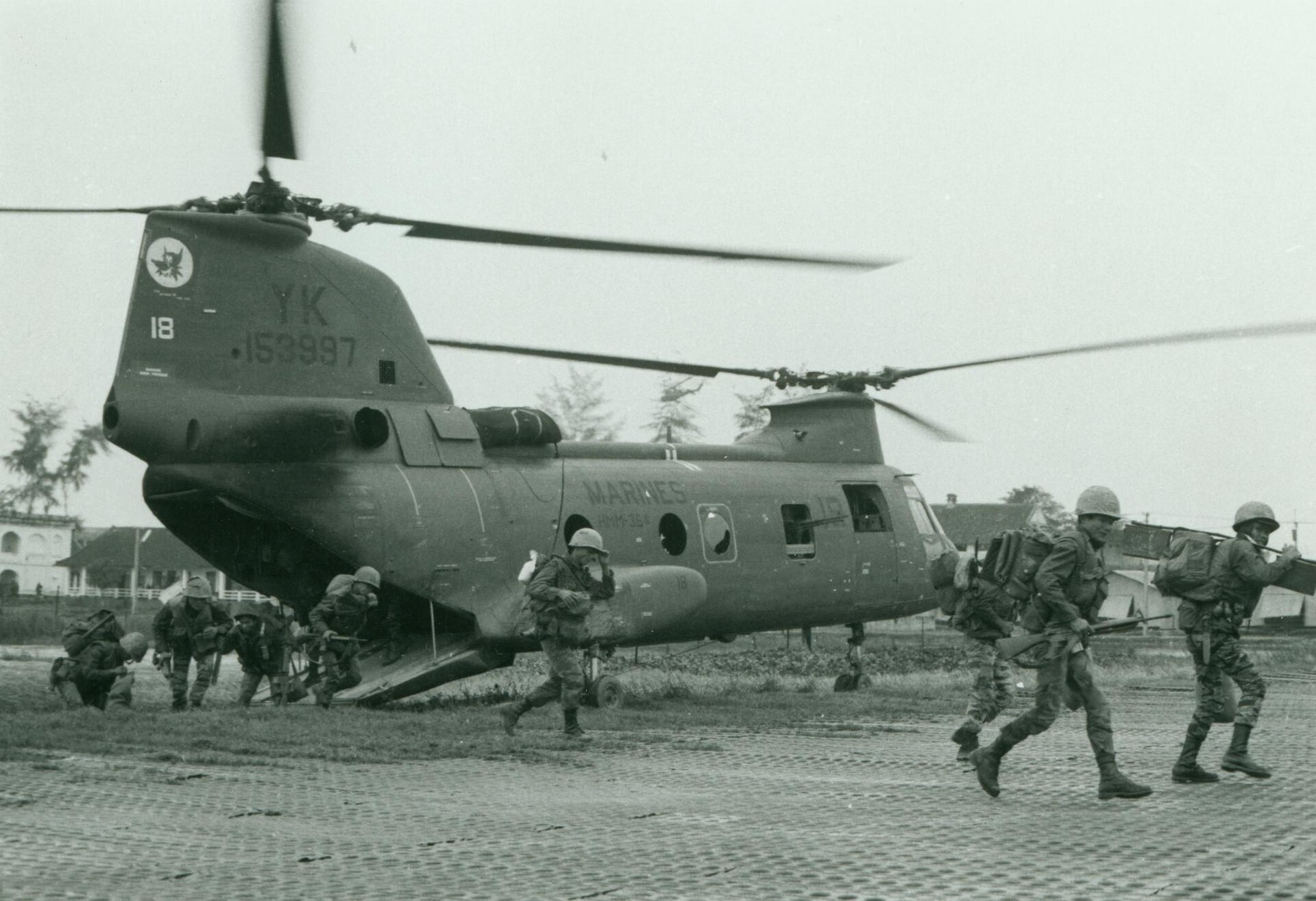
American engagement in Vietnam began with support from France and later South Vietnam. President John F. Kennedy's been growing in U.S. advisors. After the incident in the Gulf of Tonkin in 1964, Congress adopted the Tonkin resolution, which gave President Lyndon Johnson wide scope for the use of force.
Since 1965, large ground forces have been deployed and there have been extensive bombing of North Vietnam, Laos and Cambodia. The war has brought massive civilian and military losses and deep destabilization of the region.
The later publication of the Pentagon Papers showed the difference between some public statements from individual administrations and internal evaluations of the war. Vietnam has therefore become a key case of the debate on presidential war power, confidence in government and the ability of military superiority to achieve political goals.

8. INDONÉSIE 1965-1966
After the failed movement 30. On September 1965, the Indonesian army and its allies began mass murder of communists, suspected sympathizers and other groups. The victim's estimates are in the hundreds of thousands.
The United States considered the weakening of the Communist Party of Indonesia a major strategic victory, and US documents show support for the Indonesian army and information sharing. Here it is important to formulate the responsibility precisely: it is not the same to say 'the US has carried out a massacre' and say 'the US has supported the forces which carried out the massacre and welcomed its geopolitical outcome'.
9. CHILE 1970-1973
After the election of the socialist Salvador Allende president in 1970, Richard Nixon ordered the CIA to work against his recruitment and government. The classified documents distinguish between the so-called Track I and Track II; the second was aimed at supporting conditions for military coup.
The CIA funded opposition media and political activities. In September 1973, the Chilean army led by Augustus Pinochet carried out a coup in which Allende died.
But a classified US assessment does not prove that the CIA has organized and managed the military plan itself out of 11. September 1973. The US has been actively working to weaken Allende and previously supported coup scenarios; this is not the same as proof of direct command to the final coup. The subsequent Pinochet regime was committed by torture, murder and forced disappearance.
10. LATIN AMERICA AND OPERATIONS CONDOR
70. and 80. In the years of the South American military dictatorship under Operation Condor, the leaders of the opposition have been working together to monitor, kidnap and eliminate opponents. American governments have maintained close security relations with some regimes within the framework of anti-communist policy.
The degree of American knowledge, consent and support differed by country and period. The classified documents allow you to examine specific episodes without the need to claim that Washington centrally managed every crime of these regimes.
11. NIKARAGUA AND CONTRAS
After the Sandinist Revolution of 1979, the US supported the armed Contras fighting the Nicaragua government. The conflict became one of the most important proxy of the late Cold War in the Western hemisphere.
The Commission therefore concludes that the measures in question are compatible with the internal market. United States has ruled that the US has violated international law by, inter alia, supporting the Contras and mining Nicaragua ports. The United States refused to accept the jurisdiction of the court at a crucial stage.
Moreover, Iran-Contra's affair revealed a secret mechanism by which part of the Reagan administration financed the Contras despite restrictions on Congress through the proceeds of arms sales to Iran.
12. GRENADA 1983
The United States and several Caribbean states attacked Grenada militarily in October 1983 after the coup d'état and the assassination of Prime Minister Maurice Bishop. Washington argued the safety of American students and the demands of some regional states.
The UN General Assembly, by adopting Resolution 38 / 7, has identified the intervention as a violation of international law. The US argued with a different legal interpretation. The case is therefore one example where the military result is clear, but legal legitimacy remains fundamentally questionable.
13. PANAMA 1989
In December 1989, the US Operation Just Cause launched and overthrew Panama's leader Manuel Noriega. The US government has reported protection for citizens, defence of the Panama Canal treaties, support for democracy and the fight against drug trafficking.
Noriega was captured and later sentenced in the United States. The invasion has claimed civilian and military casualties and has been criticised as excessive use of force and violation of Panama's sovereignty.

14. THE WAR IN PERIOD 1990- 1991
Iraq attacked Saddam Hussein in August 1990, Kuwait. The UN Security Council adopted a series of resolutions and finally authorised the use of "all necessary means" to enforce the withdrawal of Iraqi forces.
A coalition led by the US launched a large-scale air campaign in January 1991 and a subsequent ground operation. Kuwait was freed, but Saddam's regime remained in power.
This case is a very different legal basis from some later American wars: there was explicit Security Council approval to use force against the Iraqi occupation of Kuwait.
15. SOMALIA, 1992- 1994
Operation Restore Hope has begun in the context of famine, state breakdown and UN resolutions. American forces were supposed to help create safe conditions for humanitarian aid. The mission has gradually moved towards wider security tasks.
After the battle in Mogadishu in October 1993, in which 18 American soldiers and a large number of Somali died, the administration decided to withdraw. Somalia is another example of a "mission creep" - a change in the scope and objectives of the operation during the intervention.
16. KOSOVO 1999
NATO launched the bombing of the Federal Republic of Yugoslavia in order to force Slobodan Milošević's government to end repression and violence in Kosovo.
Humanitarian crises and crimes against civilians were real. The review is primarily based on the legal basis: the operation did not have explicit authorisation from the UN Security Council to use force. It is therefore often described as a case of conflict between the argument of humanitarian legitimacy and the strict legality under the UN Charter.
The later independent Kosovo Commission used the wording "illegal but legitimate" - legally problematic, but according to the Commission, politically defensible. This wording itself is not a universally accepted legal conclusion.
17. AFGHANISTAN 2001-2021
After the attacks of 11. On September 2001, the United States attacked the Taliban in Afghanistan, providing background to al-Qaeda. NATO first activated Article 5 of the North Atlantic Treaty and the Security Council recognised the right to individual and collective self-defence.
After a rapid Taliban crash, the operation turned into a 20-year state-building and anti-insurgency war. The Taliban retook control in 2021 shortly before the US withdrawal was completed.
Afghanistan shows the difference between the military's ability to overthrow the regime and the ability to build a legitimate and self-sufficient political system in the long term.
18. IRAQ 2003
The invasion of the US, Britain and other allies in March 2003 was justified in particular by the claim that Saddam Hussein's regime is in violation of UN resolutions and has weapons of mass destruction programmes. The main stocks of chemical and biological weapons, the existence of which was presented to the public as a major threat, were not found after the invasion.
The legal basis was and remains the subject of a major dispute. The Coalition has not received a new explicit Security Council resolution authorising the invasion. The US and Britain argued by combining previous resolutions and violating ceasefire conditions; many states and lawyers rejected that argument.
The fall of the regime was rapid. But the occupation, the insurrection, sectarian violence, Abu Ghraib, the rise of al-Qaeda in Iraq, and later the environment from which the Islamic State grew.

19. LIBYE 2011
The Libyan case is discussed in detail in a separate article. The UN Security Council, Resolution 1973 authorised the use of all necessary measures to protect civilians and the no-fly zone, not foreign occupation.
NATO's operation has gradually supported the military defeat of the Qaddafi regime. In 2016, the British Parliamentary Committee criticised the quality of the information on which the intervention stood and described the shift from limited protection of civilians to a policy of regime change by military means.
The subsequent long-term breakdown of Libyan institutions has become one of the main arguments of intervention critics.
20. THE SYRIES AND THE FIGHT AGAINST THE ISLAMIC STATE
Since 2014, the US and the Coalition have conducted air operations and other operations against the Islamic State in Iraq and Syria. Iraq was operated with the approval of the Iraqi Government; Syria was more complex in the legal basis, and the US invoked Iraq's collective self-defense and the fight against terrorist organisations.
The US also supported Syrian Democratic Forces and other local actors. In 2017 and 2018, they carried out limited strikes against Syrian government targets in response to the use of chemical weapons; their international legal justification was controversial and was not based on Damascus's consent or a new Security Council resolution.

21. DRONES AND "WAR AGAINST TERROR" OUTSIDE THE MAIN FIELD
After 2001, American unmanned and other targeted strikes in Yemen, Somalia and Pakistan spread. The administrations of various presidents worked with the Authority for Use of Military Force, 2001, and with the theory of self-defense against Al Qaeda and "associated forces."
The criticism concerns the geographical and temporal extension of the original mandate, the transparency of the lists of objectives and civilian losses. Defenders of these operations argue the ability to intervene in armed groups without large ground invasions.
22. WHAT INDICATIONS OFFICIAL REPORTING FOR 2025
The US War Powers Resolution report for the calendar year 2025, published in February 2026, lists the use of US military force in several countries and regions, including Iraq, Syria, Somalia and Yemen, and records other operations that the administration considered relevant to the legal information obligation to Congress.
This type of document is useful precisely because it allows the general media concept of "American War" to be separated from the specific legal statement of the administration: against whom the power has been used, the President has appealed to the domestic legal title and whether the host state has agreed.
In December 2025, the Authority for Use of Military Force against Iraq, 2002, was abolished. However, the 2001 AUMF remains the key domestic legal basis for part of the counter-terrorism operations.
23. Does the single "MODEL" OF AMERICAN INTERVENTIONS exist?
Certain recurring motives exist:
- Allies' security and access to strategic regions;
- detention of competing powers or ideology;
- the protection of commercial and energy flows;
- the fight against terrorist organisations;
- protection of citizens and evacuation;
- humanitarian arguments and protection of civilians;
- support for a government or opposition considered to be more strategically advantageous.
However, it is methodologically wrong to assume that one motive automatically explains all cases. Oil played a very different role in Guatemala, Korea, Kosovo and the Gulf of Persian. The Cold War explains Iran in 1953 differently from Iraq in 2003. A humanitarian argument can be an honest part of decision making and coexist with a power interest.
24. "DEMOCRACY" AS A MOTIVA AND AS A RETORY
The US has repeatedly declared support for democracy, but the historical record also shows support for authoritarian allies, if they were considered strategically important. This is not only specific to the United States; in general, the powers combine value declarations with realpolitics.
It is precisely the difference between the declared principle and the particular alliance that is an appropriate object of critical analysis. It does not need to be inferred from this that any public humanitarian or democratic motivation is automatically a lie. But it is necessary to compare statements with actions.
25. INTERNATIONAL LAW: BASIC TEST
The UN Charter generally prohibits the use of force against territorial integrity or political independence of another state. The main exemptions recognised are:
1. individual or collective self-defence as referred to in Article 51;
2. use of force authorised by the UN Security Council.
The consent of the host government may be another relevant legal basis for the presence of foreign forces.
The most controversial are the operations that seek to extend the legal framework - for example, humanitarian intervention without a Security Council resolution, preventive self-defense or long-term application of the old AUMF to new groups.
26. HOW TO READ LIST OF INTERVENTIONS IN THE COMPETITION
For each item it is useful to ask the same questions:
- Who initiated the armed conflict?
- Was there an agreement of the Government of the country concerned?
- Was there a mandate of the UN Security Council?
- What domestic American law degree was used?
- Was it a public military operation or a secret operation?
- What objectives did the government declare publicly?
- What do the classified internal documents show?
- What were the civil and long-term consequences?
- What is documented and what is merely an interpretation of motives?
This framework gives a more meaningful picture than the simple sum of interventions.
CONCLUSION
After 1945, the United States used military, secret and economic power abroad extremely often. Some operations responded to obvious aggression or had a UN mandate; others included secret overthrow of governments, support for authoritarian forces, or the use of force with a seriously questionable legal basis.
The archive documents on Iran, Guatemala, Chile, or Congo are particularly important because they show that some claims once rejected as suspects are now directly documented by US own records. At the same time, the same archives teach us not to exaggerate: for example, America's attempt to remove Lumumba does not prove that the CIA physically executed him; supporting the conditions for a coup d'état in Chile is not the same as documented direct management of the coup d'état from 11. September 1973.
The best criticism of power policy is therefore the one that does not need to exaggerate. The evidence is sufficiently extensive in itself.
RESOURCES AND OTHER READING
[1] Conventional Research Service - Guidelines of Use of United States Armed Forces Abroad, 1798-2023.
everycrsreport.com
https://www.everycrsreport.com/reports/R42738.html
[2] U.S. Department of State, Office of the Historian - Foreign Relations of the United States, Iran 1951-1954, retrospective materials on the 1953 coup.
♪ ♪ ♪ ♪ ♪ ♪ ♪ ♪ ♪ ♪ ♪ ♪ ♪ ♪ ♪ ♪ ♪ ♪ ♪ ♪ ♪ ♪ ♪ ♪ ♪ ♪ ♪ ♪ ♪ ♪ ♪ ♪ ♪ ♪ ♪ ♪ ♪ ♪ ♪ ♪ ♪ ♪ ♪
https://history.state.gov/historicaldocuments/frus1951-54Iran
[3] U.S. Department of State, Office of the Historian - Guatemala / PBSUCESS sources.
♪ ♪ ♪ ♪ ♪ ♪ ♪ ♪ ♪ ♪ ♪ ♪ ♪ ♪ ♪ ♪ ♪ ♪ ♪ ♪ ♪ ♪ ♪ ♪ ♪ ♪ ♪ ♪ ♪ ♪ ♪ ♪ ♪ ♪ ♪ ♪ ♪ ♪ ♪ ♪ ♪ ♪ ♪
https://history.state.gov/historicaldocuments/frus1952-54Guat/sources
[4] U.S. Department of State - Foreign Relations, Intelligence Community, PBSUCCESS and Guatemala.
♪ ♪ ♪ ♪ ♪ ♪ ♪ ♪ ♪ ♪ ♪ ♪ ♪ ♪ ♪ ♪ ♪ ♪ ♪ ♪ ♪ ♪ ♪ ♪ ♪ ♪ ♪ ♪ ♪ ♪ ♪ ♪ ♪ ♪ ♪ ♪ ♪ ♪ ♪ ♪ ♪ ♪ ♪
https://history.state.gov/historicaldocuments/frus1950-55Intel/d154
[5] U.S. Department of State - Foreign Relations, Chile 1969-1973, Track II and cover action.
♪ ♪ ♪ ♪ ♪ ♪ ♪ ♪ ♪ ♪ ♪ ♪ ♪ ♪ ♪ ♪ ♪ ♪ ♪ ♪ ♪ ♪ ♪ ♪ ♪ ♪ ♪ ♪ ♪ ♪ ♪ ♪ ♪ ♪ ♪ ♪ ♪ ♪ ♪ ♪ ♪ ♪ ♪
https://history.state.gov/historicaldocuments/frus1969-76v21/d94
♪ ♪ ♪ ♪ ♪ ♪ ♪ ♪ ♪ ♪ ♪ ♪ ♪ ♪ ♪ ♪ ♪ ♪ ♪ ♪ ♪ ♪ ♪ ♪ ♪ ♪ ♪ ♪ ♪ ♪ ♪ ♪ ♪ ♪ ♪ ♪ ♪ ♪ ♪ ♪ ♪ ♪ ♪
https://history.state.gov/historicaldocuments/frus1969-76v21/d154
[6] U.S. Department of State - CIA retrospective assessment on Chile and the 1973 coup.
♪ ♪ ♪ ♪ ♪ ♪ ♪ ♪ ♪ ♪ ♪ ♪ ♪ ♪ ♪ ♪ ♪ ♪ ♪ ♪ ♪ ♪ ♪ ♪ ♪ ♪ ♪ ♪ ♪ ♪ ♪ ♪ ♪ ♪ ♪ ♪ ♪ ♪ ♪ ♪ ♪ ♪ ♪
https://history.state.gov/historicaldocuments/frus1969-76ve16/d145
[7] U.S. Department of State - Foreign Relations, Congo; U.S. cover political action and Lumumba.
♪ ♪ ♪ ♪ ♪ ♪ ♪ ♪ ♪ ♪ ♪ ♪ ♪ ♪ ♪ ♪ ♪ ♪ ♪ ♪ ♪ ♪ ♪ ♪ ♪ ♪ ♪ ♪ ♪ ♪ ♪ ♪ ♪ ♪ ♪ ♪ ♪ ♪ ♪ ♪ ♪ ♪ ♪
https://history.state.gov/historicaldocuments/frus1964-68v23/d1
[8] International Court of Justice - Military and Paramilitary Activities in and against Nicaragua (Nicaragua v Council). United States), Judgment 1986.
icj-cij.org
https://www.icj-cij.org/case/70
[9] United Nations Security Council - Resolution 678 (1990), authorisation concerning Iraq's occupation of Kuwait.
undocs.org
https://undocs.org/S/RES/678(1990)
[10] Conventional Research Service - Kosovo and international law / Operation Allied Force.
everycrsreport.com
https://www.everycrsreport.com/reports/RL30152.html
[11] The National Security Archive - Iran, Guatemala, Chile and other Declared Collections.
nsarchive.gwu.edu
https://nsarchive.gwu.edu/
[12] U.S. White House - Report on the Legal and Policy Frameworks Guiding the United States' Use of Military Force and Related National Security Operations / Report for calendar year 2025, published 2026.
whitehouse.gov
https://www.whitehouse.gov/wp-content/uploads/2026/02/Use-of-Military-Force-and-Related-National-Security-Operations.pdf
[13] UK House of Commons Foreign Affairs Committee - Libya: Examination of intervention and collection (2016).
publications.parliament.uk
https://publications.parliament.uk/pa/cm201617/cmselect/cmfaff/119/11902.htm
[14] National Archives - Pentagon Papers / Vietnam War documentation.
archives.gov
https://www.archives.gov/research/pentagon-papers
Deeper case studies
Vietnam and Kosovo have their own chronology, sources and legal analysis.