
From European anti-Judaism to the State of Israel
Zionism, migration, war, occupation and Palestinian experience
Content
- Question, method and concepts
- Anti-Judaism Before Hitler
- Modern anti-Semitism, pogroms and Dreyfus
- Zionism: response, project and internal dispute
- Ottoman Palestine, allies and soil
- Balfour, British mandate and two national projects
- Closed borders, Holocaust and Survivors
- Pre-State institutions and UN plan
- 1948: Independence and Nakba
- Migration after 1948
- Internal Israeli Society
- 1967, occupation and settlements
- Interactive control development map
- Detention, Gaza and historical analogies
- Same metre and conclusion
- Movies on the subject
- Sources and further reading
1. Question, method and concepts
This text does not begin in 1933 or 1948. The creation of the state of Israel cannot be understood without the long history of the European status of Jews, without modern nationalism, without political Zionism, British imperial politics, mass migration and the Holocaust. At the same time, Palestinian experience cannot be reduced to a secondary consequence of Jewish emancipation. Palestine's Arab population had its own society, ownership and political claims; was not the source of European anti-Semitism, but a major part of the costs of the territorial solution to the European "Jewish question" fell on them.
The central question is therefore not which party has a simple exclusive historical claim. The study monitors how the legitimate need for the safety of the persecuted minority has become an organised national project, how this project has obtained institutional and international support, how it has encountered another national community, and how the security of the state has linked after 1967 to the long-term occupation and settlement of the conquest.
The detailed evidence framework explains the separate methodology of political articlesHere is a fundamental terminology resolution:
| Term | Labour relevance | To be avoided |
|---|---|---|
| AntiJudaism | Enemy towards Judaism and Jews based primarily on religious teaching, legal separation and the notion of religious guilt. | Not to pretend that every pre-modern conflict had the same racial logic as Nazism. |
| Anti-Semitism | Modern political, national or racial hostility towards the Jews as supposedly a unified and hereditary group. | Do not dissolve the concept so widely that every criticism of the Israeli Government is automatically a hatred of the Jews. |
| Zionism | A family of Jewish national movements seeking home or state in the historic country of Israel / Palestine. | Do not treat him like one immutable ideology or confuse him with all Jews. |
| Israel | A state formed in 1948, its citizens, institutions and governments. | Do not confuse the state, the specific government, the Jewish population and the world Jewish. |
| Palestinians | An Arab nation shaped by the historical experience of Palestine, war, displacement, occupation and diaspora. | Do not confuse Palestinian civilians, Palestinian Authority, PLO, Hamas and individual armed groups. |
2. Anti-Judaism Before Hitler: Acceptance, Restriction and Exodus
Jewish communities have lived in a variable position in Europe for centuries. Some periods have provided relative security, business opportunities and cultural development; Others brought forced conversions, legal segregation, professional restrictions, special taxes, confiscation, pogroms and expulsion. There was not one coherent European policy, but a structural formula was repeated: a monarch or a city could protect the community, use its financial and trade networks, and at the same time expose it to collective responsibility at the time of the crisis.
Christian anti-Judaism worked with the idea of religious guilt and rejection of Christ. People's superstitions added charges of ritual murder or desecration of the host. Economic restrictions have often pushed Jews into several permitted professions; This coerced concentration was then used as a "proof" of a stereotype. The expulsion from England in 1290, France in several waves, and Spain in 1492 was not a Nazi race project, but they show that the European rejection of Jews has a much longer history.
Enlightenment and emancipation offered another model: a Jew could acquire civil rights as an individual. But the problem didn't go away. Integration caused resistance to those who defined the nation in a religious or ethnic way. Modern anti-Semitism then transcribed older religious images into the language of race, nation, biological heritage, conspiracy and alleged control of finance or media.
Law as a tool of exclusion: different countries, different regimes
Legal restrictions did not form one unchanging European system. Their shape depended on whether Jews were subjects of a monarch, townspeople, foreigners, a religious minority or later citizens of a nation-state. Medieval and early modern towns repeatedly imposed limits on residence, land ownership, guild membership, state service and access to professions. A charter of protection could safeguard a community while making it dependent on a ruler’s decision and special taxes. The expulsion from England in 1290, repeated expulsions from France and the expulsion from Spanish territories in 1492 show that Jewish presence was often conditional on political convenience. The USHMM overview describes this changing landscape; analysis should not project the racial logic of twentieth-century Nazism onto every earlier religious conflict.
Emancipation in the eighteenth and nineteenth centuries removed parts of this special legal status, but civic equality developed unevenly. The timing and reach of access to education, property, military service and public office differed across France, the Habsburg lands, Germany and other states. Rights could also become targets of political backlash. Antisemitism therefore cannot be measured only by whether a statute recognized equality: it also matters whether the state protected those rights, whether professional access worked in practice and whether crisis politics turned into collective blame.
In the Russian Empire, pogroms spread after the assassination of Alexander II in 1881. The May Laws of 1882 restricted Jewish settlement outside towns, land purchase and some commercial activity. The Pale of Settlement, educational quotas and administrative arbitrariness encouraged emigration. These pressures combined with poverty, violence, family networks and the prospect of a better life in America; they cannot be reduced to one “push” factor. Poland-Lithuania, Romania and Hungary had different legal histories, but emancipation was also disputed through questions of citizenship, land access and political loyalty.
France’s revolution abolished Jewish disabilities and granted civic rights to individuals, yet the Dreyfus Affair demonstrated that legal equality had not removed antisemitism from the army, press or mass politics. Jews in the German Empire and Weimar Republic formally held civic rights even as racial theories and political movements portrayed them as alien. This gap between law and social practice matters: exclusion can operate through open discrimination, quotas, professional barriers, violence and failures of protection.
Experiences beyond Europe were also diverse. In colonial Algeria, the 1870 Crémieux Decree granted French citizenship to most Algerian Jews while the Muslim majority remained in a different legal position; Vichy revoked the decree in 1940 and restored discriminatory rules. In Tunisia and Morocco, French colonial law layered over local institutions, and restrictions differed. In Iraq, Jews held citizenship and participated in public life before the 1941 Farhud pogrom, the war and later political changes transformed their sense of security. These cases should not be collapsed into a single story of “Jewish expulsion”: compare the law, violence, property measures, possibility of leaving and destination.
Nazi legislation marked a qualitative break: the state classified people by ancestry, stripped them of civic rights, excluded them from the economy and prepared them for deportation and murder. Yad Vashem notes that the Nazi regime issued more than two thousand anti-Jewish measures and decrees between 1933 and 1945. The 1935 Nuremberg Laws defined Jews by ancestry, removed full citizenship and banned marriage and sexual relations between Jews and people of “German or related blood.” Confiscation and “Aryanization” of property, occupational bans, compulsory marking, deportation and murder formed an escalating sequence, not one isolated statute. The USHMM account of the Nuremberg Laws explains the legal architecture.
Allied and occupied regimes belong to this history, but were not uniform copies of Germany. Hungary introduced a numerus clausus for Jewish students in 1920; laws from 1938 to 1941 further restricted employment, business, civil rights and intermarriage. Vichy France adopted its Statut des Juifs; Romania, Slovakia, Croatia, Bulgaria and Italy had their own laws, degrees of autonomy and relationships to deportation. The Hungarian case shows how legal exclusion could precede occupation and mass murder, while state responsibility shifted over time. In French North Africa, Vichy revoked Algerian Jews’ citizenship and introduced racial restrictions, but the scope differed with colonial status.
The point is not that every restriction inevitably led to the Holocaust. Such teleology would distort history and conceal differences among regimes. The relevant transformation is legal vulnerability: unequal status, loss of citizenship, professional exclusion, confiscation and restrictions on movement, followed in some cases by deportation and murder. This context helps explain why Zionism’s security argument resonated with many Jews, without automatically determining a territorial settlement or the rights of the people already living there.
3. Modern anti-Semitism, Pogroms and Dreyfus
In the 19th century, anti-Jewish hostility merged with mass politics, press and nationalism. In the Russian Empire, the pogroms brought physical violence, destruction of property and mass emigration. In the West, emancipation had a stronger legal basis, but France - a country of revolutionary citizenship - was not immune to anti-Semitism.
French officer Alfred Dreyfus was convicted of treason in 1894. By overview United States Holocaust Memorial Museum The court-martial received a secret file to which the defense had no access, and part of the documents were false. The public degradation of Dreyfus accompanied anti-Jewish screams and anti-Semitic press. The affair showed that a formally emancipated Jewish citizen could be described as a foreign element in a nationalist crisis and sacrificed to the army's institutional self-defense.
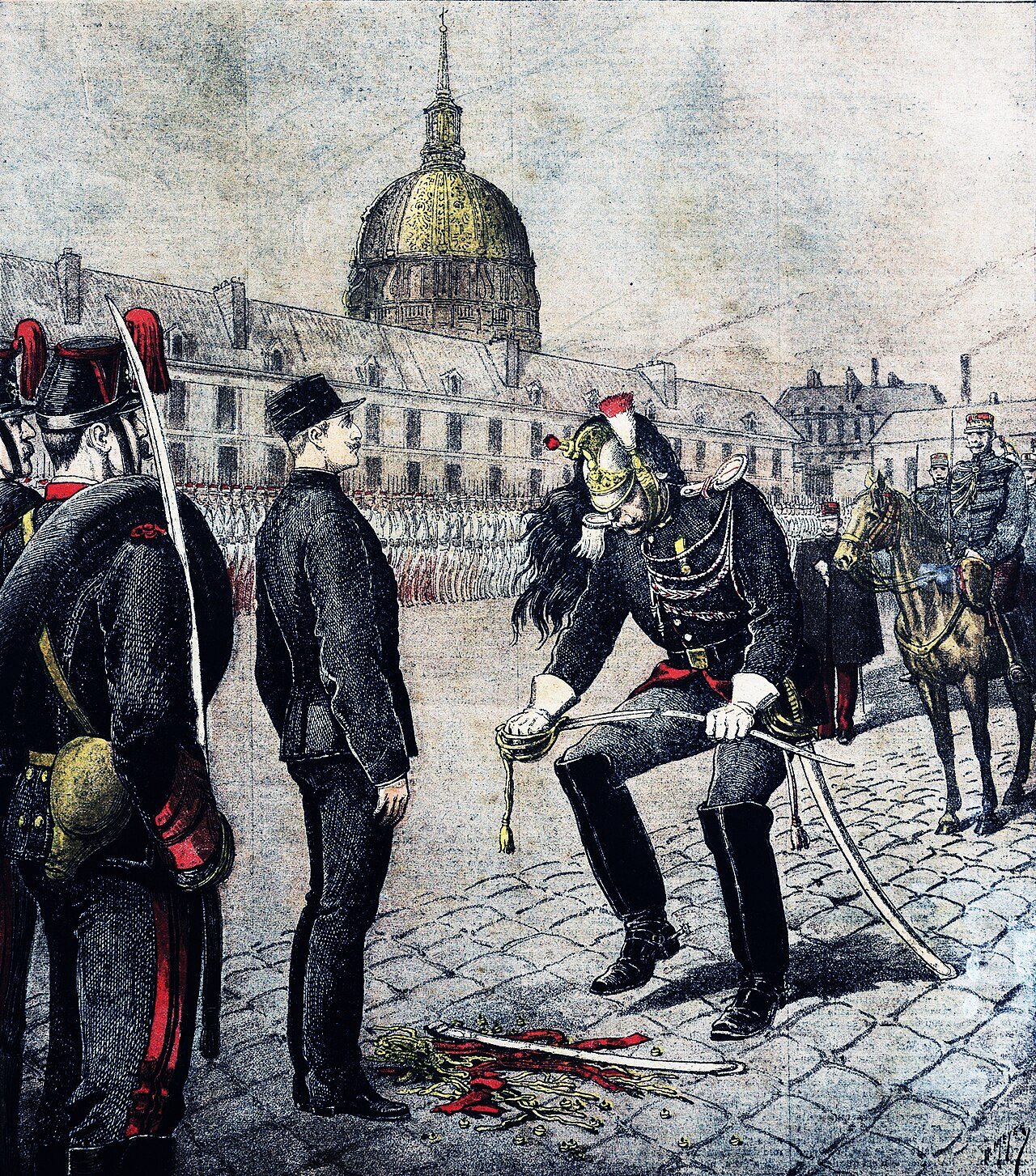
Dreyfus' affair is often referred to as a direct impulse by Theodore Herzl. Such an explanation is useful, but simplified. Herzl watched wider European anti-Semitism and political Zionism had more intellectual resources. But the affair supported the conclusion that individual assimilation and civil equality may not ensure Jewish security permanently.
So Nazi anti-Semitism didn't start with anything. He took over the old paintings, linked them to racial pseudo-science and state bureaucracy and led them to industrial extermination. The difference in scale and objectives is essential; It is equally essential not to pretend that European societies were a simple environment before Hitler, into which anti-Semitism suddenly imported a single regime.
4. Zionism: answer to uncertainty, national project and internal dispute
Political Zionism has taken over the period language of national self-determination: if European nations have the right to their own political space, the Jewish nation has the right to have it. For some of the supporters, the target was the state; for other safe homes, cultural center or socialist society. There were liberal, socialist, religious and revisionist currents, and deep disputes about work, land, relation to the Arabs, and the use of force.
Not all Jews were Zionists. Some religious authorities rejected the political "speedy" return, assimilationists believed in civil equality in the countries where they lived, the Bund advocated Jewish cultural and social autonomy in Eastern Europe, and others headed towards socialism or emigration to America. The history of Zionism is therefore the history of one extremely successful response to persecution and nationalism, not the automatic voice of all Jews.
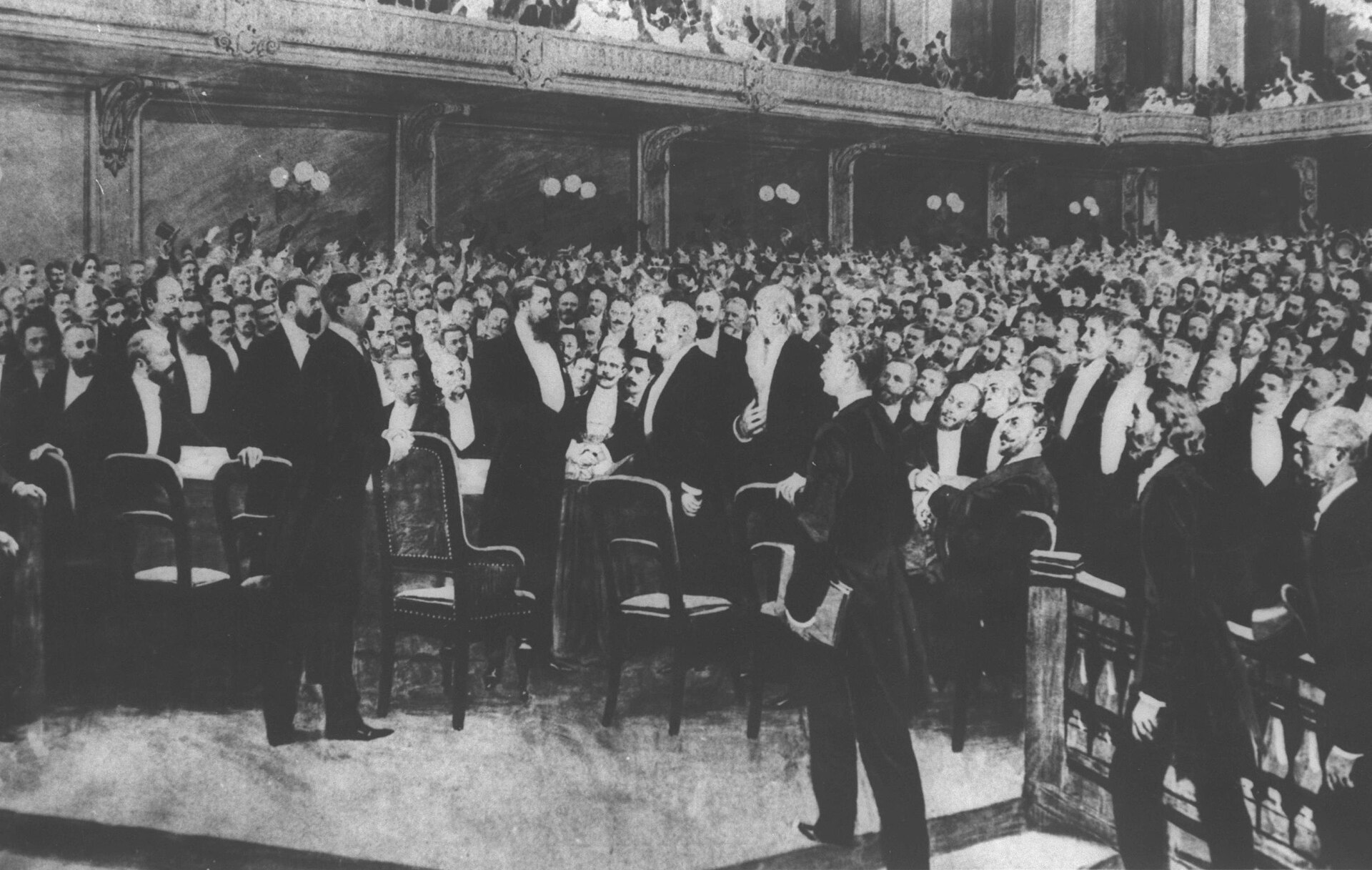
Other territorial options were also discussed. The British offer of an area in East Africa, known as the Ugandan Plan, was rejected; the decisive current insisted on Palestine because of a historical, religious and cultural relationship. This relationship was real for the Jews. The Arab population was equally real, for which Palestine was not an empty symbolic landscape, but a home.
Zionism was not the only Jewish response
Jews in and beyond Europe did not embrace Zionism as a single program. Some supported civic integration and regarded religious or cultural autonomy as compatible with diaspora life. The Bund advocated Jewish rights and Yiddish culture where Jews lived, not necessarily emigration to Palestine. Others supported a territorial solution elsewhere or emphasized Hebrew cultural renewal without an immediate state project. Orthodox opponents warned against politically hastening redemption; some religious Zionists, in contrast, connected national return to religious tradition. These currents changed and overlapped, but their existence refutes the idea that Zionism was an obvious consensus among all Jews from the start.
The Zionist movement itself contained different strategies. Theodor Herzl sought diplomatic recognition and sponsorship by great powers; practical Zionism emphasized immigration, land purchase and institution-building. Ahad Ha’am’s cultural Zionism warned against political sovereignty without a spiritual and cultural centre. Labour Zionism joined the national project to collective economics and a new Jewish labour force; the Revisionist current emphasized strength, defence and broader territorial claims. Israel’s creation resulted from negotiations among these currents, their institutions and changing international circumstances, not from one unchanging plan.
These strategies mattered for the population already living in Palestine. Immigration and the building of a national majority could appear as a rescue mechanism for Jews and at the same time as a threat to the political future of the Arab majority. Some Jewish thinkers anticipated this conflict and proposed binationalism, federation or political equality between two national groups; other currents viewed sovereignty as essential to safety. Palestinian Arab politics also contained its own currents and internal disputes. Yet unequal access to institutions, foreign support and later armed force meant the two sides did not enter negotiations with equal possibilities.
5. Ottoman Palestine, Aliya, Work and Land
Palestine was part of the Ottoman Empire until World War I. It was not a sovereign Palestinian state in today's sense, but also a 'country without people'. The population consisted mainly of Arab-speaking Muslims and Christians, along with old and new Jewish communities and other groups. Cities, villages, religious institutions, land and trade were part of the Levant's regional life.
The first and second alija have brought new Jewish immigrants since the end of the 19th century. Part of the land was legally purchased from local or absent owners. However, the legal purchase did not address the full social impact: tenants whose rights and livelihoods were weakened in the land. Zionist institutions gradually built Hebrew education, settlements, cooperatives, trade unions, health and security organisations. This was not just a group of migrants, but a parallel infrastructure for the future state.
The socialist ideals of kibbutz and collective work were emancipation for many immigrants. But at the same time, the "Hebrew labor" policy could push out Arab workers and separate two economies. This is an example where a progressive project within one community creates exclusive consequences for the other.
| Layer | Jewish experience | Palestinian Arab experience |
|---|---|---|
| Migration | Escape from pogroms, poverty and uncertainty; building a safe home. | The arrival of an organised movement with external resources and a long-term national goal. |
| Soil | Legal purchase and collective settlement. | Loss of tenants' access, change in working relationships and fear of future extrusion. |
| Institutions | Self-government, education, trade unions, defence and modernisation. | The growth of a parallel society whose organisation was stronger than the Arab representation. |
6. Balfour Declaration, British Mandate and Two National Projects
British The Balfour Declaration of 1917 support the creation of a "national home for the Jewish people" in Palestine, while declaring that the civil and religious rights of existing non-Jewish communities should not be harmed. The wording is historically decisive and problematic: it did not name the Arab majority as a people with political rights, but as "non-Jewish communities."
The mandate of the League of Nations for Palestine transferred support to the Jewish national home into the international institutional framework. At the same time, however, Britain managed territories with an Arab majority and faced commitments and promises formulated during the war. The result was not neutral technical supervision, but a contradictory imperial policy.
The Jewish agency, Histadrut, settlement institutions and defence organisations gained experience with self-government. Palestinian Arab society created its own political and national movements, but it was fragmented by gender rivalries, British intervention and different strategies. The Arab uprising in 1936-1939 was directed against the British administration and mass Jewish migration; His suppression weakened Palestinian leadership just before the decisive events of the 1940s.
Britain was gradually changing support and restrictions. The 1939 White Paper limited Jewish migration at a time when European Jews were closed off. For the Jewish movement, it was proof of betrayal of a mandate promise. For Palestinian Arabs, the restrictions were late and did not guarantee real self-determination.
7. Closed borders, Holocaust and postwar survivors
Europe's persecution would have fewer victims if other states opened up safe roads. Ship St. Louis. Louis She left in May 1939 with 937 passengers, almost all Jewish refugees. Cuba did not accept the majority, the United States did not change quota policy and the ship returned to Europe. USHMM He's using this case as an image of people being persecuted at home and unwanted abroad.
The Holocaust destroyed much of the European Judaism and changed the political weight of the Zionist argument. It wasn't just hypothetical minority uncertainty anymore. The state with modern bureaucracy has demonstrated the ability of systematic extermination, and the surrounding world has shown limited willingness to accept fleeing.
After liberation, hundreds of thousands of people were left homeless. USHMM Presentsthat the survivors lived in the camps of displaced persons in Germany, Austria and Italy and that migration to Palestine remained strongly restricted until Israel was established; some of the people were detained by the British in Cyprus. Thus, the post-war pressure on the solution was not only created by propaganda from Zionist organizations. He relied on the real mass of people who lost their families, property, and confidence in their return.
After liberation: displaced people were not one group
The label “displaced person” brought together very different lives. Camps in Germany, Austria and Italy housed liberated prisoners, people who had survived in hiding, former forced labourers and refugees from shifting front lines. Jewish survivors often could not return to their towns: their families had been murdered, homes occupied, and property stolen or transferred to others. In some regions, returnees faced continued antisemitism and violence. The Kielce pogrom in Poland in July 1946 prompted further departures; it was a specific episode of postwar violence, not a continuation of Nazi state policy by identical means.
Allied camp administrations were meant to provide food, health care and registration, but conditions varied. Harrison’s 1945 report warned that Jewish survivors were sometimes housed separately only in name and that their needs were not sufficiently recognized. Jewish communities, schools, religious life and political organizations gradually emerged. The choice to leave was not simply a geopolitical choice between “the West” and Palestine: available visas, family ties, health, language, work, fear of return and the wish to rebuild communal life all mattered.
Between 1945 and 1948, entry to Mandatory Palestine remained subject to British quotas. The Briha network helped survivors move from Eastern Europe to the western occupation zones, from which some tried to continue. The maritime Aliyah Bet network used ships of different sizes, incomplete or false travel papers, transit ports and volunteer crews. The British Navy intercepted most vessels; passengers could be sent back, interned in Cyprus or held in camps in Palestine. Estimates vary according to whether they count successful arrivals, all attempts or people who never made it to a ship. The figure of “more than one hundred thousand attempts” used here is not the number of people who settled in Israel.
British immigration restrictions had their own context: London sought to maintain the mandate, responded to the Arab revolt and feared further escalation. That context does not erase the consequences for refugees and survivors, for whom a limited legal route could be a matter of safety. At the same time, not every clandestine voyage should be described as a simple humanitarian evacuation without a political objective. Zionist organizations sought both to save people and to increase the Jewish presence in the country and alter the international balance. The two purposes overlapped in particular operations.
The rejection of the St. Louis in 1939 and the British interception of the Exodus 1947 are often used as shorthand for closed borders. They can be compared as examples of states regulating refugee access, but they arose from different legal and political situations. In the first case, Cuba and the United States refused passengers while Nazi expansion continued; in the second, Britain administered the mandate and enforced an immigration limit after the war. Historical analogy is useful only when it preserves differences in timing, authority and immediate threat.
8. Institutions before the State, Armed Organisations and UN Plan
Jewish Yishuv entered the end of the mandate with institutions capable of taking over the administration: political representation, taxes, education, health, economic organisations and armed structures. Hagana acted as the main defense force; Irgun and Lechi also used terrorist methods against the British and the Arab. The differences between them were real, but together they show that the state was not created by a single UN vote. It was prepared organically, demographically, diplomatically and militarily.
UN General Assembly Resolution 181 of 29 November 1947 recommended the division of Palestine into a Jewish and Arab state with an economic union and a special regime of Jerusalem. Jewish representation adopted the plan as an international basis for statehood. Arab representation rejected it as an unfair division of the country in which the Arab population formed the majority and Jewish land ownership was minority.
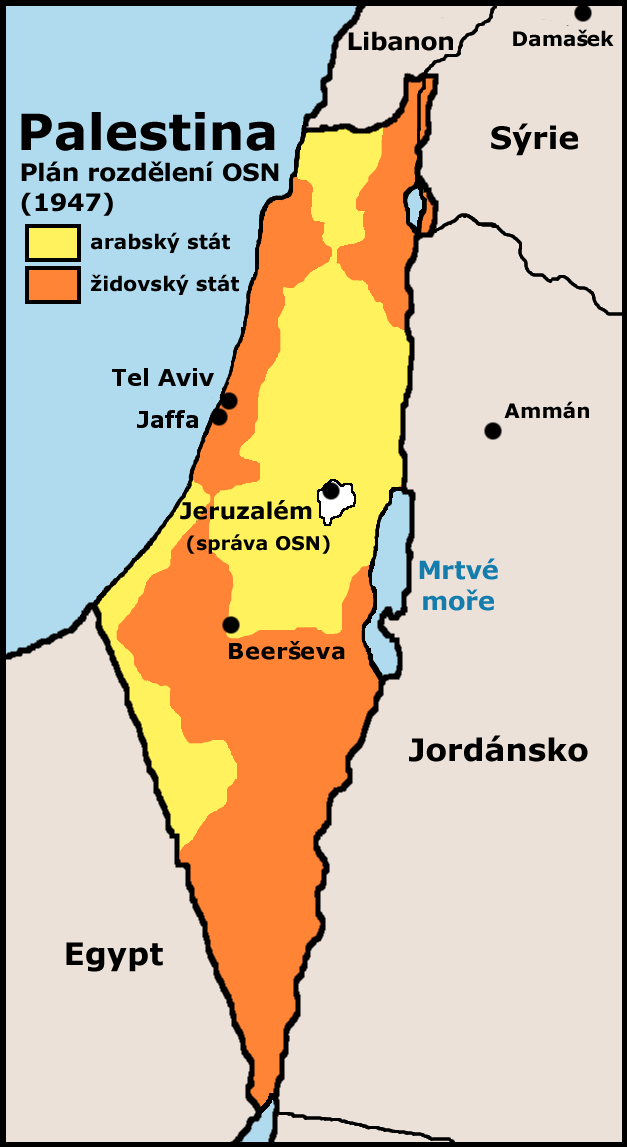
The resolution was not a peace treaty between two nations. It was a recommendation from an international organization in a situation where British power was leaving and both communities were already expecting armed conflict. The civil phase of the war began immediately after the vote, before the entry of the armies of neighboring Arab states in May 1948.
| Document | What he created | What he didn't solve |
|---|---|---|
| Balfour Declaration, 1917 | British support for the Jewish national home. | Political self-determination of the Arab majority and specific boundaries. |
| Mandate for Palestine, 1922 | International administrative framework and commitment to support national home. | The conflict between two national projects. |
| Resolution 181, 1947 | A recommended plan of two states and international Jerusalem. | Consent of both sides, enforcement of the plan, refugees and final borders. |
| Israel Declaration, 1948 | Announcement of the state and the promise of equality between its citizens. | Palestinian state, refugee return and post-war status of territory. |
9. 1948: Revolutionary War and Nakba
For the Israelis, 1948 is the war for the independence and survival of a new state. For Palestinians, Nakbou is a disaster linked to the disintegration of society, the destruction or depopulation of hundreds of sites and the emergence of mass refugees. These names describe two real experiences of the same war. One does not need to be denied so that the other can be documented.
Israel Declaration of Independence declared a state open to Jewish migration, based on freedom, justice and peace, and promised full social and political equality, regardless of religion, race and sex. At the same time, there was a war during which the Palestinian population left or was expelled from various causes: from fighting, from fear, from the direction of local commanders, from collapse of administration and from direct military expulsion. The proportion of these causes varied according to the location and phase of the conflict.
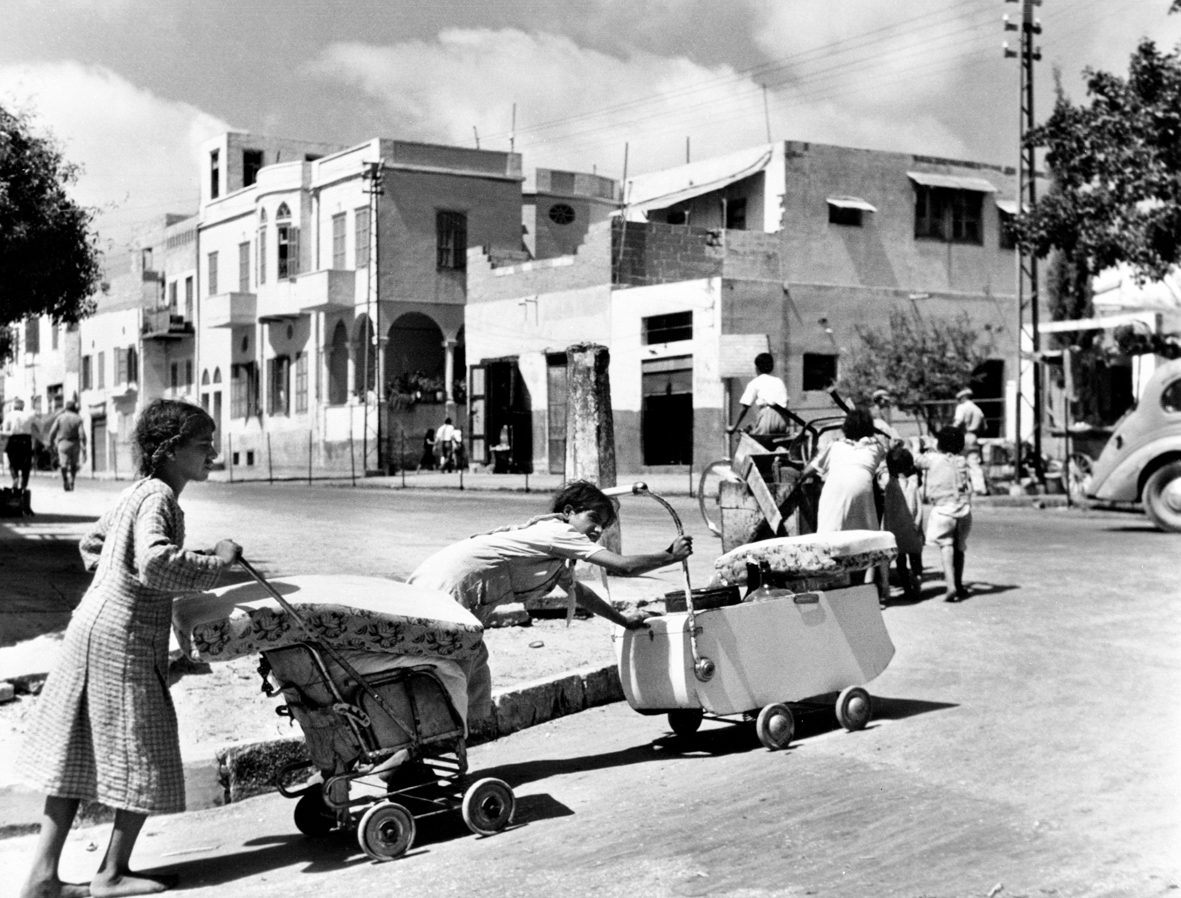
It is not possible to argue that all Palestinians have gone on a single Arab order and voluntarily. It is just as inaccurate to describe every departure as the implementation of one central pre-approved plan. In some locations direct orders for expulsion and violence are verifiable; elsewhere, military development, psychological war, fear of massacres and supply breakdown were decided. Historical honesty requires local reconstruction, not one universal sentence.
UNRWA defines Palestinian refugees as people habitually resident in Palestine between June 1946 and May 1948 who lost their home and means of subsistence as a result of the conflict. When the Agency started operating in 1950, it responded to the needs of approximately 750,000 refugeesIsrael absorbed Jewish refugees and migrants, but did not allow most Palestinian refugees to return. This turned the emergency outcome of the war into a permanent political issue.
10. Migration after 1948: Europe, Arab countries, Soviet Union and Ethiopia
After the creation of the state, Israel opened the door to extensive Jewish migration. According to the Israeli Statistical Office, more came in the first four years than 700,000 immigrantsso the population of the state doubled. They included survivors from Europe as well as Jews from Iraq, Yemen, Egypt, Libya, Morocco, Tunisia and other countries.
The passing of Jews from Arab and Muslim countries had no cause. There was direct persecution, violence, confiscation and the loss of civil rights; elsewhere the fear of war in 1948, increasing Arab nationalism, economic incentives, Zionist organizations and family decisions. To denounce all of them as voluntary migrants would make persecution less light. Marking all one refugee legal status would wipe out different local history.
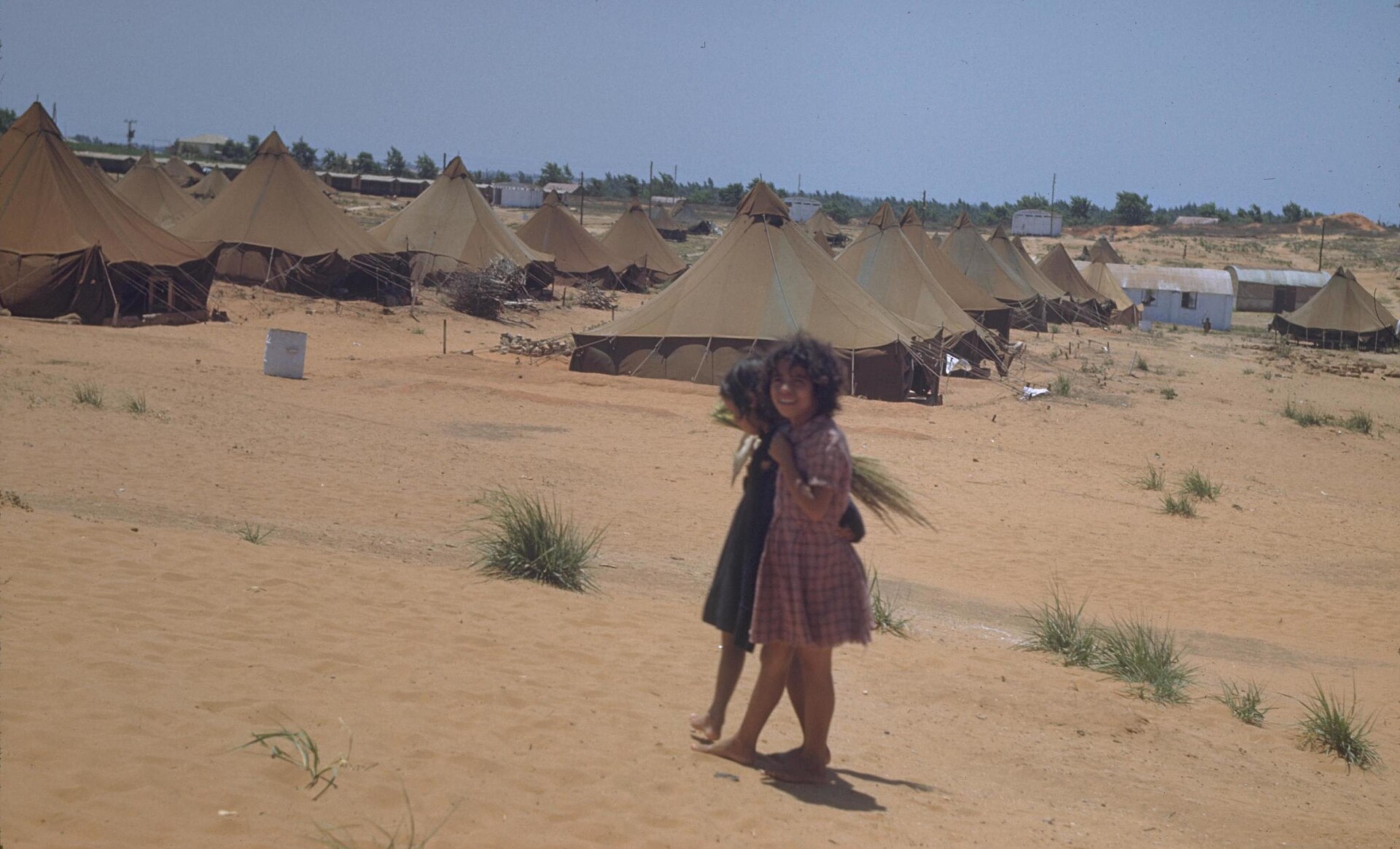
Israel accepted these people as citizens, which fundamentally distinguished their institutional future from Palestinian refugees in the surrounding states. However, acceptance did not mean equal treatment. Many of Mizrachi have passed temporary camps. ma'abarot, peripheral settlement and paternalist absorption. Their experience also disrupts the simple image of Israel as a purely European colonization project: a significant proportion of Israeli Jews come from the Middle East and North Africa. But this does not solve the Palestinian displacement itself or the legal status of the occupied territories.
Later waves from the Soviet Union and Ethiopia have further changed society. Operation Moses and Solomon rescued Ethiopian Jews from dangerous conditions, but subsequent integration revealed racial and social hierarchy within the state. Migration is therefore not just a story of rescue or demography; is also a story of who decides how a new citizen should live and what price to pay for integration.
| Wave | Main circumstances | Analytical question |
|---|---|---|
| European survivors | Holocaust, camps of displaced persons, closed return and emigration. | A safe home and a relationship with people already living in the territory. |
| Arab and Muslim countries | Persecution, nationalism, war, confiscation, Zionist mobilization and family decisions. | Distinguish individual countries without hiding the scale of the disappearance of communities. |
| USSR | Restrictions on emigration, later opening and mass post-Soviet migration. | The relationship between citizenship, religious definitions and secular identities. |
| Ethiopia | War, famine, clandestine journeys and rescue operations. | Rescue alongside racism and unequal treatment after arrival. |
How the number of arrivals changed
The annual series from Israel’s Central Bureau of Statistics shows several distinct waves: arrivals peak in 1949–1951 after the state was established, then rise in the early 1960s, in 1969–1973 and especially after emigration from the Soviet Union became possible around 1990. The CBS records 239,954 arrivals in 1949, 199,516 in 1990 and 176,100 in 1991. These are recorded arrivals, not automatically refugee status, motive or route. The CBS annual table for 1948–2023 provides the series; the second chart below uses a different publication and classification.
Annual arrivals to Israel, 1948–2023
Move the year slider or start the animation. Bars show recorded immigrants for each year; the scale remains fixed.
Source: Israel Central Bureau of Statistics, arrivals by year; absolute counts. The cumulative chart by country of birth below uses a different table and should not be added to this series.
Origins: cumulative growth by country of birth
The annual total does not show how geographic origins changed. The CBS publishes a more detailed table by country of birth and last country of residence in fixed periods: 15 May 1948–1951, 1952–1960, 1961–1971, 1972–1979, 1980–1989, 1990–1999, 2000–2020, then separately 2021–2024. The animation adds arrivals for each completed period. Each bar represents a country of birth, so its height increases as more periods are added. The vertical axis stays fixed throughout and is set to the highest final value among the displayed countries. The timeline does not move year by year because this CBS table does not publish annual country-level detail.
Arrivals by country of birth, cumulative
Select a period with the slider. Each bar is a country of birth; the cumulative count grows during playback.
Source: Israel Central Bureau of Statistics, Statistical Abstract of Israel 2025, table 2.37, “Immigrants by period of immigration, country of birth and last country of residence.” Country of birth is not always the same as last country of residence or travel route. The table includes immigrants, potential immigrants and tourists whose status changed; since 1970 it excludes immigrating citizens. Data for 2020–2022 may have been affected by pandemic restrictions. The cumulative chart uses only published period totals; it does not interpolate annual values. Full CBS table 2.37.
Organized, clandestine and state-supported routes
After 1948, some migration operations were organized as large-scale airlifts. Operation Magic Carpet (also called “On Wings of Eagles”) brought most of Yemen’s Jewish community to Israel in 1949–1950. Israel’s defense archives cite approximately 47,000 people from Yemen and Aden and hundreds of flights; totals vary slightly according to how the operation and transit points are defined. The route often led through Aden, Djibouti or Eritrea. People travelled on foot from remote villages and waited in temporary camps before flying. The Israeli Ministry of Defense archive describes the airlift’s organization and scale.
Operation Ezra and Nehemiah (1950–1951) transported more than 120,000 people from Iraq to Israel. Iraqi law changed before the airlift: Jews could lose citizenship under conditions of departure and surrender property, while the Iraqi government confiscated property from some emigrants. Because Israeli aircraft could not land freely, foreign carriers and transit airports were used. “Organized transfer” does not mean every participant had the same motive or free choice: people responded to security threats, legal uncertainty, political campaigns, fears about the future and family networks. To verify the legal conditions precisely requires Iraqi legislation, registration records and archival files alongside commemorative accounts; the National Library of Israel archive catalogue points to period records on citizenship and travel documents.
Other routes were clandestine or illegal under the law of the country from which people departed. Britain continued to restrict entry to Mandatory Palestine after the war, so Zionist organizations operated Aliyah Bet, maritime journeys outside the British quota. The USHMM estimates that more than 100,000 people attempted to reach Palestine this way between 1945 and 1948; many were detained by the British and interned in Cyprus. The Exodus 1947 became internationally known, but was one of dozens of voyages. Secret routes also carried people from Iraq and other countries. In the 1980s, Ethiopian Jews travelled through Sudan, where refugees hid in camps. The Ethiopian Jewish Heritage Center describes the clandestine operations Moses and Sheba and the risks of the journey.
In May 1991, Operation Solomon transported 14,310 people from Ethiopia to Israel in about 34 hours. Israel’s military archive documents the use of military and civilian aircraft and rapid coordination before the security situation in Addis Ababa changed. The airlift was an Israeli state operation, but followed decades of dispute over the recognition of Ethiopian Jews, their legal status and their right to emigrate. The archival account of Operation Solomon gives the number evacuated and duration.
The United States as another refuge: migration did not lead only to Palestine
Jewish emigration from Europe also went to the Americas. Around 300,000 Jews lived in the United States in 1880; between 1881 and 1924, more than 2.5 million Jews from Eastern Europe arrived, according to the Library of Congress. They were pushed by persecution and limited economic opportunity. Many settled in cities, built labour, religious and cultural institutions and transformed American Jewish life. Their motives were not identical to Zionist aliyah: many families sought work and joined an existing diaspora, while Zionists aimed to build a national centre in Palestine.
| Period | Documented scale | What the figure means |
|---|---|---|
| 1820–1880 | The estimated Jewish population of the United States grew from about 3,000 to 300,000. | These are population estimates at two points in time, not immigrant arrivals. |
| 1880s | More than 200,000 arrivals from Eastern Europe. | Library of Congress estimate; more than 300,000 arrived in the 1890s. |
| 1900–1914 | More than 1.5 million arrivals from Eastern Europe. | The largest prewar wave; US quota laws later sharply curtailed its scale. |
| 1933–1945 | A series cited in a US congressional document records 2,372 entries in 1933, 19,736 in 1938, a peak of 43,450 in 1939 and 10,608 in 1942. | This contemporary series labelled “Jewish immigration” uses its own reporting and fiscal periods; it cannot be added directly to Library of Congress estimates. |
| 1945–1952 | About 80,000 Jewish displaced persons entered the United States under the Displaced Persons Act. | A legally defined postwar group, not all postwar Jewish migration. |
The Library of Congress estimates as many as three million Eastern European Jews arrived between 1880 and 1924, while another Library of Congress overview gives more than 2.5 million for 1881–1924. The difference reflects the period and the population being counted, so these figures should not be presented as one exact series. For 1933–1945, documentation submitted to the US Congress records a sharp rise in entries before the war and a decline under wartime restrictions. A separate postwar account must distinguish quotas, displaced-person programs and the different legal definitions of refugee and immigrant.
US immigration quotas in 1921 and 1924 sharply restricted migration from Eastern and Southern Europe at a time when Jews in Europe faced state-organized violence. After the war, President Truman advocated admitting displaced people, but the initial legal framework contained quota and geographic restrictions. The USHMM reports that approximately 35,000–40,000 displaced people, most Jewish, entered the United States under the Truman Directive between 1945 and 1948; after changes to the Displaced Persons Act, approximately 80,000 Jewish survivors had entered by 1952. The USHMM documents the development of US immigration law. These figures depend on period and legal definition and are not a complete total of all Jewish migration to the United States.
Immigration totals also differ from net population change. A recorded arrival does not show how many people later left, died or changed registry status, and birth statistics include the children of migrants. The charts therefore describe arrivals, not the total Jewish population or the long-term demographic contribution of each wave. They answer a narrower but verifiable question: when did recorded entries occur, and in which published periods did people born in particular countries arrive?
Comparing the United States and Israel reveals two different refuge models. The US offered an existing civic and economic space but regulated entry through quotas; Israel made the admission of Jews central to its state identity and received an exceptionally rapid mass migration after 1948. Neither model can be judged only by totals: timing, applicant categories, legal barriers, family ties, violence in countries of origin and whether migration also brought conflict over land and the rights of other inhabitants all matter.
One wave, different journeys and different degrees of choice
The figures for 1948–1951 summarize a vast movement of people, but conceal different decisions. Some European survivors arrived from displaced-person camps; others moved from Eastern Europe through western occupation zones. Jews from Iraq left amid a changed political climate after the war in Palestine and legislation that enabled departure under conditions involving loss of citizenship and property. The Yemenite operation was largely an organized airlift of people who often reached transit centres on foot. The same final bar in a chart may therefore represent flight from persecution, family migration, clandestine travel or mass evacuation.
Four questions help compare these movements. First, what pressures operated in the country of origin: law, violence, political uncertainty, economic crisis or several factors together? Second, who chose and financed the journey: an individual, family, religious network, Zionist organization, foreign government or the Israeli state? Third, what legal status did those leaving have, and what consequences did departure have for citizenship and property? Fourth, what happened after arrival: what path to citizenship did people receive, where were they housed and what social position could they build? Without these distinctions, “migration” becomes an overly broad label that conceals power and inequality.
Waves from Arab countries differed by place. In Iraq, the 1941 Farhud, war, rising nationalist politics and later departure legislation all mattered. In Yemen, long-standing religious and economic conditions, uncertainty after a change of regime and news of Israel’s creation shaped decisions. In Libya and Egypt, war, anticolonial politics, state intervention and fear of violence combined at different moments. Large Jewish communities remained in Morocco and Tunisia after the first waves; departures unfolded over several decades and were connected to decolonization, opportunities in Israel and France, and changing economic relations. There was no single “Arab aliyah” with one cause and date.
Migration from the Middle East and North Africa should not be confused with the claim that all communities faced the same danger or held the same legal position before departure. Jewish communities in Morocco, Iraq, Yemen, Iran and Turkey lived under different institutions, had different citizenship status and faced different combinations of protection and discrimination. Some states maintained Jewish civic rights and public roles; others adopted confiscatory or restrictive measures. Historians therefore examine local statutes, police records, property registers, family letters and testimony, not only later state narratives of “rescue” or “expulsion.”
In Israel, new arrivals often first lived in transit camps, tents, converted military facilities or provisional immigrant towns. Ma'abarot were intended as temporary accommodation, but for many families meant prolonged overcrowding, limited services and dependence on state agencies. Settlement in peripheral areas supported population dispersal but restricted housing choice and employment opportunities. Language policy, education and public discourse often privileged a European cultural norm. “Mizrahi” and “Ashkenazi” therefore refer not only to geography but also to power relations and changing political identities; neither term captures every family or religious experience.
The fact that the first generation became Israeli citizens is a major difference from the experience of many Palestinian refugees, who remained in camps or acquired citizenship only in some host states. Citizenship and formal admission did not, however, erase social hierarchy or personal loss of home. It is possible to recognize that Israel gave hundreds of thousands of Jews safety and citizenship while also examining unequal absorption, confiscated property and the relationship between state-building and Palestinian displacement. One claim does not refute the other.
Soviet waves: exit permits, the Cold War and a new society
Emigration from the Soviet Union changed with relations between Moscow and Israel, domestic policy and international pressure. After the 1967 Six-Day War, the Soviet Union broke diplomatic relations with Israel, and public expressions of Jewish identity could be associated with professional restrictions and suspicion of disloyalty. Emigration permits increased during the 1970s, but “refuseniks”—people denied permission to leave—became symbols of the political struggle for freedom of emigration. The number of permitted departures fluctuated with international diplomacy, especially US–Soviet relations. Some emigrants went to Israel; others used American or European programs and changed their intended destination after reaching a transit country. Israeli arrival statistics therefore do not capture all Soviet Jews who left.
The breakup of the Soviet Union created a different-scale event. About one million people from the former USSR arrived in Israel during the 1990s, with major effects on education, labour markets, culture, media and electoral politics. Not all identified in the same way as religiously Jewish; the Law of Return also covers defined family members. This movement shows that Israeli citizenship and Jewish national belonging are not identical categories. New arrivals brought professional expertise and demographic growth, yet credentials were sometimes not recognized and many people began work below their level of education.
The CBS recorded nearly 200,000 arrivals in 1990 and more than 176,000 in 1991; subsequent annual figures were markedly lower. These peaks reflect administrative and logistical capacity and a one-time change in political possibilities, not simply Israel’s “attractiveness.” Reading the time series therefore benefits from identifying the decision that changed the ability to travel: open borders, quotas, exit permits, war or a security operation.
Ethiopia: rescue, clandestine routes and a long struggle for recognition
Ethiopian Jews, often called Beta Israel, had their own religious tradition and community history. Their recognition by Israeli institutions was not automatic. Rabbinical authorities, state agencies and political parties debated how they related to religious rules and the Law of Return. Delayed recognition had practical consequences: it affected access to documents, travel support and legal status. The story of aliyah therefore does not begin with Operation Solomon; it includes the long efforts of families, activists and overseas communities to secure recognition and a safe route.
In the 1970s and 1980s, Ethiopian state crisis, famine, war and political repression combined with limited freedom to leave. Some people walked across the border to Sudan and waited in refugee camps. The journey was dangerous and brought illness, deaths and family separation. Israeli and Jewish organizations negotiated with intermediaries to arrange flights; Operation Moses in 1984–1985 and the later Operation Sheba were secret, and their exposure brought political complications. Even after part of the refugee population was evacuated, families remained separated and many relatives waited for years.
Operation Solomon in 1991 responded to the immediate risk of the Ethiopian government’s collapse and rapidly deteriorating security. Its remarkable speed and number of evacuees are well documented, but should not obscure the subsequent history of integration. Ethiopian Israelis faced racism, disputes about recognition of religious practices, police violence and unequal educational and employment opportunities. Community protests in 2015 and 2019 showed that successful evacuation and legal citizenship do not by themselves prove equality. Here aliyah means actual rescue, state organization, a long struggle for recognition and an unresolved dispute over racial hierarchy.
What geographic origin can and cannot tell us
Country of birth is useful for comparison, but cannot by itself identify ethnicity, mother tongue, citizenship, last residence or travel route. Someone born in one Soviet republic might have lived in another and travelled to Israel through Vienna; a child born in a transit camp might be recorded by birthplace rather than the country from which the family fled. Before 1970, many arrivals were citizens or had their status changed later. The CBS notes explain which categories the table includes and excludes.
The chart displays selected countries and compresses long periods into the intervals used by the published table. This improves readability but omits some states and smaller groups. Cumulative totals add historical differences together: a large first bar may come from a mass movement over several years and does not show whether migration continued. That is why the annual chart is paired with a period-based chart rather than replaced by it. To assess the pace of change, use the annual series; to compare the origin structure across official periods, use table 2.37.
Different CBS publications may also use different reference dates, revisions and definitions of “immigrant.” The annual table is suited to the overall time pattern; the period table to geographic origin. They cannot be combined into one exact accounting balance without checking their metadata. The charts therefore remain separate, and each legend states its unit, source and time granularity. If a later revision is published, the relevant series should be updated as a whole and the table version identified.
US quotas after 1924 and the postwar choice of destination
The Johnson–Reed Act of 1924 restricted immigration through national-origins quotas based on an earlier composition of the US population, sharply limiting arrivals from Eastern and Southern Europe. During Nazi persecution, legal access to the United States therefore depended not only on individual danger but also on quotas, documentation and refugee category. After the war, the 1948 Displaced Persons Act authorized the admission of up to 200,000 people over several years, but its original conditions favoured some groups and disadvantaged Jews who had fled east. A 1950 amendment partly changed the rules. The figures of 35,000–40,000 and around 80,000 cited above refer to different legal programs and periods; they should not be added as a complete accounting of Jewish migration to the United States.
Unlike Israel, the United States offered entry into a large society where Jewish communities, synagogues, aid organizations and employment networks already existed. The American route depended on admission permits and quotas; entry to Israel after 1948 rested on the Law of Return and state absorption. Historically, this is not a competition over which country “rescued more” people. It is a comparison of institutional responses to a refugee crisis: border decisions, transport, housing, citizenship and the possibility of starting over. This comparison also prevents Israeli migration from being explained only as an after-effect of the Holocaust: its roots predate it by decades, and its later waves had diverse causes.
11. Internal Israeli society: citizenship, equality and hierarchy
Israel is not a homogeneous society. Ashkenazi, Mizrachi, Sephardé, Ethiopian Jews, Russian immigrants, ultra-orthodox communities, secular inhabitants, Palestinian citizens of Israel, Drusus and other groups have different historical experiences and positions. Political conflicts within the state cannot be reduced to simple "Jews against Arabs."
Palestinian Arabs, who remained within Israel's borders and later acquired citizenship, have the right to vote and own political parties, but have long-term faced inequality in soil, planning, budgets and access to public resources. Formal citizenship is significant; does not in itself prove complete material equality. The same difference between declaration and operation must be measured for other States.
The Law of Return gave Jews and defined relatives a privileged way to immigration and citizenship. In terms of the purpose of the state as a safe Jewish home, it's logical. A sharp contrast arises from the Palestinian perspective: a person without a personal connection to a particular house can gain access due to Jewish origin, while a Palestinian refugee or his family cannot, as a rule, return to their original city or village.
Citizenship, national rights and unequal access to return
The 1950 Law of Return declared that every Jew had the right to come to Israel as an oleh; the 1952 Citizenship Law set out how citizenship was acquired, including for most Jews who arrived after the state was established. A 1970 amendment extended eligibility to the children and grandchildren of Jews and their spouses, subject to statutory exceptions. This legal pathway responded to the experience that citizenship in European states had not protected Jews from persecution. It is also a privileged route based on Jewish descent, not on prior residence or a personal connection to a particular home.
The Palestinian right of return rests on a different historical and legal argument: refugees and their descendants emphasize forced or coerced departure, property loss, UN General Assembly Resolution 194 and general principles of remedy. Israel points to the security, demographic and political consequences of mass return and notes that the 1949 armistice did not resolve the issue. Host states of Palestinian refugees applied different policies; some refugees gained citizenship, while others remained stateless or faced restrictions. The Law of Return and the Palestinian claim are not the same legal institution, but their coexistence creates a visible asymmetry: Jewish national belonging enables immigration, while Palestinian connection to home does not guarantee return.
The number of Palestinian refugees changes over time according to the definition. UNRWA registers descendants of original refugees who meet its conditions and register for assistance; registration is not itself a judicial ruling on an individual right of return. Israeli records, the United Nations and academic estimates may therefore count different groups. The same care applies to Israeli immigration statistics: immigrants under the Law of Return, refugees, tourists whose status changed and people arriving through organized operations are not interchangeable categories. Precise comparison begins with a definition, not with the most striking number.
The open question is not whether one side “has” or “lacks” a national story. It is how security, citizenship, return, compensation, family reunification and collective self-determination can be arranged without one population’s rights being purchased through the other’s permanent exclusion. History does not dictate one technical solution, but it shows which losses and fears any political settlement must address.
12. 1967, military occupation and settlement system
In the six-day war of 1967, Israel occupied the West Bank, East Jerusalem, Gaza, Sinai and Golan Heights. Sinai was later returned to Egypt; Israel removed settlements and permanent land presence from Gaza in 2005, but continued to control essential aspects of access, airspace and population register. The West Bank and East Jerusalem have remained the center of long-term territorial control.
UNSCR 242 linked the withdrawal of Israeli forces from the territories occupied in conflict with the right of every state in the region to live within safe and recognised borders. The language of the resolution has become the subject of long disputes, but the principle of inadmissibility of land acquisition by war is explicit in its introduction.
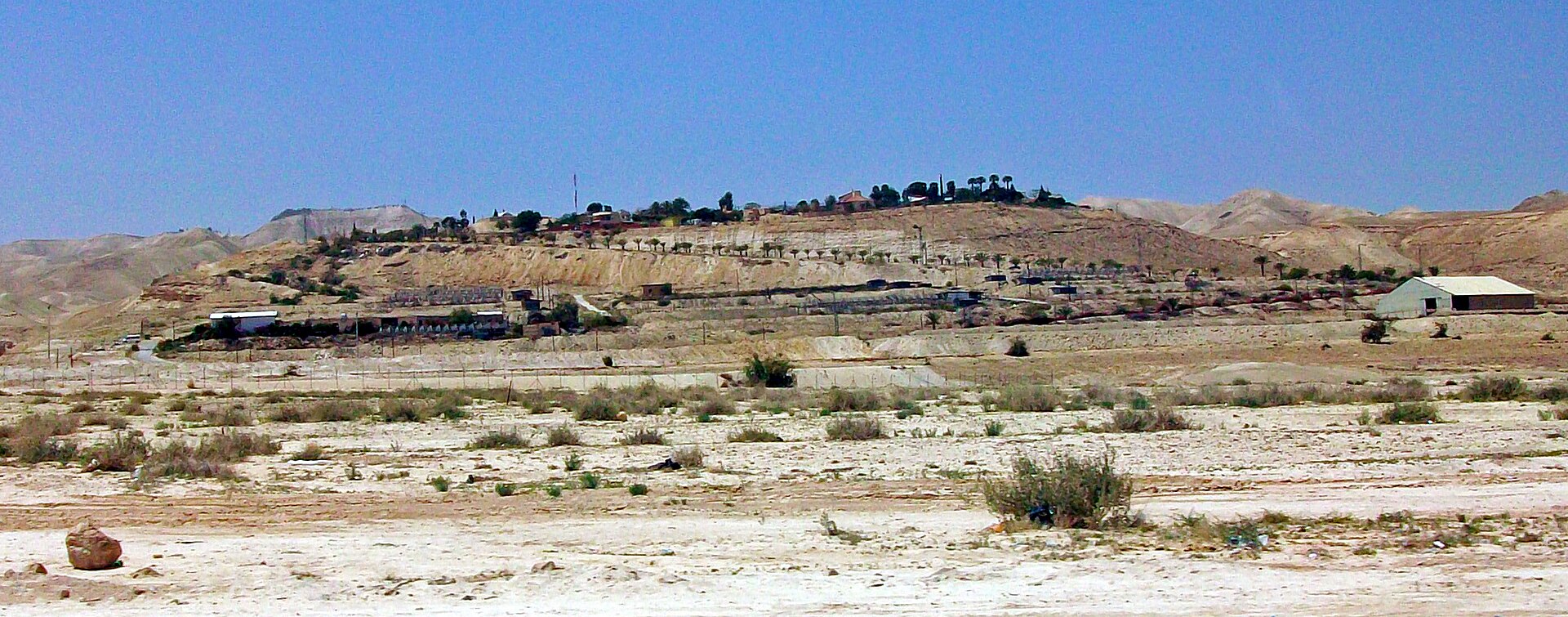
Article 49 The Fourth Geneva Convention provides that the occupying power must not transfer parts of its own civilian population to the occupied territory. The full text is available in: ICRC database. Israel objected to some legal interpretations and stressed the disputed previous status of the territory as well as the voluntary movement of settlers. The International Court of Justice, the UN Security Council and the prevailing international legal opinion of the settlements regard the settlements as a violation of international law.
International Court of Justice in the Advisory Opinion of 19 July 2024 concluded that the continued Israeli presence in the occupied Palestinian territory was illegal, that new colonial activities were to be stopped and that settlers were to be evacuated. The Court also analysed the expansion of Israeli law, settlement infrastructure and the creation of lasting facts as elements of anexus.
Double legal and spatial arrangements
On the West Bank, Israeli settlers live alongside each other under the extensive protection of Israeli civil law and Palestinian citizens under military orders and limited authority of the Palestinian Authority. Roads, checkpoints, security zones, building permits and access to land create fragmented geography. The security need to protect civilians is real; However, the expansion of civilian settlements alone increases this need at the same time and makes it more difficult to divide territories if necessary.
The problem is not only the violence of individual extremist settlers, but the relationship between violence, state protection and investigation. Report OHCHR 2024 reported only two indictments for the study file. In 2025, OCHA recorded a sharp increase in attacks, injuries and displacement; These numbers are variable in time and must be read with an exact period, not as an eternal summary.
| Security claim | What really explains | What doesn't justify itself |
|---|---|---|
| Israeli civilians faced and faced attacks. | Checks, defense measures and the state's duty to protect life. | Permanent land confiscation or expansion of civilian settlements without end of occupation. |
| Palestinian groups use terrorism. | Criminal prosecution of perpetrators and measures against imminent threats. | Collective punishment of the civilian population or impunity of the violence of settlers. |
| The territory has religious and historical significance for Jews. | The power of social motivation and connection to places. | The disappearance of the rights of the people who live in the territory and the automatic change of international legal status. |
12A. Interactive map: changes in territorial control and settlements
The map separates the UN proposal, the ceasefire line, military occupation, the return of territories, limited Palestinian self-government and individual settlers. The monthly slider can be manually or automatically played at adjustable speed.
Recording local data layer...
Data range: the local layer contains all 517 settlers of selected categories from the used research dataset; 515 has coordinates and 491 data on the year of origin. For data with accuracy only for a year, the slider does not pretend to be a documented month. Undated entities are displayed only in the current state. Dataset captures mainly current active entities and is not in itself a complete registry of all the defunct settlements in Sinai, Gaza and the West Bank.
How to read the map: The red areas of the occupied area and the orange symbols of the self-government are simplified indicative envelopes. By contrast, the A / B layers, the jurisdiction and the ground plan are based on locally archived GIS Peace Now geometry; these are not even cadastral evidence of land ownership. The figures are the number of entities in the selected research dataset, not the official or generally accepted legal number. Point layer: Israel Settings: Integrated Research Dataset (CC BY 4.0), composed of, inter alia, Peace Now, B'Tsel, Israel's CBS and OCHA. Jurisdiction, areas A / B and evacuated settlements: Peace Now - Maps and GIS Layers. Source snapshot, licenses and checksums are archived locally; the web loads its own derived JSON. The base map provides OpenStreetMap and Leaflet is stored locally.
13. Detention, Gaza and the dangers of historical shortcuts
Israel uses civil and military courts, security prisons and administrative detention against Palestinians. The state has the right and duty to prosecute specific attacks, abductions, murders and the preparation of violence. The dispute arises in respect of the length of detention without prosecution, access to evidence, interrogation conditions, detention of minors and inequality in a system in which actually similar acts may be assessed under different laws, depending on citizenship and location.
The Gaza Strip is a different legal and factual case than a prison or concentration camp. It is a densely populated area with its own Palestinian society and, since 2007, with the Hamas government, at the same time exposed to Israeli and Egyptian border control, blockade, repeated wars and widespread restrictions on movement. The comparison to "open-air prison" describes the limited possibility of leaving and external control. It's not an exact legal category.
Term concentration camp historically, it did not only refer to Nazi extermination camps; used for various systems of concentration of the civilian population. Yet the combination of Gaza today directly with Auschwitz often fogs the difference between a genocide extermination facility and a besieged territory with its own institutions and an armed organisation. But rejecting this analogy must not serve to downplay civilian suffering, destroy infrastructure, hunger or illegal attacks.
The same principle goes the other way around. The Holocaust Trauma explains Israel's sensitivity to existential threats, but it cannot automatically turn every military measure into legally acceptable self-defense. Each attack shall be assessed on the basis of a distinction between civilian and military objectives, necessity, proportionality, treatment of prisoners and prohibition of collective punishment. The same rules apply to Hamas and other Palestinian groups: deliberate attacks on civilians and hostage taking are not free from occupation experience.
14. Same meter: safety, self-determination and limits of state power
Israel's history is a real story of rescue, political organisation and renewed ability to defend itself from the persecuted group. It is also a story of war, displacement and a state that, after 1967, maintains extensive control over another nation. Both planes must remain visible.
The Palestinian story is a real story of loss of home, refugee, occupation and unequal distribution of power. It is also a story of internal political conflicts and armed organisations, some of which deliberately attacked civilians and denied the rights or existence of the second nation. Nor does suffering give automatic moral or legal impeccable.
The same meter means that the right to self-determination granted to Jews will not be denied to Palestinians; the ban on attacks on civilians applies to both the State and non-state organisations; the historical link to the territory does not undermine the rights of current residents; a security exemption may not be an unrestricted government in a timely manner; and the criticism of the state must not go into collective accusations of ethnic or religious groups.
15. Movies as perspective, not substitute springs
I'm suing! (2019)
Dreyfus' affair, French army, anti-Semitism and manipulation of evidence.
Ship of the Damned (1976)
Dramatizing the rejection of refugees from the ship St. Louis.
The Long Way Home (1997)
Holocaust survivors, displaced camps and the road to Israel.
Pillar of Fire (1981)
The vast Israeli documentary perspective of Zionism history until 1948.
1948: Creation & Catastrophe (2017)
Israeli and Palestinian testimonies about the creation of the state and Nakba.
Sallah Shabati (1964)
Satira on immigrants, absorption camps and the inequality of Mizrachi.
The Settlers (2016)
History, ideology and the everyday life of the colonial movement.
Hot House (2006)
Palestinian prisoners, political organization and radicalization in Israeli prisons.
16. Primary Sources and Further Reading
Documents and law
- Balfour Declaration, November 2, 1917.
- The mandate of the League of Nations for Palestine.
- United Nations General Assembly, Resolution 181 (II), 1947.
- Declaration of Independence of the State of Israel, 14 May 1948.
- United Nations Security Council Resolution 242 (1967).
- Fourth Geneva Convention, Article 49.
- International Court of Justice, occupied Palestinian territory, advisory opinion 2024.
Persecution, migration and demographics
- Yad Vashem – database of anti-Jewish laws and measures in Nazi Germany.
- USHMM – The Nuremberg Laws.
- USHMM – The Holocaust in Hungary and anti-Jewish legislation.
- USHMM – Anti-Jewish legislation in North Africa.
- Israel CBS – annual immigration statistics, 1948–2023.
- Israel CBS – Statistical Abstract 2025, table 2.37: country of birth and last country of residence.
- Israel Ministry of Defense archives – Operation Magic Carpet.
- Israel Ministry of Defense archives – Operation Solomon.
- Ethiopian Jewish Heritage Center – aliyah and clandestine routes.
- Library of Congress – Jewish migration to the United States, 1820–1924.
- USHMM – United States immigration and refugee law, 1921–1980.
Refugees, memory and current documentation
- USHMM - Alfred Dreyfus and the Dreyfus Affair.
- USHMM - Voyage of the St. Louis.
- USHMM - Postwar refugee crisis and the establishment of Israel.
- UNRWA - Palestine refugees.
- OHCHR - Israel settlement and accounting for settler violence, 2024.
- OCHA - displacement and settler violence in the West Bank, 2025.