
MUAMMAR GADDAFI'S LIBYA: JAMAHIRIYA, THE WELFARE STATE, PAN-AFRICANISM AND THE 2011 WAR
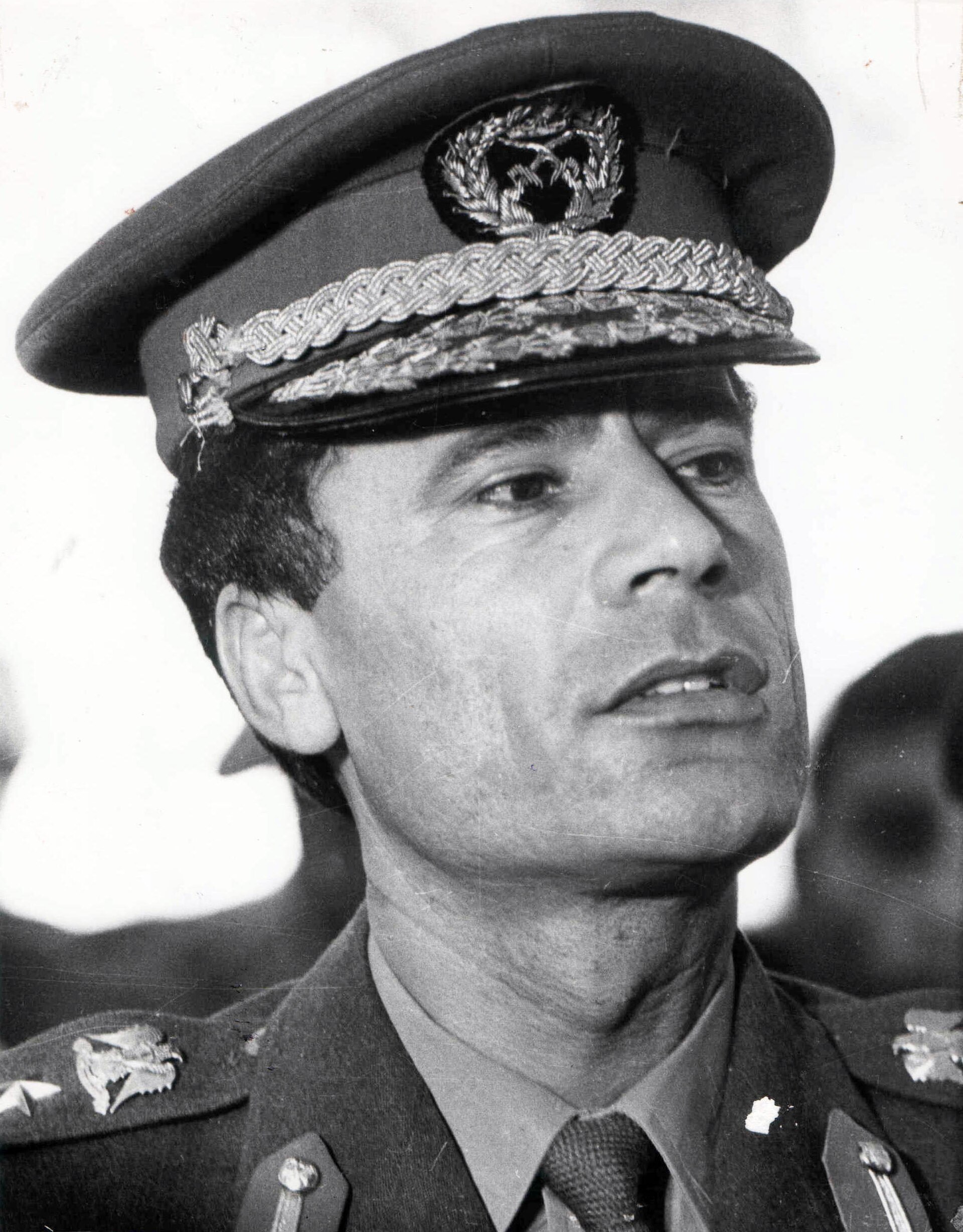
INTRODUCTION: WHY LIBYA IS SUCH A DIFFICULT CASE
The story of Libya under Muammar Gaddafi is told in two almost incompatible versions. The first was Gaddafi's authoritarian leader, whose fall was the result of domestic resistance and international intervention. In the second, he was mainly an modernizer, who built a welfare state, advocated African emancipation, and was removed because he obstructed Western geopolitical and economic interests. Both abbreviations leave out a substantial part of reality.
Indeed, Libya reached high income, education, health and life expectancy ratios in Africa before 2011. The State provided extensive subsidies, free education and health care and financed extremely ambitious infrastructure projects. At the same time, a political model - Jamahirii - was created based on basic popular congresses and popular committees. The stated objective was not to have a classic parliamentary competition, but to have citizens' direct participation in decision-making.
This model cannot be described honestly either as a mere set or as a system without any power constraints. The legal framework gave the people's congresses real powers, while revolutionary and security structures at the same time protected the revolutionary framework itself and limited the separate organisation that wanted to replace it. The tension between participation and revolutionary supervision is one of the main topics of the evaluation of the Jamaican.
It is equally important to skip from criticizing the official justification for the 2011 war straight to saying that we know one secret and definitive reason for intervention. There are documents pointing to oil, strategic, French and Pan-African interests. There is also a famous memorandum by Sidney Blumenthal about Gaddafi's golden reserves and the planned Pan-African currency. However, a distinction must be made between the authenticity of the document and the trueness of the information within it: an authentic document may contain unconfirmed reporting claims.
Therefore, a meaningful assessment must separate the substantiated fact, analytical interpretation and hypothesis - and apply the same standard to Libya and to countries that criticised or counteracted it militarily.
1. FROM THE 1969 COUP TO A NEW POLITICAL MODEL
On 1. On September 1969, a group of young officers led by Muammar Gaddafi overthrew King Idrís I. The monarchy was replaced by the Republic of Libya. The new regime combined Arab nationalism, anti-colonialism, state control of strategic sectors, and emphasis on redistribution of oil revenues.
Gaddafi ideologically inspired Gastar Nasser, but gradually created his own doctrine, which he called the Third Universal Theory. It was supposed to be an alternative to both capitalism and Soviet Marxism. The most famous form of it was the Green Book, published since the middle of 70. flight.
In 1977, the Great Libyan Arab People's Socialist Jamahiri was declared. The word "jamahiriya" is Gaddafi's neologism derived from the Arab expression for the masses; the purpose was to be "the state of the masses" or "the rule of the people's masses."
The formal model was based on basic popular congresses, popular committees and the General People's Congress. The theory rejected parliamentary representation, arguing that Parliament took away power from citizens: the citizen, according to it, should not have given a vote to a professional politician every few years, but should have taken direct part in the local Congress and co-decision.
This is an important correction to the common abbreviation that Libya "had no political system." It had a complicated system of direct participation and institutions, which actually worked at local and national level. The question is, however, how much real power did the citizens have in it.
2. JAMAHIRIYA: AN EXPERIMENT IN DIRECT DEMOCRACY AND REVOLUTIONARY OVERSIGHT
Jamahiri was not just a change in the name of the state. This was an unusual institutional experiment whose ambition was to circumvent classical party parliamentary rule and move decision-making into the system of basic popular congresses and popular committees. The American Library of Congress described the emergence of popular committees since 1973 as an attempt to increase public participation, reduce bureaucratic passivity and involve citizens directly in administration (Libya: A Country Study).
In 1977, this concept was institutionalised as "the government of the people" and in 1979 Gaddafi left the office of Secretary General of the General People's Congress. Since then, he has been acting as "Leader of the Revolution." In the period institutional context, this title was expressed by the department of formal government from the revolutionary leadership, not by the ordinary presidential office. The designation "Leader of the Revolution" is therefore not an analytical proof of dictatorship; what is important is what was the actual distribution of decision-making power.
The legal structure of the jamahirii gave the basic popular congresses a wide power. Law No For example, the 2007 1 identified their role in the adoption of laws, budgets, public policies and other key decisions (Law No. 1 / 2007 - DCAF Legal Database). This is an important reason why the local participation experience cannot be automatically rejected as mere propaganda.
At the same time, there was a second layer - the Revolutionary Committees and security structures. Their supporters saw them as a fail-safe against the return of pre-revolutionary elites, foreign influence, armed Islamism and the destruction of a revolutionary project; critics described them as an ideological surveillance mechanism. Here lies the main tension of the Jamahirii: the system could provide real participation in a number of local and practical issues, but at the same time significantly restricted the possibility of creating a separate organisation to replace the revolutionary framework itself.
The party competition was rejected in Gaddafi's political theory as a mediator between a citizen and power. This is a different model than liberal parliamentary democracy, not just an unfinished copy of it. For an honest assessment, it is not enough to measure Libya only by whether it had a Western type of party competition; it is also necessary to examine whether the declared direct participation actually allowed citizens to influence the decision and whether revolutionary supervision did not go beyond the legitimate defence of the system.
2A. REGIME SECURITY, THE OPPOSITION, ABU SALIM AND A CONSISTENT STANDARD
The state's rigidity towards the opposition cannot be assessed without distinguishing what the intervention is aiming at. Jamahiriya did not have to take passive account of the preparation of assassinations, armed insurrection, terrorism, violent coup, or demonstrably foreign-controlled subversion. In Libya, it was not just a hypothetical danger: Amnesty International experienced violent clashes of security forces with armed Islamist groups in Benghazi in September 1995 and the subsequent arrest of suspected Islamists (Amnesty International, 1995). Therefore, the existence of strict security measures alone does not yet prove insolence.
Armed violence
A strong and legitimate reason to intervene is against a man preparing for assassination, terrorist attack or violent coup. They shall determine the specific actions, evidence and proportionality of the force used.
Foreign-controlled destabilisation
There is also a legitimate security interest, but there must be proof of actual financing, management or participation in a violent operation. Only foreign contacts or disagreements do not replace such evidence.
Non-violent political alternative
The requirement of another constitution, election, economic model or leadership criticism is qualitatively different. Their automatic identification with violent subversion takes the system's ability to correct its own errors.
The third category shows the border of legitimate defence of the revolutionary project. Law 71 of 1972 did not just affect violent actions, but generally group political activity contrary to the principles of the revolution. Human Rights Watch has demonstrated the restrictions on independent association, peaceful political activity, and cases of people who have remained in prison after the sentence was served or after the court's decision to release (Human Rights Watch, 2009). This does not prove that every opponent was non-violent or that the state did not have real enemies. This shows that the legal framework has gone beyond combating violence.
For a system based on popular participation, this difference is also relevant in terms of its own function. Revolutionary surveillance can protect the institutional experiment from armed disruption; however, if it also eliminates non-violent corrections, it weakens the feedback that the government of the people had on. The basic analytical question is therefore: How much was political control a defense layer of jamahirii against violent destabilization and how did it exceed this function and began to protect leadership from legitimate non-violent correction?
Abu Salím: numbers, composition of prisoners and two stages of the incident
The popular acronym "Gaddafi had shot up 1,200 political prisoners" combines several uncertain claims into one sentence. The number 1,200 is approximate. Human Rights Watch recorded a witness estimate derived from, among other things, a decline in the number of dishes prepared in the prison kitchen; the Gaddafi Foundation later spoke of 1,167 deaths. The UN Working Group on Involuntary and Violent Disappearances received a submission of 1,161 detainees, expressly stating that there was no definitive official list of missing persons. The difference between dozens of persons does not change the severity of the event, but the article cannot give an estimate for the exact number (HRW: Truth and Justice Can't Wait; United Nations Working Group, 2018).
It is equally carefully necessary to describe who was imprisoned in Abu Salim. It was mainly political and security prisoners, not a common prison filled with only property offenders. Among the detainees were members or sympathizers of the Libyan Islamic Fighting Group and other militant Islamist currents, people detained after armed conflict and persons accused of solely belonging to a prohibited organisation. Non-violent opponents and members of the Muslim Brotherhood, which Gaddafi Development Foundation has identified in a particular process as a group that neither uses nor advocates violence (Amnesty International, 1996; HRW, 2009). We don't know the exact proportions of each group. It is therefore not defensible to denote all dead, nor peaceful democratic dissidents, nor dangerous terrorists.
Events 28-29. On June 1996, at least two distinct phases were in place. According to the witness statements, the incident began by protesting conditions, limited visits, inadequate care and long detention without trial. Some of the prisoners got out of their cells, captured two guards, and at least one guard was killed according to multiple versions; in addition, the official version claimed that the prisoners had taken over the weapons. Abdullah Senusi arrived in prison, negotiations were held and approximately 120 sick or injured prisoners were allegedly taken to treatment (HRW, 2006; HRW, 2012).
It is only after negotiations that the versions are fundamentally dissociated. The official Libyan interpretation described the victims as a result of the suppression of violent rebellion. The witness version claims that the next day the prisoners were concentrated in the courtyard and security officers shot at them from the rooftops after the situation was largely under control. The first stage may have required the use of force to protect lives and free hostages. But if the second phase was done as described by the witnesses, it would no longer be about averting the imminent threat, but about mass extrajudicial killings.
The UN's basic principles for the use of force and firearms they only allow the use of deadly force when it is essential to protect life. Therefore, neither the abbreviation "prisoners died, so that every intervention was an automatic crime," nor the opposite claim that the initial rebellion justified everything that followed. It is the moment, the nature of the threat, the status of the individual victims and proportionality that decides. However, the Gaddafi State did not provide a timely, complete and publicly controllable examination to reliably answer these questions. It is this information gap that is at the heart of the dispute and at the same time allowed for a later political use of the case.
Long-term custody, investigation and judicial control
An investigation into a terrorist network, a conspiracy of violence or foreign operations can take an objective long time. Therefore, the length of the investigation alone does not yet prove that detention is arbitrary. The question is whether the link is based on specific reasons relating to the person in question, whether it is regularly examined by an independent court and whether the detained person can effectively challenge it. Article 9 of the International Covenant on Civil and Political Rightswhich Libya acceded to in 1970 requires judicial control of detention and proceedings within a reasonable period of time or release. Neither the automatic conclusion of "long binding means injustice," nor the unlimited justification "still being investigated" is therefore not enough.
The comparison of prison populations complements the scale, but does not solve procedural quality. According to World Prison Brief, Libya had around 13242 prisoners in 2010, i.e. 220 per 100 000 inhabitants; the United States had about 2 270 142 prisoners, i.e. 731 per 100 000. So the American prison rate was about 3.3 times higher. But Libya had a higher proportion of pre-trial / remand people: 47,3% against US 20,2% (World Prison Population List; World Prison Brief - Libya). The lower number of prisoners refute the idea of Libyan equivalent of US mass imprisonment; at the same time, a high proportion of ties open the question of the length and quality of judicial review.
Guantánamo, double standard and development after 2011
US experience with Guantánamo shows that even liberal democracy can create an extraordinary detention regime in perceived existential threats and keep people in the long term without ordinary criminal charges. The US Supreme Court in the Case Boumedien v. Bush In 2008, he confirmed the detainees' constitutional right to challenge the legality of detention through habeas corpus (US Supreme Court judgment). Human Rights Watch later again criticised unlimited detention without charge or trial (HRW, 2015). Guantánamo does not excuse Libyan misconduct; however, it makes it impossible to build an assessment on a simple contrast between the "Libyan arbitrage" and the supposedly flawless Western rule of law.
The simple story that repression ended in the fall of the Qaddafi regime is not even consistent with the first months after the war. Amnesty International reported in October 2011 about 2,500 people held by militias in Tripoli and the surrounding area, often without court orders and outside standard legal control; the organisation also recorded beatings and other maltreatment (Amnesty International: Detention about staying the new Libya). This does not prove that the previous system was flawless. This shows that the removal of central authority has not, in itself, guaranteed legal protection and has further weakened it in some areas.
The same measure must therefore apply to Jamahiri, the US and the Libyan militia: What did a person do, what evidence existed against him, whether he posed an imminent danger, who reviewed his detention and whether the force used was consistent with the real threat? The questions thus put recognise the right of the State to defend society and at the same time do not turn the system's defence into a blank check against any opposition.
Libya and the USA: prison population in 2010
| Indicator | Libya | USA |
|---|---|---|
| Total number of prisoners | 13 242 | 2 270 142 |
| Prisoners per 100 000 inhabitants | 220 | 731 |
| Pre-trial / remand ratio | 47,3 % | 20,2 % |
Source: World Prison Brief. The figures describe the extent of imprisonment and detention, not in itself the quality of the trial or the grounds for detention.
3. THE GREEN BOOK: MORE THAN A COLLECTION OF ECCENTRIC THESES
Green Paper is often reduced to curious quotes about women, children or sport. In fact, it is a set of three parts devoted to politics, economics and society.
The political part rejects Parliament, political parties and referendum as a lack of form of popular government. Gaddafi claimed that the representative could not "represent" the will of a person who is not personally involved in the decision-making process. Political parties, he said, are forming the government of parts of society over the rest.
The economic part is more radical. It criticises the relationship in which the worker sells the work to the owner of the capital. The ideal was to be a worker as a production partner, not an employee. Housing was considered to be a basic need and speculative property of houses for rental as a form of dependency of the tenant. Similar considerations concerned land, transport and concentration of property.
The social part solves family, tribe, nation, education, women, minorities and sport. Some passages correspond to period anticolonial criticism and participatory ideals, others act as a biological and paternalistic impression. For serious evaluation it is therefore better to analyse specific thesis than to label the whole work in one word.

The Green Book in Czech for download
For direct comparison of the article with the primary text there are two Czech editions of the same work. The files differ in the rate and scope of the parties; they contain three parts dedicated to popular power, socialism and social base of the third universal theory.
4. LIFE IN LIBYA BEFORE 2011
The claim that Gaddafi's Libya had a large social system is not a legend. In its retrospective analysis, the World Bank states that per capita income reached around USD 11 934 in 2010, above the average of the Middle East and North Africa, and close to the top of Africa at that time. The State provided free health and education, public employment and subsidies for food and fuel.
Between 1970 and 2010, according to the same source, life expectancy increased from 46.9 to 75.1 years. The literacy of adults was about 89.5% and 99.5% among young children aged 15 to 24. The death rate of children under five years has fallen from 139 to 28 to 1,000 born.
These indicators are essential because they contradict the image of Libya as a state that provided nothing to the population. Oil revenues were significantly redistributed through public services and subsidies.
At the same time, the social model cannot be confused with a problem-free economy. More than 80% of the formal workforce worked in the public sector according to the World Bank. The private economy was weak, the state was extremely dependent on oil, and the institutional environment was problematic. The country imported a significant part of the workforce and unemployment, especially among the young, was a political problem. Oil wealth also did not mean that all residents had the same standard of living or access to clientelist networks.
It is therefore factually defensible to say that Libya had a high standard of living and a very large welfare state in African conditions before 2011. However, it is not a clear claim that 'all Libyans had a great time' or that the social system had eliminated all economic and political problems.

5. WATER, INFRASTRUCTURE AND THE GREAT MAN-MADE RIVER
The regime's most visible projects included Great Man- Made River - a huge pipeline system that drew fossil underground water from Sahara aquifers and led it to coastal cities and agricultural areas. The project shows one of the characteristics of the Gaddafi era: the state has managed to transfer some of the oil wealth into extremely expensive infrastructure.
At the same time, it is appropriate to avoid Internet legends that have been virtually inexhaustible. Water comes from very old underground reserves, whose natural recovery is limited in today's climate. The project therefore addressed immediate water supply, but did not remove the long-term sustainability issue.

6. GADDAFI AND AFRICA: PAN-AFRICANISM WAS NOT A FICTION
Since 90. Gaddafi's flight was increasingly shifting attention from panarabism to panafricanism. He supported the creation of the African Union, he promoted stronger continental institutions and spoke of the "United States of Africa."
It is important to separate this real policy from the later simplified Internet stories. Indeed, the framework of the African Union's founding plan is envisaged by the African Central Bank, the African Monetary Fund and the African Investment Bank. The African Central Bank is in the long term related to monetary integration and the common African currency. So the idea of continental financial autonomy is not an additional fictional legend.
In addition, Gaddafi used Libyan capital and oil revenues to build influence in sub-Saharan Africa. This naturally entered the area where the European powers - particularly France in French-speaking West and Central Africa - had long-term interests.

7. THE GOLD DINAR: WHAT IS DOCUMENTED AND WHAT IS NOT
The most famous claim is that Gaddafi wanted to introduce gold-covered Pan-African currency and that is why he had to be removed.
There are three different things that are proven:
First, Libya had significant gold reserves. Indeed, international statistics have ranked Libyan gold as important central bank reserves.
Secondly, Qaddafi has long been promoting African political and financial integration.
Third, there is an authentic US State Department later published e-mail that Hillary Clinton sent her unofficial advisor Sidney Blumenthal. Memorandum of 2. On April 2011, he claimed that Gaddafi's government held 143 tonnes of gold and similar quantities of silver and that gold was to serve as the basis for the Pan-African currency. According to Blumenthal's source, this currency was to offer French African states an alternative to the CFA franc, and the French intelligence services were to consider this plan as one of the circumstances affecting Sarkozy's decision making.
This is an interesting document, but it is not proof of the same power as the French Government's record or President Sarkozy's undisclosed decision. Blumenthal was not an employee of US intelligence services, his source was anonymous, and the State Department's staff considered part of his Libyan reporting to be questionable. Africa Check did not find independent evidence in the reconstruction of the origin of the claim in 2023 to confirm that a specific plan of gold-covered supranational currency was immediately ready to be implemented.
The exact conclusion is therefore: the existence of Pan-African monetary ambitions is documented; the Blumenthal memorandum of 143 tonnes of gold and the alternative to CFA franc is an authentic document published, but its content remains unconfirmed by the intelligence claim. It's not serious to make him the only proven "real reason for war."
And another important correction: if the information in the memorandum were true, it immediately describes the problem, particularly for the French CFA currency space and French influence, not a direct plan to replace the US dollar. Of course, a wider common African currency could change monetary and commodity relations in the long term, but the US's claim "attacked, because Gaddafi threatened the dollar" has no comparable strong support in the documents available.
8. 2011: WHO FORMED THE OPPOSITION AND WHERE ITS WEAPONS CAME FROM
The Libyan opposition in 2011 cannot be described as one single organisation with a single programme. It brought together people from East Libyan cities, families of prisoners and victims of repression, lawyers and civil activists, former regime officials who, after the protests, crossed over, long-term exile, tribal and local networks, and Islamist groups. Their common goal was the end of Gaddafi's government; the idea of what was to come after was no longer common.
The opposition did not start in February 2011
Organized resistance has existed for decades. National Front for the Rescue of Libya founded by the exiles of 1981. Her most famous representative was Muhammad Yusuf al-Makarjaf"The former Libyan ambassador who broke ties with the regime; after the fall of Gaddafi, he returned to politics. The overview of the post-war parties by Carnegie Endowment refers to the National Front as a direct political successor to this exile stream and also mentions a former officer and diplomat Ibrahim Sahad. The opposition has had contacts abroad and long history, but it was not the same as the street uprising in Benghazi, nor was it in control of all its armed forces.
Other origins Libyan Islamic Combat Group (LIFG)which was in the '90s. Years have been created by veterans of the Afghan war to overthrow the regime. The regime has imprisoned and persecuted its members; part of the leadership later in prison has formally rejected violence. After 2011, the various streams of this scene entered public policy. Abdal Hakim Bilhaj, former Emir LIFG, became Commander of the Tripoli Military Council, while They're... they're... they're... they're... they're... they're... He worked in a political party. This past helps explain later mistrust among secular exiles, former regime technocrats, military defectors and Islamist brigades; it does not prove, however, that the whole rebellion had a single Islamist character.
From protest to the Transitional National Council
The immediate trigger of February's protests was arrest of a lawyer Fathi Tirbilwho represented the families of the victims of the massacre at Abu Salim prison. Following the clashes and the loss of control over the eastern part, the Transitional National Council was established in Benghazi. Her own founding declaration of 2. On March 2011 she described it as the political face of the revolution, set a temporary seat in Benghazi and stated Mustafu Abdala Jalila as chairman; and Abd al-Hafiza Ghugu as Vice-President and spokesperson. The declaration assumed 30 members, but she didn't publish a part of the names for security reasons. This primary document illustrates the institutional ambition of the Council; it does not in itself demonstrate that the Council has effectively managed each local brigade.
Mustafa Abdal Jalil He was the Minister of Justice before he ran over. Mahmoud Jibril, economist and former Head of the General Development Institution, managed by the Executive Authority of the Board and foreign negotiations. Their biographies show a fundamental feature of the revolution: part of its top leadership came from a long-standing underground, but from a state apparatus that split up in the crisis. This provided the opposition with knowledge of institutions and foreign contacts, while at the same time, it gave rise to suspicion of people who had resisted the regime longer.
Military leadership was not united
The first armed forces were created locally and their quality differed significantly. In addition to civilian volunteers, defected soldiers, police officers and entire crew fought. Former Minister of Interior and General Abd al-Fattáh Junus He went to the rebellion and became chief of the armed forces subordinate to the council. Him Murdered in July 2011 After the call from the front, he showed how deep the distrust between former regime officers and some revolutionary brigades was. The later investigation and series of assassinations did not close the dispute.
Khalifa Haftar He was another different branch: the former Gaddafi officer broke up with the regime after the war in Chad, long lived in exile and returned in 2011. He competed with Juniz for command, but he did not control all the forces of the rebellion. Local brigades, such as Benghazi and Misrita, have maintained their own leadership, funding and political ties. The designation "rebels" therefore covers the coalition, not the finished national army.
Where the weapons came from: four removable layers
After the loss of East Libya, large warehouses remained in Benghazi and Adjedabaji. Human Rights Watch has documented on-site handguns, RPG, mortars, artillery, anti-aircraft weapons, Grad missiles, and portable missiles. It was the fastest and largest home-made source of weaponry.
The rebels were getting weapons with the transfer of military and police officers, leaving bases and changing city control. The material was often old and the service was untrained.
The UNODA Panel has recorded information and physical traces of supplies from Qatar and Sudan. Qatar admitted limited presence of military personnel but denied direct armaments; the panel also described unreported transfers in violation of the embargo.
Coalition strikes destroyed the regime and changed the fighting ratio. Britain has announced small advisory teams; the US has announced non-lethal material. This aid is not the same as the origin of each individual weapon, but it was essential for the military outcome.
Human Rights Watch field message from 5. On April 2011, he described sixty bunkers in Benghazi and thirty-five in Adjedabiya, which remained accessible to insurgents and civilians after the retreat of the government. Observers saw the same types of weapons on the front. This disproves the simple notion that an armed uprising could only have been created through a secret foreign shipment. At the same time, uncontrolled warehouses created a long-term problem: the material was scattered among brigades, civilians, and later outside Libya.
But external supplies are not just speculation. United Nations Expert Panel in Report S / 2012 / 163 He summarized the testimony of Libyan military officials and his own investigation into the flights and material attributed to Qatar, including the anti-tank complexes of MILAN. In the annex to the report, Qatar denied directly supplying weapons and ammunition to the rebels, and admitted a limited number of armed personnel for their own protection. The panel also described the ammunition originally exported to Qatar, which was found in the rebels. In Sudan, the report recorded small arms and RPG and later the public statement by President Omar al-Bashir that Sudanese supplies had reached revolutionaries. The exact volume and final recipients of all consignments remain incompletely documented.
What results from this composition of the opposition
Supported The domestic protest, the disintegration of part of the state apparatus, the occupation of the supermarkets and the formation of the Benghazi Council have preceded NATO's full involvement. So the uprising was not just a foreign scene. Dispute and variable The Council has never been fully in control of all the brigades and it cannot be inferred from its international recognition to the single mandate of the entire Libyan society. Essential escalation Foreign aviation, advisory and material assistance has changed the opposition's ability to survive and advance, and later contributed to the victory of the coalition, whose internal contradictions have not disappeared after the fall of the regime.
The most accurate conclusion therefore does not lie between the two absolute claims. The Libyan opposition had its own history, representatives, social resources, and the first domestic equipment. At the same time, it became a beneficiary of foreign support during the war and its military success cannot be separated from intervention. It is the combination of domestic revolt, military disintegration, free warehouses, competitive brigades and external intervention that explains both the rapid fall of the regime and the difficult construction of a single state after it.

9. UN RESOLUTION 1973: WHAT IT ACTUALLY AUTHORISED
The UN Security Council adopted 17. On behalf of the President, It called for a ceasefire, approved a no-fly zone, and allowed Member States to take "all necessary measures" to protect civilians and civilian-populated areas at risk of attack. At the same time, it excluded foreign occupation power in Libyan territory.
The mandate was therefore not formulated as a power to overthrow Gaddafi and select a new government. Its legal and public justification was the protection of civilians.
France, Britain and the United States have launched military operations 19. March. NATO subsequently took over Operation Unified Protector, which included the promotion of the arms embargo, the no-fly zone, and the blows to forces deemed a threat to civilians.

10. THE BENGHAZI QUESTION: HOW CERTAIN WAS THE THREAT OF A MASSACRE?
One of the key arguments of intervention was that Gaddafi's forces were headed for Benghazi and threatened to massacre the civilian population.
The British Foreign Affairs Committee has reached a very critical evaluation in its 2016 report. According to the Committee, the British Government was unable to accurately determine the true extent of the threat to civilians, and its strategy was based on false assumptions and an incomplete understanding of the situation. The Committee wrote that the threat was presented with greater certainty than the information available.
That's not the same as proof that civilians were in no danger. In the civil war, violence against civilians actually took place. The point is something else: the most dramatic prediction on the basis of which the urgency of the war was explained to the public was not sufficiently substantiated, according to a later parliamentary inquiry.
11. FROM PROTECTING CIVILIANS TO REGIME CHANGE
This is one of the best proven controversy of the whole intervention. 14. On April 2011, Barack Obama, David Cameron and Nicolas Sarkozy jointly published a text that said that leaving Gaddafi in power would be "unthinkable" and that Libya's future should be without him.
The British Parliamentary Committee later concluded that limited intervention to protect civilians "drifted into an opportunistic policy of regime change by military means" - has gradually turned into an opportunistic policy of regime change by military means.
This conclusion is important, because it is not the argument of NATO's critics from the Internet border. This is the conclusion of the parliamentary committee of one of the main States that led the operation.
12. FRANCE: OIL, INFLUENCE, DOMESTIC POLITICS AND THE CFA FRANC
France was among the states that pressed for military action as quickly as possible. The official reason was to protect civilians. The available materials allow for discussion of other possible motives.
The British parliamentary report quotes the Blumenthal Memorandum, which described Sarkozy's possible motives as an attempt to gain a greater share of Libyan oil, to increase French influence in North Africa, to improve Sarkozy's domestic political position, to demonstrate French military strength and to prevent Qaddafi from weakening French position in French Africa.
Nor can the list be converted into a certain order of "real causes." The memorandum is not the French government's record. It shows, however, that the reflection on economic and geopolitical motives is not a mere fantasy and that it was considered relevant by the British parliamentary committee to include it in its assessment.
Oil is a clear structural factor: Libya had the largest proven oil reserves in Africa and was lying right at the European market. This does not mean that any military decision can be explained by the word 'oil', but it would be equally wrong to exclude economic interests from the analysis altogether.
13. THE UNITED STATES: WAS THE WAR FOUGHT FOR THE DOLLAR?
The United States provided significant support for NATO operation at the initial stage of critical military capacity and subsequently. The public US justification was based on the protection of civilians and a multilateral mandate.
For the claim that the main American motive was to prevent the gold dinar, a documentary chain is not available comparable, for example, to the undisclosed US coup d'état in Iran 1953 or Guatemala 1954. This does not mean that monetary and geopolitical interests can be excluded by apriori; it only means that we do not have evidence that would allow the hypothesis to be presented as a fact found.
Moreover, the then US administration was not the first initiator of intervention to the extent that France and Britain were. This weakens the simple story once again, "Washington has removed Gaddafi for the dollar."

14. WHO KILLED GADDAFI?
20. On October 2011 Gaddafi tried to escape Syrty with a convoy. The convoy was attacked from the air by NATO forces. Human Rights Watch has been reconstructing events from physical evidence, videos and witness statements.
Gaddafi survived the air attack. He was subsequently found and captured by the combatants of Misurat alive. The video footage shows the wounded Gaddafi in the hands of armed men, beatings and other violence. Shortly after that, he was dead. The precise sequence of recent moments has not been transparently examined in a way that would remove all doubts. Human Rights Watch therefore requested an investigation into a possible extrajudicial killing.
The phrase "NATO killed Gaddafi" is therefore inaccurate in the immediate sense: the air strike created a situation in which his convoy was stopped, but Gaddafi was then captured alive and died in the hands of Libyan fighters. But the exact same version is that he simply fell in a regular fight.
15. WHAT HAPPENED AFTER THE VICTORY
The intervention test is not only the fall of the government, but also what followed. The Libyan state has not developed into a rapidly stabilised democracy after 2011. Armed groups, regional power centers and rival governments have gradually created a fragmented system in the long run. The civil war was fully heated again in 2014. Other foreign actors intervened in the conflict and Libya has become a transit area for migration and a place of serious human rights violations.
The British Foreign Affairs Committee has combined this development with the absence of a coherent strategy for the post-regime situation. The Committee noted that the consequences included political and economic collapse, militia rivalry, humanitarian and migration crises, human rights violations, proliferation of arms, and the growth of extremist groups in North Africa.
In 2026, Libya remains politically divided among rival power centers. The UN continues to seek to create a path to national elections. Human Rights Watch in World Report 2026 describes the continued arbitrary detention, kidnapping, violence of armed groups and lack of full responsibility. At the same time, the World Bank points out that, despite high oil revenues, the economy is still extremely dependent on hydrocarbons and institutional fragmentation limits long-term development.
This does not mean that every problem after 2011 can only be attributed to NATO; domestic factions and regional powers are responsible for their own. It cannot be said, however, that the post-war development was a side-by-side detail of a successful operation. The stable state that existed before the intervention was replaced by a long-term fragmented political environment.
16. GADDAFI AS A REVOLUTIONARY MODERNISER: VISION, RESULTS AND LIMITS
The single word "tyrant" or "liberation" label will always capture only part of Gaddafi's historical role. More precisely, it is also possible to monitor his project, his practical results and the boundaries of the system that he created around him.
It is documented that Gaddafi's state invested large-scale funds in health, education, infrastructure, housing and subsidies, and that Libya has achieved high social indicators. Great Man- Made River is one of the most ambitious water-management projects of its time. At the same time, Jamahiriya tried to create her own model of direct participation instead of classical party representation. In this sense, it was a real and unusual modernization experiment, not just a rhetorical change in the name of the regime.
Gaddafi was also a major promoter of Pan-African integration and greater African economic and political autonomy. He supported African institutions, infrastructure and the idea of a smaller continent's dependence on former colonial powers. Part of his programme can therefore be rightly considered as long-term and visionary in some respects - but this assessment is not the same as the claim that each part of his system worked without problems.
The biggest internal issue remains the relationship between direct participation and revolutionary supervision. The system provided citizens with participatory channels, but the organised competition for replacing the revolutionary model itself was severely restricted. The security system faced real armed threats, but the legal framework also interfered with non-violent political organisation. These two facts do not need to be mixed up.
Nor is it necessary to accept the idea that social results automatically abolish political misconduct, nor the contrary the idea that political restrictions automatically deprive the importance of social, infrastructure and Pan-African projects. The historical picture of Qaddafi Libya is more accurate just when both planes remain visible simultaneously.
17. CONCLUSION: LIBYA AND ITS CRITICS MUST BE JUDGED BY THE SAME STANDARD
Libya shows a problem that is repeated in international policy: domestic conflict, real security threats, social results, geopolitical interests, human rights and foreign intervention may overlap in one story. The presence of one motive does not automatically exclude others.
Therefore, a fair assessment cannot apply a more stringent principle to Libya than to those countries that criticised or bombed it. If a long link without a standard process is a problem in Libya, it is also a problem in Guantánamo. If the use of deadly force against prisoners requires proven necessity and proportionality in Abu Salim, the same requirements apply to other states. And if Libyan political pluralism is assessed, it is also legitimate to compare it with the US mass incarceration rate, extraordinary detention regimes, or the way Western states treat security threats.
But the same scale works the other way around. The existence of Guantánamo does not automatically make every Libyan intervention justified, and the high American prison rate alone does not prove that Libyan detention was legally smooth. The comparison is intended to eliminate the double standard, not create a new standard.
The strongest conclusion is therefore: Qaddafi's Libya was associated with extensive social modernisation, ambitious infrastructure, pan-African projects and an original experiment of direct participation with revolutionary supervision and security systems, which sometimes also interfered with non-violent political activity. The 2011 uprising had a domestic basis, but foreign intervention was not neutral even without its own strategic interests; the mandate of civil protection had in practice moved to a change in regime, and the subsequent breakdown of state power was one of the essential results for which the operation had to be evaluated.
Such a painting does not demonize or idealize Gaddafi. It allows for serious consideration of his efforts to create his own social and political model, real social results and Pan-African ambitions - while leaving an open critical question where the legitimate defence of the revolutionary system ended and the disproportionate restraint of the individual began.

RESOURCES AND OTHER READING
[1] World Bank - Middle East and North Africa Economic Monitor, April 2017; part of "Libya, Pre-Conflict (1970-2010)."
documents1.worldbank.org
https://documents1.worldbank.org/curated/en/235401491413228678/pdf/114057-REPLACEMENT-PUBLIC-4-17-10-am-Online-MEM-SPRING-2017-FINAL.pdf
[2] World Bank - Socialist People's Libyan Arab Jamahiriya, Country Economic Report / Public Institutions and the Development of Jamahiri.
documents1.worldbank.org
https://documents1.worldbank.org/curated/en/918691468053103808/pdf/30295.pdf
[3] Human Rights Watch - World Report 2011: Libya; human rights, political imprisonment, Abu Salim.
hrw.org
https://www.hrw.org/world-report/2011/country-chapters/libya
[4] Human Rights Watch - World Report 2010: Libya.
hrw.org
https://www.hrw.org/world-report/2010/country-chapters/libya
[5] African Union - African Union Financial Institutions; African Central Bank, Monetary Fund and Investment Bank.
Aug.
https://au.int/en/ea/epr/aufi
[6] Africa Check - Did Gaddafi plan to introduce an African currency backed by gold reserves? Maybe, but there's little evidence for this (31. 5. 2023). Detailed analysis of the origin of claims of 143 tons of gold and Blumenthal's memorandum.
africacecck.org
https://africacheck.org/fact-checks/meta-programme-fact-checks/did-gaddafi-plan-introduce-african-currency-backed-gold
[7] UK House of Commons Foreign Affairs Committee - Libya: Examination of intervention and collection and the UK's future policy options, 2016. Chapter on the decision to intervene and possible French motives.
publications.parliament.uk
https://publications.parliament.uk/pa/cm201617/cmselect/cmfaff/119/11905.htm
[8] UK House of Commons Foreign Affairs Committee - same report, chapter "The aftermath" / transition to regime change and consequences.
publications.parliament.uk
https://publications.parliament.uk/pa/cm201617/cmselect/cmfaff/119/11908.htm
[9] UK Parliament - Summary of the Foreign Affairs Committee report on Libya.
Committees.parliament.uk
https://committees.parliament.uk/committee/78/foreign-affairs-committee/news/103285/libya-report-published-16-17/
[10] United Nations Security Council - Resolution 1973 (2011), S / RES / 1973.
undocs.org
https://undocs.org/S/RES/1973(2011)
[11] NATO - Operation Unified Protector, archival information on the scope of the operation.
Na.int
https://www.nato.int/cps/en/natohq/topics_71652.htm
[12] Human Rights Watch - Death of a Dictator: Bloody Vengance in Sirte, 2012. Reconstruction of the capture and death of Muammar Qaddafi and other convoy members.
hrw.org
https://www.hrw.org/report/2012/10/16/death-dictator/bloody-vengeance-sirte
[13] World Bank - Libya country review / Economic Monitor, current economic structure and dependence on oil.
worldbank.org
https://www.worldbank.org/ext/en/country/libya
[14] Human Rights Watch - World Report 2026: Libya; political fragmentation and human rights after 15 years of regime collapse.
hrw.org
https://www.hrw.org/world-report/2026/country-chapters/libya
[15] UNSMIL - United Nations Support Mission in Libya, reports on the political roadmap and elections in 2026.
unsmil.unmissions.org
https://unsmil.unmissions.org/en/news/unsmil-welcomes-agreement-on-next-steps-towards-national-elections
[16] U.S. Conventional Research Service - Libya: Transition and U.S. Policy (update 2026; use for the chronology of political fragmentation and foreign actors).
crsreports.congress.gov
https://crsreports.congress.gov/
[17] Human Rights Watch - Truth and Justice Can't Wait (2009); Law 71, political activity, prisoners left in custody after court and Abu Salim.
hrw.org
https://www.hrw.org/report/2009/12/12/truth-and-justice-cant-wait/human-rights-developments-libya-amid-institutional
[18] Human Rights Watch - June 1996 Killings at Abu Salim Prison (2006) and Abu Salim Prison Massacre Remembered (2012); witness reconstruction of the incident. UN Working Party on Involuntary and Violent Disappearances - Submission to 1 161 Detainees (2018).
[19] OHCHR - International Covenant on Civil and Political Rights, Article 9; personal freedom, judicial control of detention and proceedings within a reasonable period of time.
[20] United Nations - Basic Principles on the Use of Force and Firearms by Law Enforcement Offices.
[21] World Prison Brief - data on Libya and World Prison Population List; comparison of prison population and share of ties.
Libya · World Prison Population List
[22] Supreme Court of the United States - Boumediene v Council of the European Communities [22]. Bush (2008); right of detention in Guantánamo to challenge the legality of detention.
[23] Amnesty International - Detention abuses holding the new Libya (2011); detention by militia after the regime has fallen.
The Mauritanian - official website
RESOURCES NOTE
The Blumenthal Memorandum is important as an authentic document, not as a confirmed intelligence document. In the final HTML version it is advisable to view the following information next to each other: (a) the exact passage of the memorandum, (b) the parliamentary evaluation of French motifs, (c) the fact- check of origin and (d) the official mandate of the UN. The reader can thus see the difference between the primary document, interpretation and independent verification.