
Karlheinz Stockhausen
Stockhausen personifies postwar institutional electronics and the concept of study as a tool. In his work, the parameters of sound (height, volume, color, space) become a composite material and synthesis is connected to the structure of the work.
In pedagogical reading, the question of authorship is: if the composition is a chain of study operations, where does the composition end and where does implementation begin?
Vzdělání a poválečná avantgarda
Karlheinz Stockhausen se narodil roku 1928 u Kolína nad Rýnem. Po válce studoval hudbu na kolínské Musikhochschule a filozofii i germanistiku na univerzitě. V Paříži se setkal s Olivierem Messiaenem a v Kolíně s akustikem Wernerem Meyer-Epplerem. Jeho rané skladby vznikaly v prostředí darmstadtských kurzů nové hudby, kde se prosazovala serialita a hledání nových kompozičních pravidel.
Elektronické studio a prostor
V padesátých letech pracoval v elektronickém studiu západoněmeckého rozhlasu WDR. Vytvořil Studie I a Studie II, rané skladby sestavené z tónů laboratorních generátorů. V Gesang der Jünglinge (1955–56) spojil elektronické zvuky s dětským hlasem a prostorovým rozmístěním. Kontakte propojuje elektronickou pásku s klavírem a bicími. Prostor zkoumal i v dílech pro několik orchestrů, například Gruppen, a v živé elektronice, jako je Mikrophonie I.
Momentová forma a velké cykly
Od přísného serialismu přešel k tzv. momentové formě, v níž mohou jednotlivé části působit jako samostatné zvukové situace. V šedesátých a sedmdesátých letech vznikly Stimmung, Mantra a Aus den sieben Tagen. Později se soustředil na operní cyklus Licht, sedm oper odpovídajících dnům týdne. Jeho plánovaný cyklus Klang měl členit den na 24 hudebních částí.
Teorie a odkaz
Stockhausenovy texty a přednášky ovlivnily poválečné pojetí kompozice. Byl kontroverzní osobností, zároveň však rozšířil možnosti elektronického studia, prostorového zvuku, živé elektroniky a vztahu mezi hlasem a technologií. Jeho díla inspirovala skladatele, experimentální hudebníky i některé tvůrce populární hudby.
Text je přeložené a redakčně zpracované shrnutí hesla anglické Wikipedie. Původní heslo · historie úprav · CC BY-SA 4.0.
Discography / Selected works
| Year | Work | Note | Reference |
|---|---|---|---|
| 1956 | Gesang der Jünglinge | Electronics + voice; space | Wikipedia |
| 1968 | Stimmung | Process vocal work | Wikipedia |
Links
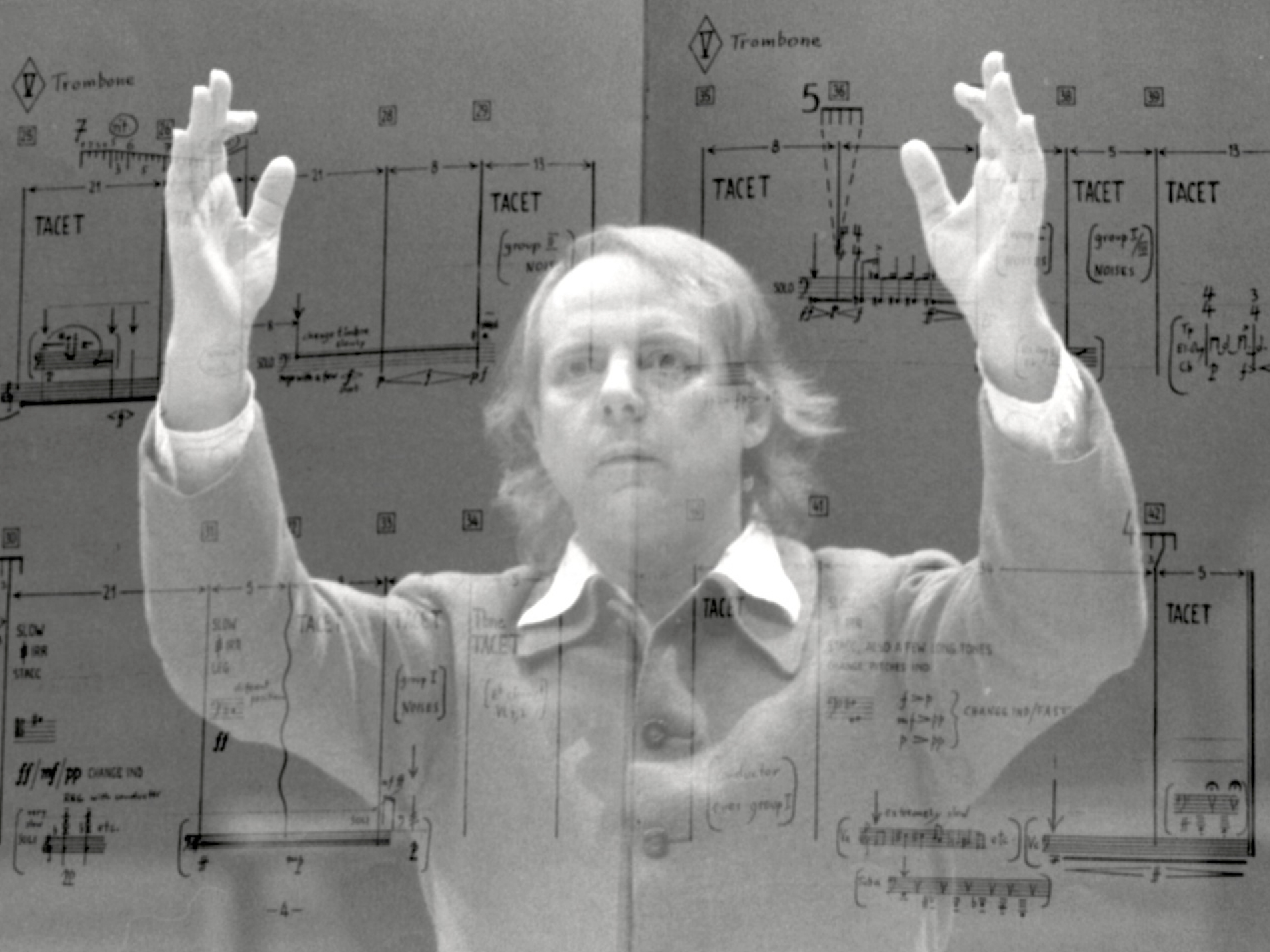
Karlheinz Stockhausen embodies post-war institutional electronic music and the idea of the studio as an instrument. In his work, pitch, loundness, timbre and space become comparative material, joining synthesis to the structure of the piece.
His practice Raises a question of autoship: if a comparison is a chain of studio operations, where does composition end and realization begin?
Education and the post-war avant-garde
Karlheinz Stockhausen was born near Cologne in 1928. After the war he studied music at the Cologne Musikhochschule and philosophy and German studies at the university. In Paris he encountered Olivier Messiaen; in Cologne he worked with acoustician Werner Meyer-Eppler. His early compositions grew out of the Darmstadt new-music courses, where serialism and new compositional rules were being developed.
Electronic studio and space
During the 1950s he worked at the electronic music studio of West German Radio (WDR) in Cologne. He made Studie I and Studie II, early pieces assembled from tones produced by laboratory generators. Gesang der Jünglinge (1955–56) combined electronic sound with a boy’s voice and spatial distribution. Kontakte joins electronic tape with piano and percussion. He also explored space in works for several orchestras, such as Gruppen, and live-electronic pieces such as Mikrophonie I.
Moment form and large cycles
Stockhausen moved from strict serialism toward moment form, in which sections can function as independent sound situations. Works from the 1960s and 1970s include Stimmung, Mantra and Aus den sieben Tagen. Later he concentrated on the opera cycle Licht, seven operas corresponding to the days of the week. His planned cycle Klang was to divide a day into 24 musical parts.
Theory and legacy
Stockhausen’s writings and lectures influenced post-war ideas of composition. He remained controversial, but expanded the possibilities of electronic studios, spatial sound, live electronics and the relationship between voice and technology. His works influenced composers, experimental musicians and some creators of popular music.
This is a translated and edited summary of the English Wikipedia article. Original article · revision history · CC BY-SA 4.0.
Selected works
| Year | Work | Notes | Link |
|---|---|---|---|
| 1956 | Gesang der Jünglinge | Electronics and voice; space composition | Wikipedia |
| 1968 | Stimmung | Process-based vocal work | Wikipedia |
References and links
Footnotes
- For broker theory see References (Roads, 2001; Deutsch, 2013). ↩