
John Chowning
Chowning is a key character of FM synthesis (Chowning, 1973). His work is important both in mathematics (model) and culturally (transfer to commercial instruments and pop aesthetics).
Didactic is FM excellent for demonstrating time variable color: cover modulator = draturgy spectrum.
Hudební studia a Stanford
John Chowning se narodil roku 1934 v New Jersey. Po studiu hudby a službě ve vojenské kapele pokračoval v kompozici u Nadie Boulangerové v Paříži. Doktorské umělecké vzdělání získal na Stanfordově univerzitě, kde začal zkoumat, jak může počítač zvuk nejen zapisovat, ale také vytvářet. Roku 1975 se stal zakládajícím ředitelem Stanfordského centra pro počítačový výzkum v hudbě a akustice (CCRMA), které spojilo skladatele, programátory a akustiky.
Objev FM syntézy
Roku 1967 zjistil, že frekvenční modulace může při vhodném poměru nosné a modulační frekvence vytvářet bohaté spektrum s nízkými výpočetními nároky. Článek z roku 1973 popsal praktický algoritmus digitální syntézy. Stanford poskytl licenci společnosti Yamaha a technologie se dostala k širokému publiku zejména prostřednictvím syntezátoru DX7. FM se stala důležitou součástí digitálních kláves, herních zvukových čipů i počítačové hudby.
FM neznamená jen napodobení existujících nástrojů: poměry frekvencí a modulační index umožňují přecházet od harmonických tónů k neharmonickým, kovovým či zvonivým barvám.
Skladby a mezinárodní spolupráce
Mezi Chowningova díla patří Stria (1977), která pracuje s neharmonickými FM barvami a proporcemi zlatého řezu, a Phoné (1980–81), jež propojuje FM se syntézou řeči. K dalším skladbám patří Sabelithe, Turenas a Voices. Jeho působení v CCRMA i kontakty s IRCAM přispěly k rozvoji počítačové hudby jako výzkumné a umělecké disciplíny.
Uznání
Chowning získal ocenění v oblasti počítačové hudby, včetně Giga-Hertz Award, a byl členem American Academy of Arts and Sciences. Jeho kariéra ukazuje, jak se princip digitálního zvuku přesunul z akademického výzkumu do běžných nástrojů hudební produkce.
Text je přeložené a redakčně zpracované shrnutí hesla anglické Wikipedie. Původní heslo · historie úprav · CC BY-SA 4.0.
Discography / Selected works
| Year | Work | Note | Reference |
|---|---|---|---|
| 1973 | The Synthesis of Complex Audio Spectra by Means of Frequency Modulation | Basic Article | CCRMA |
Links
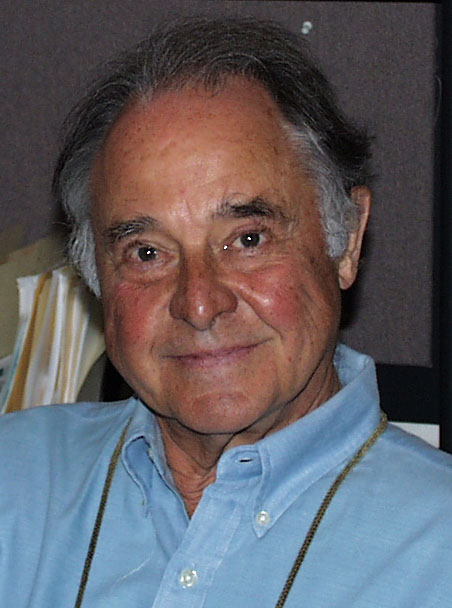
John Chowning is a key figure in FM synthesis (Chowning, 1973). His work matters are probably through its model and culturally through its adoption in commercial instruments and popular music.
FM is an effective way to demonstrate timbres change over time: the modulator developer shares the spectrum 's development.
Musical studies and Stanford
John Chowning was born in New Jersey in 1934. After studying music and serving in a military band, he studied composition with Nadia Boulanger in Paris. He completed doctoral work at Stanford University, where he explored how computers could create sound rather than merely notate it. In 1975 he became founding director of Stanford’s Center for Computer Research in Music and Acoustics (CCRMA), bringing composers, programmers and acousticians together.
The discovery of FM synthesis
In 1967 Chowning found that frequency modulation could generate a rich spectrum at relatively low computational cost when carrier and modulator frequencies were set in suitable ratios. His 1973 paper described a practical digital-synthesis algorithm. Stanford later licensed the technology to Yamaha, and it reached a mass audience especially through the DX7 synthesizer. FM became important to digital keyboards, game sound chips and computer music.
FM is not limited to imitating existing instruments: frequency ratios and modulation index can move a sound from harmonic tones toward inharmonic, metallic or bell-like spectra.
Compositions and international work
Chowning’s works include Stria (1977), which uses inharmonic FM timbres and proportions related to the golden ratio, and Phoné (1980–81), which connects FM with speech synthesis. Other pieces include Sabelithe, Turenas and Voices. His work at CCRMA and exchanges with IRCAM helped establish computer music as both a research field and an artistic practice.
Recognition
Chowning received honours in computer music, including the Giga-Hertz Award, and was elected to the American Academy of Arts and Sciences. His career shows how a digital-sound principle moved from academic research into everyday music-making tools.
This is a translated and edited summary of the English Wikipedia article. Original article · revision history · CC BY-SA 4.0.
Selected works
| Year | Work | Notes | Link |
|---|---|---|---|
| 1973 | The Synthesis of Complex Audio Spectra by Means of Frequency Modulation | Foundation paper | CCRMA |
References and links
Footnotes
- FM is historically forced to Stanford; see References for citation scaffending. ↩